How Can I Incorporate Natural Wellness Into My Daily Routine?
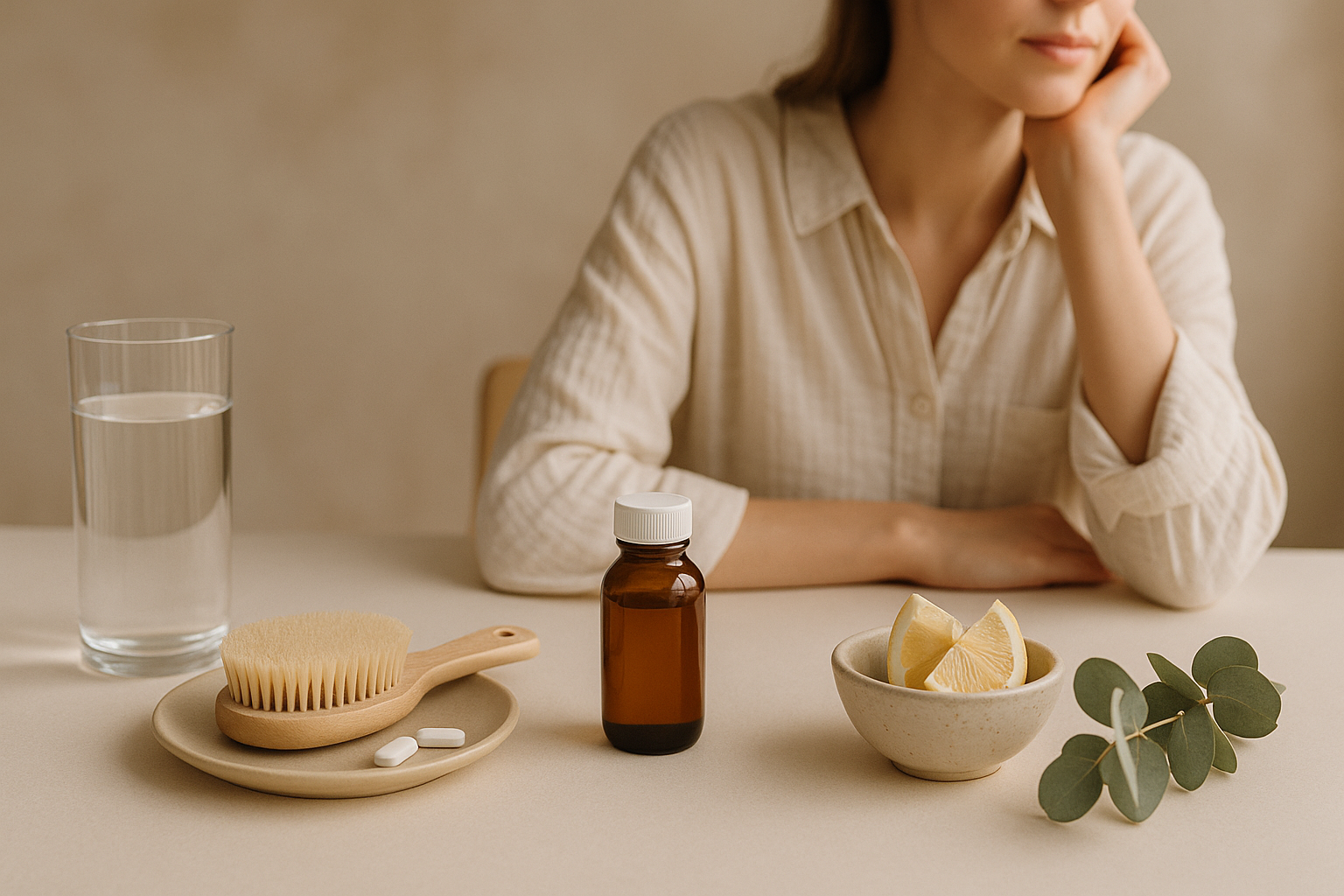
Natural wellness works best when it fits the life you already have. Instead of reinventing your day, we’ll attach quick, evidence-guided micro-habits to cues that already exist—wake-up, commute, lunch, the last email, and lights out. The goal is steady support for your microbiome, fewer unnecessary additives, and a calmer mind–body loop. Start with what you control at home, keep changes small, and notice what actually helps on your busiest days. [1]
One standout finding: a small human study found that reducing daily-use products containing parabens and phthalates was associated with reversal of certain cancer-associated molecular features in disease-free breast tissue. While early and not a cure claim, it suggests that pragmatic product swaps may be more than symbolic (PMID 36746253). This fits a broader principle I teach: focus on low-effort, high-frequency decisions you repeat all week. [2]
What does a grounded, nature-friendly routine look like on a busy day?
The simplest path is anchors. Attach one 60–120 second habit to each daily cue—wake, commute, lunch, finish work, and lights out. This keeps the routine on rails without willpower. You’ll do less deciding and more doing, because your cue does the nudging for you.
Start with low-friction steps you control at home. Open windows when local air quality allows, step into sunlight or sit by a bright window, and rely on fiber-rich snacks you prep once. These are quiet wins that compound and cost little. For general context on household ventilation, many health agencies note that brief air exchanges can help refresh indoor spaces when outside air is suitable; you can check regional air quality guidance through national or local resources.
Protect your weekends by keeping one 5-minute reflection (I like Sunday evening). Scan what felt easy, what felt heavy, and adjust. Keep the helpers, cut the hype. In my practice, this weekly trim is what makes wellness sustainable for the long run. Over time, your anchors become automatic, which is the real finish line.
78% of Inner Circle subscribers maintained their regimen for 6+ months Source: Inner Circle subscribers with recorded billing cycle count (2024–2025)
How can I build a 10-minute morning that sets the tone without a 5 a.m. wake-up?
Think light and lungs first. Spend 2 minutes by a window or outside, then 2 minutes of slow nasal breathing—try a gentle 4-count in and 6-count out. This brief pairing helps orient your body clock and steadies your attention for the first tasks of the day. If you prefer, step onto a balcony or your front step; the important part is consistent, gentle light exposure.
Next, sip something simple. Set out a glass the night before. In the morning, add a slice of citrus or an unsweetened herbal infusion for flavor without added sugar. Keeping the glass pre-positioned is the real trick—it removes one more step between you and that first sip. If your mornings are hectic, prefill a reusable bottle and place it by your keys.
Round out the 10 minutes with 3–4 mobility moves for about 5 minutes: cat–cow, hip hinges, calf raises, and shoulder circles. You’ll wake up joints and soft tissues, shake off stiffness, and walk into your day with fewer creaks. If time is tight, do one set of each move for 30–45 seconds and call it a win.
Before you head out, set one nourishing anchor for lunch or snacks. A piece of fruit, small yogurt, a nut/seed mix, or a jar of chickpeas you roasted on Sunday all take seconds to grab and keep your choices steadier later on. Make it visible—when it’s on the counter or at the front of the fridge, you’ll reach for it first.
What everyday swaps reduce exposure to unnecessary additives?
Personal care is a practical place to start. Try a 2–4 week switch toward products labeled paraben‑ and phthalate‑free. In a 2023 human study, reducing daily use of these additives tracked with favorable molecular changes in disease‑free breast tissue (PMID 36746253). It’s early evidence, but it aligns with a sensible, low-cost approach: change what you can control at home. [3]
In the kitchen, shrink the role of ultra-processed snack items. Scan labels to learn, not fear—look for BHA, BHT, and TBHQ so you know what you’re buying (PMID 16356880). You don’t have to be perfect to make a difference; even swapping one snack a day for a fruit or roasted chickpeas changes your default. If you share a household, involve others in choosing two simple pantry swaps so the path of least resistance is also the one you prefer.
Freshen indoor air with simple habits. Open windows for 5–10 minutes when outdoor air quality is good, and wipe dust on high-touch surfaces weekly to minimize buildup. For textiles, fragrance-free laundry products are a good baseline. If added scents bother you, skip dryer sheets and choose simpler formulas. For broader context on why clean indoor air matters, see the WHO’s overview of air quality principles (WHO).
Introduce one new product at a time, and patch test on a small area first. The calm, measured approach is kinder to your skin, your budget, and your routine. Track how each change feels over two weeks before layering on something else.
Should I rethink my oral care if I use a strong mouthwash daily?
Daily use of certain antiseptic mouthrinses can shift the oropharyngeal microbiome in some people, based on a 2024 trial substudy (PMID 38833520). That doesn’t make these products “bad,” but it’s a nudge to match frequency to your needs in conversation with your dental professional. If you prefer a gentler approach, alternate days or choose a milder formula, and reassess with your clinician.
The foundations matter most: brush twice daily with a fluoride toothpaste and clean between teeth once a day (string floss or interdental aids). The American Dental Association has clear, practical guidance on the basics here (MouthHealthy, ADA). A simple, low‑tech habit I recommend is a 60‑second plain‑water rinse after lunch—useful when you skip stronger options or when you’re on the go.
If you like botanical blends, know that effects on plaque control vary by formula and usage. Recent evidence syntheses have assessed these categories, but results differ by product and study design (PMID 39133629). As a supportive part of a daily routine, some readers prefer a professional-strength, lipid-based gum care concentrate such as Dental Pro 7. It can fit after flossing and brushing. It’s not a medical fix, but for those who like a concentrated, botanical‑lipid style application, it’s one more option to discuss with your dentist.
When to see a dental professional
If you notice gum bleeding that persists beyond a week, ongoing bad breath, soreness, ulcers that don’t settle, or tooth sensitivity that worsens, book an exam. Early advice is usually simpler. Find general oral health guidance via the ADA (MouthHealthy).
How can I fold movement and breathwork into a packed schedule?
Adopt “3 × 10” micro-sessions: three brisk 10‑minute walks or stair intervals spaced across your day. Many adults can meet recommended activity goals with this approach, without carving out a full workout block. See the CDC’s basics on physical activity for context (CDC). For an international perspective on weekly activity targets, see the WHO’s recommendations for adults (WHO).
Pair moves with moments you already have. Do calf raises while the kettle heats, wall sits during video ads, or stretch breaks between meetings. Habit pairings stick better because the cue is built in—you’re using time that would otherwise be idle. If you lead meetings, try a standing first minute to reset posture and attention.
Before tough tasks, try a 2–5 minute downshift breath set: longer exhales than inhales. For example, 4-count in, 6–8-count out, through the nose. This can steady focus and reduce jitters before a presentation or a complex email thread. Consistency matters more than technique perfection—pick a cadence you’ll actually use.
In my experience coaching busy teams, the people who succeed aren’t the ones with perfect 60‑minute workouts; they’re the ones who seize the small windows they actually have. Ten minutes, done three times, travels surprisingly far.
What simple food and beverage habits make a realistic difference?
Defaults beat diets. Use a plant‑at‑every‑meal rule of thumb: fruit at breakfast, salad or veg at lunch, and two veg at dinner. When your default plate includes produce, fiber and micronutrients ride along—without extra decisions. If you eat out, scan for a veg side first and build from there.
Give yourself a “fiber first” buffer to steady mid‑afternoon grazing. Carry a nut/seed mix or roasted chickpeas. These keep well, travel easily, and can help you avoid the vending machine spiral. For drinks, keep unsweetened options within reach—sparkling water, herbal blends, or simply chilled tap with citrus.
Set a personal caffeine cutoff 6–8 hours before bedtime. Swap to unsweetened herbal blends in the afternoon. Many readers find this one change improves wind‑down without touching anything else. If you’re sensitive, experiment with an earlier cutoff and notice how your evening feels over a two-week trial.
On Sundays, prep one pot of whole grains and a tray of roasted veg. With a simple base ready, you can assemble quick bowls all week. For general healthy eating guidance, the NHS offers clear, practical overviews (NHS Live Well). Keep spice blends and a jar of tahini or yogurt on hand to change the flavor quickly without extra effort.
Can I design an evening wind-down that sets up better rest and focus for tomorrow?
Start a 90‑minute dimming window. Lower overhead lights, reduce screen brightness, and switch to warmer tones if possible. This gentle slope into the night cues your body that the day is wrapping up. If you can, dim the living area first and leave task lighting for essentials only.
Build a tech fence: pick an app‑free 30 minutes. Read, stretch lightly, or write two or three lines in a journal. Keep it simple; this is a wind‑down, not a performance. If your mind races, try a brief breath set with longer exhales or a short, guided body scan.
Return to bedroom basics: cool, dark, and quiet. Keep a consistent lights‑out window even on weekends. Your body appreciates the rhythm. If noise is an issue, consider a simple fan or a consistent ambient sound at low volume.
For oral and skin care, aim for simple and consistent. If you try new products, patch test and introduce one at a time. Your skin and gums generally prefer small, steady changes over sudden, complicated stacks. A two-item maximum in the evening can keep things calm and repeatable.
How do I personalize and track what’s working—without making wellness a second job?
Pick two metrics: energy on waking (0–10) and wind‑down ease (0–10). Jot them daily for two weeks. This light-touch check‑in is enough to spot patterns without turning your life into a spreadsheet. If you miss a day, just resume; streaks aren’t the point—clarity is.
Change one variable at a time for 7–14 days. Move your caffeine cutoff earlier, add a lunch walk, or switch to paraben‑ and phthalate‑free personal care. When you only change one thing, you can actually see what helped. Keep notes short and factual to avoid overthinking.
If a habit still feels forced after two weeks, shrink it to 30–60 seconds or replace it with a simpler anchor. The only routine that works is the one you’ll keep. Give yourself margin: some days you’ll do the minimum, and that’s still progress.
Finally, give yourself permission to be imperfect. Natural wellness is not an all‑or‑nothing test. It’s a series of small, kind choices that meet you where you are today. When in doubt, choose the step you could repeat on a chaotic Tuesday—that’s the step most likely to last.
Frequently Asked Questions
Can I build a natural wellness routine on a tight budget?
Yes. Prioritize no-cost or low-cost anchors: morning light at a window, opening windows when air quality is good, brisk walks, homemade snacks like roasted chickpeas, and fragrance‑free laundry. Use a Sunday 5‑minute review to keep only what feels helpful.
Is it okay to use antiseptic mouthwash every day, or should I alternate?
Daily use can shift the mix of microbes in the throat area in some people. If you use a strong formula daily, discuss frequency with your dental professional. Core basics—brushing with fluoride twice daily and cleaning between teeth—matter most for gum and tooth care.
How do I choose personal care products if I want to avoid parabens and phthalates?
Trial a 2–4 week switch to options labeled paraben‑ and phthalate‑free. A small human study linked reduced daily use of these additives with favorable molecular changes in disease‑free breast tissue. Patch test new items and introduce one at a time.
What are quick movement ideas if I work at a desk all day?
Try three 10‑minute brisk walks or stair intervals, calf raises while the kettle boils, wall sits during ads, and stretch breaks between meetings. Pair moves with a cue you already do, like waiting for a call to start.
How long should I try a new habit before deciding if it helps?
Test one change at a time for 7–14 days. Track two simple ratings—energy on waking and wind‑down ease. If a habit still feels forced after two weeks, shrink it to 30–60 seconds or replace it with a simpler anchor.
Are aromatherapy diffusers appropriate around children and pets?
Use caution. Ventilate rooms, keep diffusers out of reach, and avoid direct skin contact. If anyone develops coughing, headaches, or eye irritation, stop and air out the space. Check pediatric and veterinary advice for your household.
As you refine your day, remember: change travels farther when it’s portable, kind, and small enough to do on your busiest Tuesday.