Is Natural Medicine?
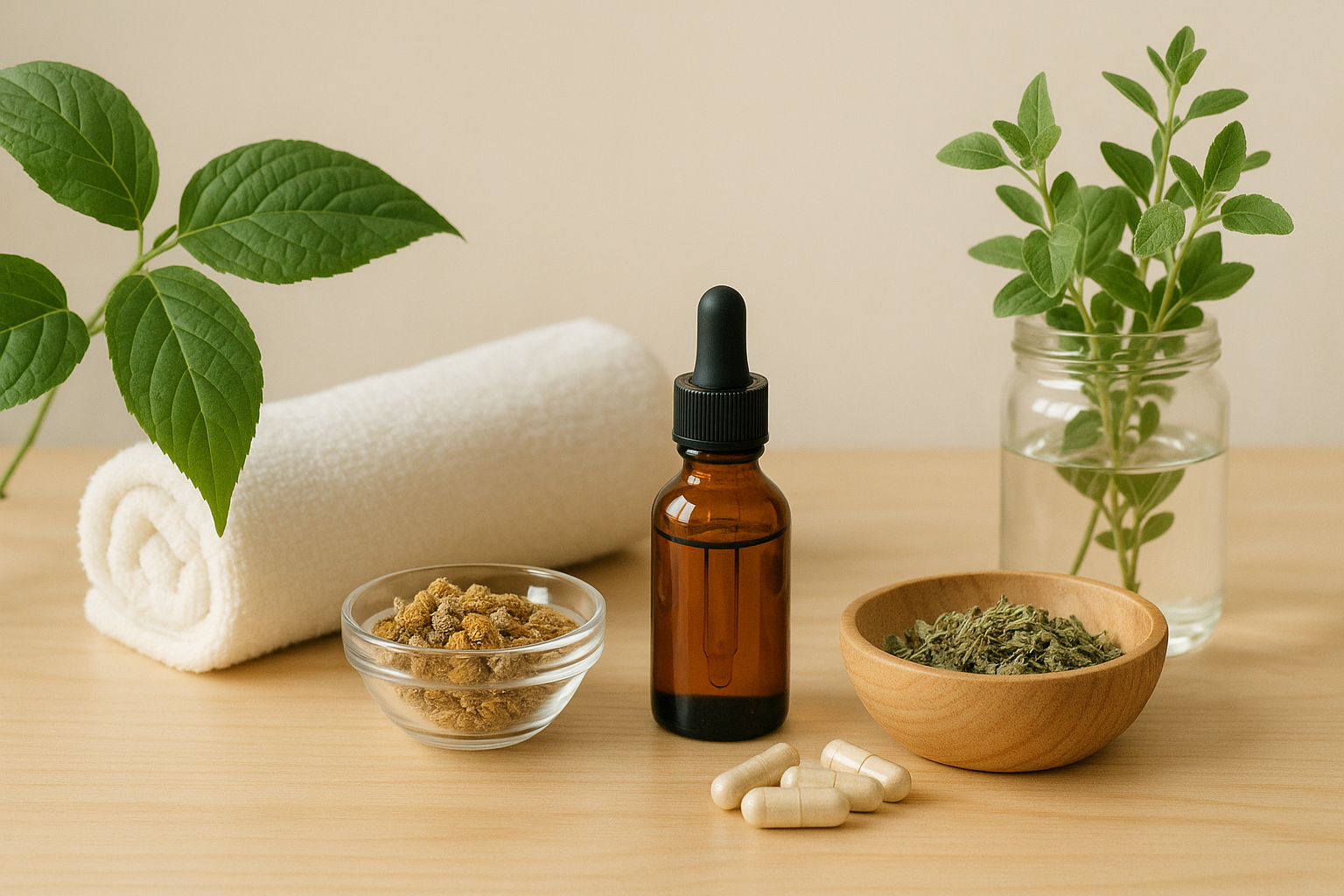
Cut through the noise with a clear, evidence-first guide. In everyday use, people say “natural” to describe a wide range of approaches—from herbs and vitamins to breathing practices and light devices. Some can sit neatly next to standard care; others are unproven, or simply not right for certain situations. This article shows you how to tell the difference, how to stay safe, and how to work confidently with your GP, dentist, or pharmacist. [1]
What do people actually mean by “natural medicine”?
“Natural” is an umbrella term rather than a precise category. It often includes:
- Botanicals and dietary supplements: capsules, teas, tinctures, gummies, and topical applications made from plant or mineral sources.
- Nutritional approaches: whole‑food dietary patterns, specific nutrients, and culinary herbs used in everyday cooking.
- Mind–body practices: breathing exercises, meditation, yoga, guided imagery, and biofeedback.
- Device‑based modalities presented as “natural”: light‑based facials, cold exposure, and similar wellness devices.
It’s also helpful to separate two kinds of claims:
- Wellness support: claims about comfort, appearance, freshness, energy, focus, or sleep routines.
- Disease management: claims about preventing, diagnosing, or managing medical conditions—these require strong clinical evidence and professional oversight.
Finally, remember the regulatory reality. In the UK, foods and supplements are regulated differently from licensed medicines. A clean label or a traditional use note is not the same as proof from robust human studies. For a clear overview of how these fields fit into mainstream health systems, see the NHS guide to complementary approaches (NHS) and the WHO’s pages on traditional, complementary and integrative medicine (WHO). [2]
78% of Inner Circle subscribers maintained their regimen for 6+ months Source: Inner Circle subscribers with recorded billing cycle count (2024–2025)
Is it evidence‑based or mostly tradition?
Expect a spectrum. Some practices have early or mixed evidence; many remain uncertain; a few have stronger support for specific uses. Importantly, absence of proof is not proof of benefit. What matters is whether well‑conducted human trials show outcomes that people can feel or see, not just promising lab signals. [3]
Look for systematic reviews. These bring multiple studies together, assess quality, and grade certainty. For example, a 2024 Cochrane review of herbal applications for preventing dental caries concluded the certainty of evidence was very low due to limited, small, and varied trials (PMID 39908071). That doesn’t mean a herb can’t help; it means we don’t yet have reliable proof that it does in everyday life.
Also separate mechanisms from outcomes. A plausible explanation—say, an antioxidant pathway or a receptor interaction—does not replace real‑world results. Good studies track outcomes that matter to people: chewing comfort, fresher breath through the day, or fewer dentist‑detected cavities over a meaningful time span.
How can you check if a natural option is likely to be safe for you?
Start with you. Safety is personal. The same product that suits your neighbour may not suit your body, your medicines, or your life stage. Work through this simple screen:
- Personal risks: pregnancy, breastfeeding, allergies, and long‑term conditions should prompt extra caution and professional advice.
- Interactions: botanicals and concentrated nutrients can change how prescribed medicines work. Ask your pharmacist to cross‑check.
- Dose, duration, and source: follow labelled directions; avoid mega‑doses unless advised; prefer brands with batch numbers, testing, and transparent ingredient lists.
- Red flags: promises of quick fixes, disease cures, or claims to replace prescribed care are a warning sign to step back.
In my experience, the most common issues arise from stacking multiple products with overlapping actives, or from taking higher doses for longer than intended. A short conversation with your pharmacist often prevents these missteps.
When does a natural approach make sense—and when should you choose standard care first?
Natural options can be a sensible part of routine wellness when safety is clear and stakes are low—think sleep hygiene, breathing exercises for daily stress, or a gentle oral‑care addition for a freshly polished feel and long‑lasting fresh breath. Where the stakes are high, problems progress quickly, or you have red‑flag signs, start with standard medical or dental care. Add natural options later, as supportive steps, once your clinician has a plan in place.
Set a review point. For everyday aims, 2–4 weeks is a reasonable window to look for visible improvement you can describe—such as a more defined gum line on photos you take at the same angle, or breath that stays fresher through the afternoon.
| Goal | Natural options often used | What higher‑quality evidence says | First‑line choice |
|---|---|---|---|
| Day‑to‑day stress and sleep routines | Breathing practices, mindfulness, teas, magnesium | Mind–body practices have supportive evidence for perceived stress and sleep routines; supplement evidence varies by product and dose | Lifestyle and mind–body strategies; discuss supplements with a pharmacist |
| Oral freshness and a visibly elevated gum line | Lipid‑based concentrates, sugar‑free chewing, tongue cleaning | Evidence for botanicals in caries prevention is uncertain (Cochrane 2024); mechanical cleaning and fluoride remain core standards | Standard oral care (brushing, interdental cleaning, fluoride); consider a supportive concentrate for appearance and freshness |
| Persistent mouth pain, loose teeth, or jaw swelling | Herbal rinses, home remedies | Self‑care alone is risky for urgent or progressive problems | Urgent dental/medical care first; add supportive steps later under guidance |
| Minor skin comfort and general appearance | Plant‑based topicals, gentle routines | Mixed evidence; device‑based aesthetics show evolving research in clinics | Gentle skincare basics; consult a clinician for persistent or worsening issues |
When to see a professional
Arrange an urgent appointment with your GP, dentist, or NHS 111 if you have any of the following: sudden or severe pain; swelling of the face or jaw; a spreading dental infection; mouth ulcers that do not settle within two weeks; ongoing gum bleeding despite good daily cleaning; fever; or you feel generally unwell. For children, older adults, and anyone with a weakened immune system, act early and seek standard care first.
How can you judge the quality of studies you see online?
Evidence has tiers. The higher the tier, the more reliable the answer tends to be for everyday decisions:
- Favour randomized trials and systematic reviews (like Cochrane) over single lab or animal studies. They’re better at showing what happens in people.
- Check the sample size, the presence of a proper control group, and whether the outcomes matter to people (not just a lab marker).
- Verify sources. Use PubMed to locate original citations and see the study type and abstract (PubMed Help). Be cautious if the only “evidence” is a brand’s blog or an infographic with no references.
Two examples of how to read research in context:
- Oral care botanicals: the 2024 Cochrane review found very low certainty for preventing caries (PMID 39908071). Translation: interesting, but not practice‑changing.
- Device‑based aesthetics: some light‑based approaches are being explored in clinical settings; study quality and endpoints vary, and these are not home remedies (PMID 38145773).
Finally, check whether the outcome is patient‑centred. For oral care, that might be dentist‑assessed plaque scores, a more defined gum line on clinical photos, or breath freshness ratings that last beyond the first hour.
Can you combine natural and standard care safely?
Often yes—think of it as complementary care. The key is to avoid interactions and duplicated effects. For example, taking several bedtime products that all promote drowsiness may be unwise; or combining multiple botanicals that nudge the same pathway may cause unexpected side effects.
Coordinate timing and amounts with your clinician or pharmacist. Bring every product you use—prescribed, over‑the‑counter, and wellness items—so they can see the full picture. This is especially important before dental work, operative procedures, or starting a new prescription.
Document your plan. A simple list with product names, amounts, and schedules helps everyone stay aligned and makes it easier to spot what helped if you do see a visible improvement.
For everyday oral appearance and freshness, some people add a professional‑strength, lipid‑based gum care concentrate to their standard routine. For example, Dental Pro 7 can be used after brushing and interdental cleaning to help achieve a freshly polished feel, a more defined, visually elevated gum line, and to help neutralise odour‑causing impurities for long‑lasting fresh breath. Use it as a supportive step; keep up with routine dental check‑ups.
How should you speak to your GP, dentist, or pharmacist about using natural options?
Be specific and practical. Clinicians want to help you achieve your goals safely. The more precise your plan, the better their advice.
Here’s a simple script you can adapt:
- “My goal is [state it simply: for example, fresher breath through the day]. I’m considering [product/practice], used [how often and how much].”
- “I currently take [list medicines and supplements]. Are there any interactions?”
- “What should I monitor, and when should I follow up?”
Agree on monitoring before you start. Decide what to track (e.g., breath freshness ratings at lunchtime; weekly photos of your gum line taken in similar light), and set a review date. If there’s no visible improvement—or if you feel worse—pause and reassess together.
In my practice, the most helpful ingredient is clarity: a clear goal, a clear time frame, and a clear plan for what would prompt stopping or switching course.
Frequently Asked Questions
Is natural medicine the same as complementary or alternative medicine?
They overlap. “Complementary” usually means used alongside standard care. “Alternative” implies used instead of it. Many people use “natural” as a marketing label across both. The NHS and WHO often use “complementary” and “traditional” to describe these fields.
Can I use natural remedies while taking prescribed medicines?
Often yes, but check for interactions. Bring product labels to your GP or pharmacist. Some botanicals can change how medicines are processed, or duplicate effects (e.g., multiple sedating products). Coordination is the safest path.
How long should I try a natural approach before deciding if it helps?
Set a clear review point at the start (for example, 2–4 weeks for everyday aims like sleep routines or fresher breath). If there’s no visible improvement or you feel worse, pause and speak with a clinician.
Are “herbal” and “plant-based” always safer than conventional options?
Not always. Natural does not guarantee harmless. Dose, duration, personal health factors, and product quality all matter. Choose reputable brands with batch testing and clear ingredient lists, and discuss plans with your pharmacist or GP.
What certifications or quality marks should I look for on supplements?
Look for UK/EU quality marks and independent testing (e.g., GMP, ISO standards, or third‑party lab verification). These marks do not prove clinical effectiveness but they do support quality control.
Where can I find unbiased summaries of the evidence?
Use trusted sources such as the NHS overview of complementary approaches (NHS), the WHO pages on traditional, complementary, and integrative medicine (WHO), Cochrane Reviews via PubMed (PubMed), and the U.S. NCCIH news pages for context (NCCIH).
How to run a quick, safe check before you start
- Define your goal. Write one simple outcome you can observe.
- Screen your risks. Note pregnancy, breastfeeding, allergies, long‑term conditions, and all current medicines.
- Check quality. Prefer products with batch numbers, clear ingredient amounts, and third‑party testing.
- Search smart. Use PubMed and reputable summaries (Cochrane, NHS, WHO) for human studies with meaningful outcomes.
- Plan a review date. Decide what you’ll track and when you’ll stop if there’s no visible improvement.
- Share your plan. Bring labels to your GP, dentist, or pharmacist to check for interactions and suitable timing.
As a final note for UK readers focused on oral appearance and freshness: you can keep standard care (twice‑daily brushing, interdental cleaning, fluoride) as your foundation, and then consider a supportive step such as Dental Pro 7—a professional‑strength gum care concentrate with 100% lipid potency—to help achieve a freshly polished feel, a more defined, visually elevated gum line, and long‑lasting fresh breath. Keep expectations grounded, track what you notice, and check in with your dental professional at routine visits.