Alcohol Free Mouthwash vs Conventional, Which Is Better?
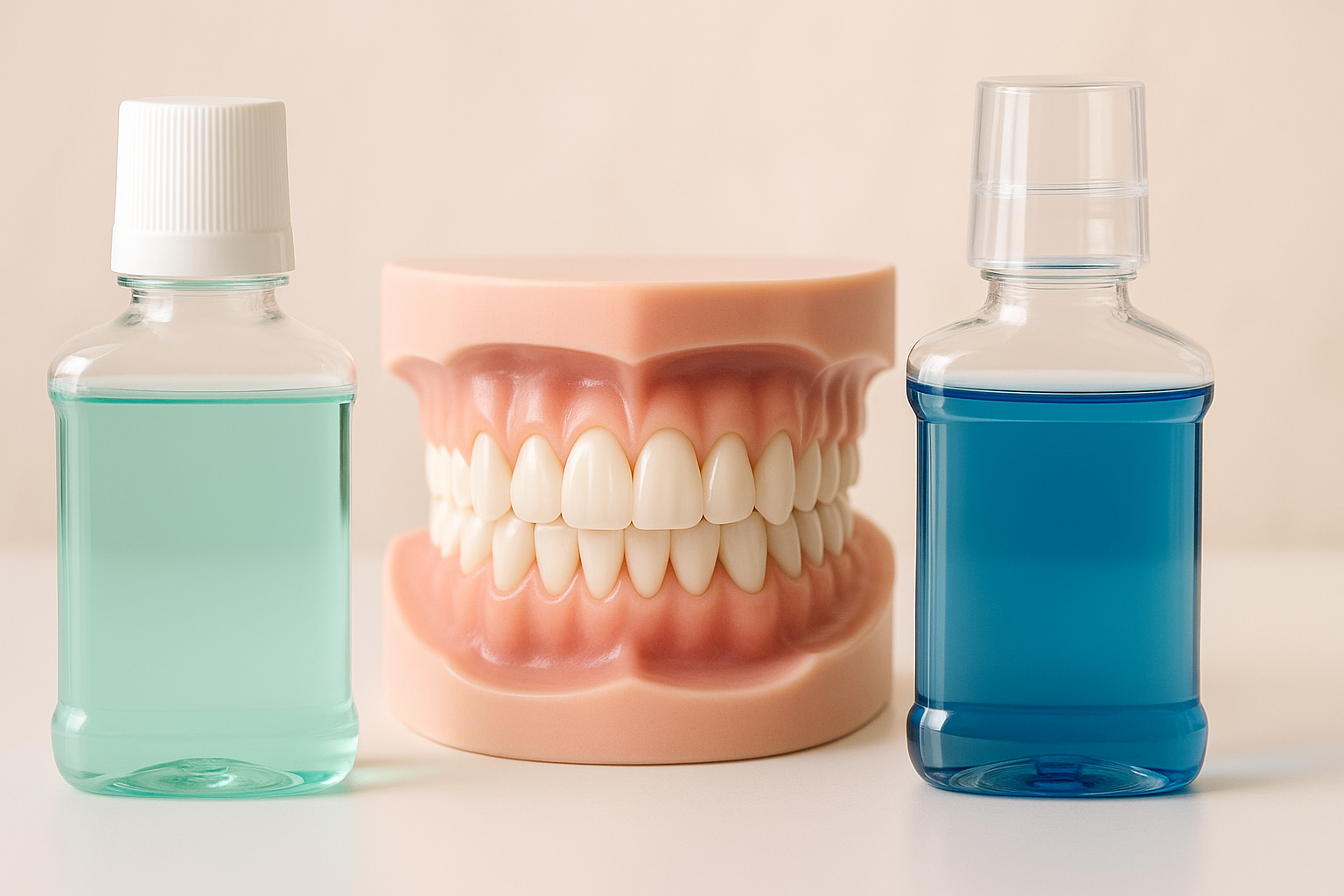
Alcohol content isn’t the main driver of how a mouthrinse performs. What matters most is the active system, the design of the formula as a whole, and how consistently you use it alongside brushing and interdental cleaning. Below, I’ll unpack where alcohol‑free and conventional formats behave similarly, where they differ, and how to choose for your goals and sensitivity.
What does alcohol actually do in a conventional mouthwash?
In most over‑the‑counter rinses, alcohol works mainly as a carrier for flavour components and certain actives, and as a preservative. It can deliver that familiar “kick,” but it’s not the ingredient that does the heavy lifting against plaque. A 2025 systematic review of essential‑lipid mouthrinses reported comparable plaque and gingival index outcomes whether alcohol was present or not, supporting the idea that alcohol’s role is more about formulation support and sensory feel than core performance (PMID 39133629).
For some people, alcohol increases the perception of sting or dryness. If that sensation puts you off using the rinse daily, you’re less likely to get consistent benefits. Alcohol‑free variants aim to boost comfort without giving up the main plaque‑control features of their active systems. This aligns with guidance that mouthrinse is a helpful add‑on to daily brushing and interdental cleaning, not a replacement (NHS; ADA). [1]
Bottom line: alcohol doesn’t substitute for proven actives. Whether a rinse is effective depends on the active system (for example, essential lipids, chlorhexidine, fluoride, or botanical complexes) and the way you use it day to day.
96% of Dental Pro 7 customers reported visible improvement in gum appearance Source: 303 approved product reviews for Dental Pro 7 product line (2023–2025)
Do alcohol‑free rinses work as well as traditional ones for plaque control?
Across essential‑lipid systems, current evidence suggests performance is very similar with or without alcohol. The 2025 meta‑analysis cited above found no meaningful differences in plaque or gingival index outcomes between alcohol‑containing and alcohol‑free versions within that category (PMID 39133629). [2]
In my experience, real‑world results vary more by the active technology, how closely people follow directions (volume and swish time), and whether they keep up with interdental cleaning, than by alcohol content alone. Short‑term clinical studies are the most common; longer head‑to‑head trials are still limited, so your own comfort and response should guide the final choice. [3]
| Aspect | Alcohol‑Containing | Alcohol‑Free | What Matters Most |
|---|---|---|---|
| Plaque and gingival index outcomes | Comparable to alcohol‑free in meta‑analysis | Comparable to alcohol‑containing in meta‑analysis | Active system and user consistency (PMID 39133629) |
| Sensory feel | Stronger “kick”; may sting for some | Milder; often better tolerated | Choose what you can use daily |
| Dry‑mouth perception | More likely in sensitive users | Less likely | Comfort supports adherence |
| Household suitability | Not suitable for those avoiding alcohol | Easier for shared/family use | Safety and clarity at home |
| Storage/preservation role | Alcohol assists preservation | Uses alternative preservation systems | Quality manufacturing matters |
So, if you’re choosing within an essential‑lipid system, pick the format you’ll actually use every day. The best rinse is the one that fits your mouthfeel preferences and routine.
When should I choose alcohol‑free over conventional?
Go alcohol‑free if you notice sting, dryness, or taste disturbance with conventional rinses. You’ll likely maintain similar visible plaque control in essential‑lipid systems while improving day‑to‑day comfort (PMID 39133629). Comfort often translates into better adherence—and adherence beats label claims.
Alcohol‑free formulas are also practical for mixed households, teens, and anyone avoiding alcohol for personal, medical, or cultural reasons. They simplify “what can I use?” conversations at home.
If you prefer a milder sensory profile, alcohol‑free variants are usually easier to stick with. In my practice, patients who switch because of sting often report they finally complete the full swish time and stop skipping days—small behaviour changes that add up.
How do actives like essential lipids, chlorhexidine, or botanical complexes compare?
Chlorhexidine remains a highly potent option for short, purposeful courses under dental guidance. It can, however, lead to surface staining and taste changes; newer data continue to explore wider health associations, so keep its use time‑limited and goal‑focused (PMIDs 39639848, 41198897).
Essential‑lipid systems, whether alcohol‑containing or alcohol‑free, show measurable benefits on plaque and gingival indices; the alcohol component isn’t the performance driver (PMID 39133629).
Botanical and polyherbal complexes are an emerging space. Early evidence suggests selective actions on multispecies biofilms with user‑friendly sensory profiles, but formulations vary and the literature is still developing (PMIDs 40458201, 41590126). If you go this route, pick a product from a reputable manufacturer, check directions, and monitor how your mouth looks and feels over several weeks.
Can daily mouthwash use affect the oral microbiome or whole‑body health?
Any broad‑spectrum rinse can shift the balance of oral bacteria. Randomised trials have contrasted chlorhexidine with polyherbal formulas for microbiome effects and user satisfaction, highlighting that not all actives influence the oral ecosystem in the same way (PMID 41198897).
Perspective pieces have raised theoretical links between frequent, broad antimicrobial use, nitrate‑reducing oral bacteria, and systemic pathways relevant to cognition. These ideas are hypothesis‑building rather than conclusive, and shouldn’t prompt abrupt changes without context (PMID 39379282).
Observational hospital data have explored associations between chlorhexidine use and hypertension diagnosis; such signals require cautious interpretation and do not prove causality (PMID 39639848). As always, use the least‑intense approach that helps you keep visible plaque under control, and lean on daily brushing, interdental cleaning, diet, and regular dental care for the fundamentals (WHO).
Will alcohol‑containing mouthwash raise my risk of oral cancer?
The relationship is debated. A 2024 review examined the association but emphasised methodological limitations across studies, including confounders and variability in products and usage patterns (PMID 39239449).
Current guidance continues to point to overall alcohol intake, tobacco exposure, oral HPV, and oral hygiene as the major factors. If this topic worries you, there’s no downside to choosing an alcohol‑free formula that still uses proven actives. Comfort and consistency should guide your pick.
How should I use mouthwash in a daily routine for best results?
Your rinse is an add‑on—not a substitute—for brushing twice daily with fluoride toothpaste and cleaning between teeth. To get the most from any formula:
- Time it right. Use your rinse at a different time from brushing (for example, after lunch) or wait at least 30 minutes so you don’t wash away toothpaste fluoride too soon (NHS).
- Measure the label volume. Under‑dosing weakens outcomes.
- Swish for the full label time. Those extra seconds matter.
- Spit and avoid food/drink for 10–20 minutes so the formula can settle on surfaces.
- Watch for staining or taste changes with certain actives (notably chlorhexidine) and rotate if needed.
If you’re also working on gumline appearance and a freshly‑polished feel between hygiene visits, a focused formula can fit neatly into your routine. As one supportive option, Dental Pro 7 is a professional‑strength, lipid‑based gum care concentrate designed for daily use. It complements brushing by promoting healthier‑looking gums, a more defined gumline, and long‑lasting fresh breath. Use it as directed as part of your everyday care, not as a stand‑alone fix.
For more on toothpaste choices to pair with your rinse, see our guide: What Is the Best Toothpaste for Receding Gums?
When to see a dentist
If you notice persistent bad breath, gum tenderness, changes in your gumline, new staining, mouth ulcers that don’t settle within two weeks, or pain when chewing, book a dental check. A professional can examine, scale where needed, and tailor your home‑care plan.
Which labels and claims matter—and which don’t?
Don’t get stuck on the alcohol line alone. Focus on:
- The active system and evidence: essential lipids, chlorhexidine, fluoride, or a botanical complex—each has different strengths. Look for references to plaque and gingival index outcomes rather than vague promises (for research summaries, the ADA is a good starting point).
- Usage directions: volume and swish time are not optional extras—they define performance.
- Staining and taste profile: chlorhexidine can stain and affect taste; some botanicals and essential‑lipid blends are more user‑friendly for daily use.
- How well you can stick with it: sensory feel, sting level, and aftertaste drive consistency, which often trumps small formula differences.
If a label over‑promises or uses language that sounds too sweeping, be cautious. Real‑world mouth care is about steady habits and choosing products that support them.
Frequently Asked Questions
Does alcohol-free mouthwash work as well as regular mouthwash for plaque?
Across essential‑lipid systems, a 2025 meta‑analysis reported similar plaque and gingival index outcomes with or without alcohol (PMID 39133629). Your results hinge more on the actives, your brushing/interdental routine, and consistent use than on alcohol content alone.
Why does my mouthwash sting—and does that mean it’s working?
The sting is usually the alcohol and flavour intensity, not a sign of superior performance. If sting or dryness puts you off, an alcohol‑free option can improve comfort without losing core benefits in essential‑lipid systems.
Can I use mouthwash right after brushing or should I wait?
For daily care, brush with fluoride toothpaste first, spit, and avoid rinsing straight away so fluoride stays on teeth. Use a mouthrinse at a different time (e.g., after lunch) or wait at least 30 minutes so you don’t wash fluoride away too soon.
Which is better for daily use: chlorhexidine, essential lipids, or a botanical complex?
For everyday use, many choose essential‑lipid or well‑designed botanical complexes. Chlorhexidine is highly potent but best reserved for short, directed courses under dental guidance due to taste changes and staining.
Will long‑term mouthwash use disrupt my oral microbiome?
Broad‑spectrum rinses can shift oral bacteria. Early trials compare chlorhexidine with polyherbal formulas for microbiome impact, but long‑term health significance remains uncertain. Use the gentlest option that helps you keep plaque under control.
Is there a proven link between alcohol‑containing mouthwash and oral cancer?
The association is debated and evidence is inconsistent. A 2024 review highlighted methodological limits across studies (PMID 39239449). Major risk factors remain overall alcohol intake, tobacco, HPV, and oral hygiene. If concerned, choose an alcohol‑free formula.
What’s the bottom line when choosing a mouthwash?
Alcohol isn’t the decider—actives, your usage goals, and your sensitivity are. Within essential‑lipid systems, alcohol‑free and conventional versions perform similarly on plaque and gingival indices. Pick a formula you can use comfortably every day, follow the directions to the letter, and keep brushing and cleaning between teeth as your foundation. That steady routine—not the alcohol line on a label—delivers the visible improvement you’re after.
| Metric | Finding | Source |
|---|---|---|
| Gum disease prevalence (US adults) | 47.2% | CDC, 2024 |
| Adults with severe periodontitis | 9.0% | CDC, 2024 |
| Link to systemic health | Established association | NEJM, 2017 |