What Does the Start of Receding Gums Look Like? The 4 Subtle Signs Most People Miss
Last updated: 16 August 2026
Gum recession rarely announces itself. There's no pain at the beginning, no obvious pulling back — just a few quiet changes at the gum line that are easy to put down to the light, or your imagination. By the time a tooth looks obviously "long", the process has usually been under way for months or years.
The good news: the early signs are surprisingly consistent once you know what to look for, and catching them early is the whole game. Recession that has already happened doesn't grow back on its own — but recession that's just starting can very often be stopped. Here's a practical field guide.
The four early signs
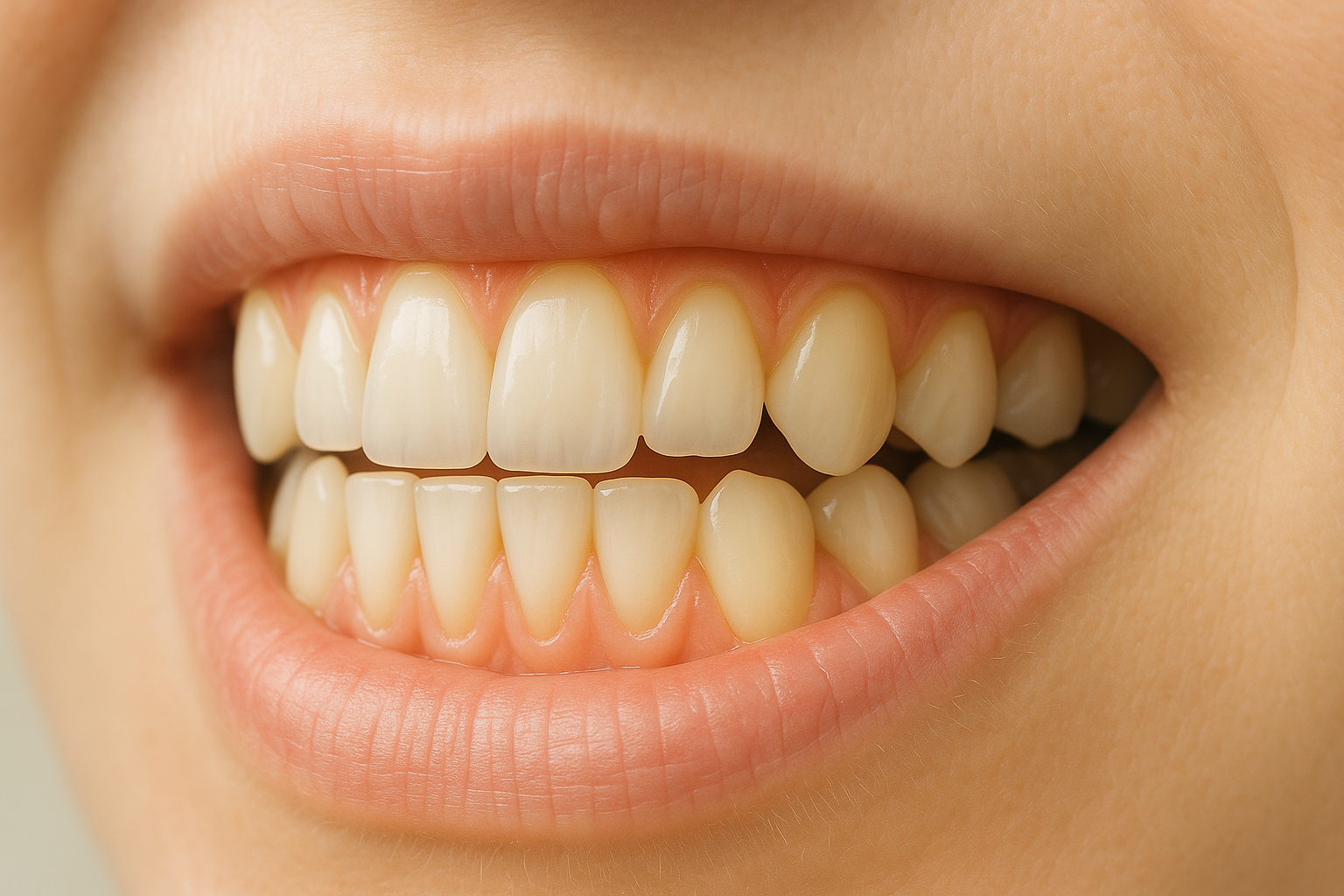
1. The scalloped edge softens. Healthy gums hug each tooth with a crisp, slightly wavy "scalloped" margin — a defined curve from tooth to tooth. One of the earliest changes is that this edge starts to look thinner or flatter on one or two teeth, most often the canines and premolars, where the gum tissue is naturally more delicate.
2. One tooth starts to look longer than its twin. Your left and right sides are a useful control group for each other. If one canine looks a millimeter or two longer than its opposite number, that's worth noting — teeth don't grow, so extra visible length means the gum has moved.
3. A faint "satin band" appears at the neck of the tooth. This is the most reliable early clue, and the one most people miss. Enamel has a glassy shine; the root surface underneath (cementum) is more matte and slightly yellower. When a root is just starting to show, you'll see a narrow band near the gum line that catches the light differently — satin rather than gloss. It also picks up stain more readily than enamel.
4. The points between your teeth look blunted. The little triangle of gum that fills the gap between two teeth (the papilla) may look slightly shorter or less pointed at one spot. Later this becomes the "black triangle" effect — at the start it's just a subtle blunting.
Alongside these visual signs, sensitivity is the common companion symptom: a small, specific spot that "zings" with cold water or something sweet, rather than general sensitivity across the whole mouth. It tends to show up exactly where the satin band is forming.
Healthy margin, early change or established recession?
| Feature | Healthy margin | Subtle early change | Established recession |
|---|---|---|---|
| Gum edge shape | Crisp, scalloped, knife-edge | Thinner, less scalloped on one or two teeth | Flattened edge across several teeth; clear pullback |
| Tooth length | Balanced left–right | One tooth looks slightly longer than its match | Noticeably longer teeth, often with notches at the neck |
| Surface sheen at the neck | Glassy enamel only | Narrow satin-looking band just visible | Broader root exposure; stains more readily |
| Gum between teeth | Fills the space fully | Slightly shortened or blunted at one spot | Triangular "black spaces" between several teeth |
| Sensitivity | None or minimal | One small trigger spot (cold, sweet, brushing) | Frequent triggers over a larger area |
A healthy gum surface also has a faint orange-peel texture called stippling — if you're not sure what "healthy" looks like on your own gums, our guide to gum stippling is a good place to start.
Why gums start to recede in the first place
Two forces do most of the damage, and they often work together.
The first is biological: plaque left sitting along the gum margin irritates the tissue. Inflamed gums bleed, swell and, over time, can lose their tight attachment to the tooth. If your gums bleed when you brush, that's the inflammation stage — the point at which things are still very fixable.
The second is mechanical: scrubbing hard with a stiff-bristled brush, sawing horizontally, or using a very abrasive toothpaste physically wears away the gum edge and the neck of the tooth. This is why recession so often appears on the canines and premolars of your dominant-hand side — they catch the most brushing force. If that sounds familiar, see our full guide to receding gums from brushing too hard.
On top of those two, a few things stack the odds: a naturally thin gum type, prominent roots, clenching and grinding, smoking or vaping, lip or tongue piercings that rub one spot, and orthodontic movement that pushes a tooth outside its bony envelope. Recession confined to a single tooth usually has a single local cause — we've covered how to work out which in why is my gum receding on one tooth only?
How to check at home, in under two minutes a month
The mirror comparison. In bright, even light, lift your lip and compare the same teeth left and right — especially canines and premolars. You're looking for a less crisp scallop, or one tooth that looks longer than its twin.
The photo log. Once a month, take the same two close-ups: one natural smile, one with your lip gently pulled back. Same angle, same lighting. Small changes that are invisible day to day become obvious across three or four months of photos. Keep them in one album with brief captions ("upper left canine looks longer than right").
The clean-and-feel test. After brushing and cleaning between your teeth, run your tongue slowly along the gum line. Enamel feels glassy; exposed root feels matte and slightly rough, and may be the spot that reacts to cold. A new rough patch at the gum line is worth a photo and a note.
That's the whole system: any tooth looking longer than its match, any new satin band, any new blunted triangle, any recurring cold zing at a single spot. Four checks, once a month.
What speeds recession up — and what slows it down
Speeds it up: hard scrubbing with a stiff brush, horizontal sawing strokes, gritty whitening pastes, nail and pen biting, clenching and grinding, frequent sugary snacking, and smoking or vaping.
Slows it down: a soft or extra-soft brush held at 45° to the gum line, light pressure and small circles (let the bristles do the work), cleaning between your teeth once a day with floss or interdental brushes, keeping sugar to mealtimes, and regular hygienist visits so tartar never gets established along the margin.
If you want a concentrated final step for the gum line itself, this is where Dental Pro 7 fits: a lipid-based gum care concentrate that you massage along the margins after brushing and interdental cleaning. Because it's oil-based rather than water-based, it clings to the gum line rather than rinsing straight away. It supports the daily routine — it doesn't replace the brushing technique and interdental cleaning that do the heavy lifting.
Will the gum grow back if I catch it early?
An honest answer: gum tissue that has genuinely receded doesn't regrow by itself, and no toothpaste, rinse or oil can rebuild it. What early action does is stop the slide — calm the inflammation, remove the mechanical cause, and keep the margin exactly where it is. Gums that are merely inflamed and swollen can tighten back up impressively once plaque control improves, which is why some people feel their gums have "come back"; what's really happened is that the swelling and redness have resolved.
For areas that have already receded noticeably, a dentist can talk you through the options, from desensitizing and cosmetic approaches to gum grafting in more advanced cases. We've covered the full picture in do receding gums grow back, and what helps them?
When to see a dentist
Schedule a checkup if you notice a tooth that looks longer than its neighbor, a new satin band at the neck of a tooth, new triangular gaps between teeth, sensitivity that's getting worse at one spot, or gums that still bleed after a week or two of careful, gentle cleaning. Bleeding that doesn't settle is a sign of inflammation that needs professional cleaning, not harder brushing.
It's also worth a review if you've recently started orthodontic treatment, been given a new retainer, or suspect you grind at night — new force patterns deserve a quick professional look. The CDC has a useful overview of gum disease and when to seek help. And if your teeth suddenly look longer right after a deep cleaning, that's usually something different — we explain why in why do my teeth look longer after a deep cleaning?
Four myths worth retiring
"Harder brushing cleans better." Technique beats force, every time. Heavy scrubbing is one of the main causes of the problem it's trying to prevent.
"Only older people get receding gums." Teenagers and young adults get localized recession too — usually from aggressive brushing, piercings or tooth movement. Age raises the odds, but behavior and anatomy matter just as much.
"If it doesn't hurt, it's fine." Early recession is painless almost by definition. The mirror and the photo log are more reliable than waiting for discomfort.
"Mouthwash will fix it." No rinse replaces physically disrupting plaque with a brush and interdental cleaning. Rinses and gum-care concentrates are the supporting act, not the main event.
Frequently asked questions
What does the very beginning of receding gums look like?
A slightly longer-looking tooth, a thinner or flatter gum edge on one or two teeth, and sometimes a faint matte, yellowish band right at the gum line where root is starting to show. The gum point between two teeth may also look slightly blunted.
Why does it start at the canines and premolars?
The gum tissue there is often thinner, the roots more prominent, and those teeth catch the most brushing force — especially on the side opposite your writing hand.
How fast does early recession progress?
It varies enormously. Some spots stay stable for years; others move faster under plaque, hard scrubbing or smoking. That unpredictability is exactly why a monthly photo log is worth the sixty seconds it takes.
Can braces or aligners cause it?
They can contribute if a tooth is moved outside its bony envelope, or if plaque builds up around attachments. Good daily cleaning and mentioning any gum changes to your orthodontist keeps you on the safe side.
The bottom line: the start of gum recession looks like almost nothing — a softer scallop, a slightly longer tooth, a satin band you'd never notice unless you looked. Look, once a month. A gum line you catch early is a gum line you can keep.
Educational information only — not a diagnosis or medical advice. Dental Pro 7 is a cosmetic product and is not intended to diagnose, treat, cure or prevent any disease. If you notice gum recession, persistent bleeding, or growing sensitivity, see a dentist.