Can Dry Skin Cause Bumps? Understanding the Connection
Last updated: 2 September 2026
Why Dry Skin Roughens Into Bumps in the First Place
Healthy skin depends on water. Its outermost layer, the stratum corneum, needs enough moisture for the enzymes that break down the connections between dead skin cells — the process that lets them shed invisibly, a few at a time. When skin loses water faster than it can replace it, a process known as transepidermal water loss, those connections stay intact too long, dead cells build up, and the surface can plug at the opening of a hair follicle, producing the rough, dotted texture most people mean by "bumpy" skin (DermNet NZ). Moisturizers counter this directly: occlusive ingredients like petrolatum can cut water loss through skin by nearly 99%, while humectants and emollients pull water in and smooth the surface (NCBI StatPearls). That's one kind of bump — several more specific conditions produce a similar texture, and they don't all respond to the same routine.
Five Things That Look Like "Dry Skin Bumps" — and How to Tell Them Apart
Running a hand over an arm, thigh or cheek and feeling small bumps rather than a smooth (if flaky) surface is worth narrowing down. Location on the body, exact texture, and whether the area itches or hurts are the main clues.
Keratosis Pilaris ("Chicken Skin")
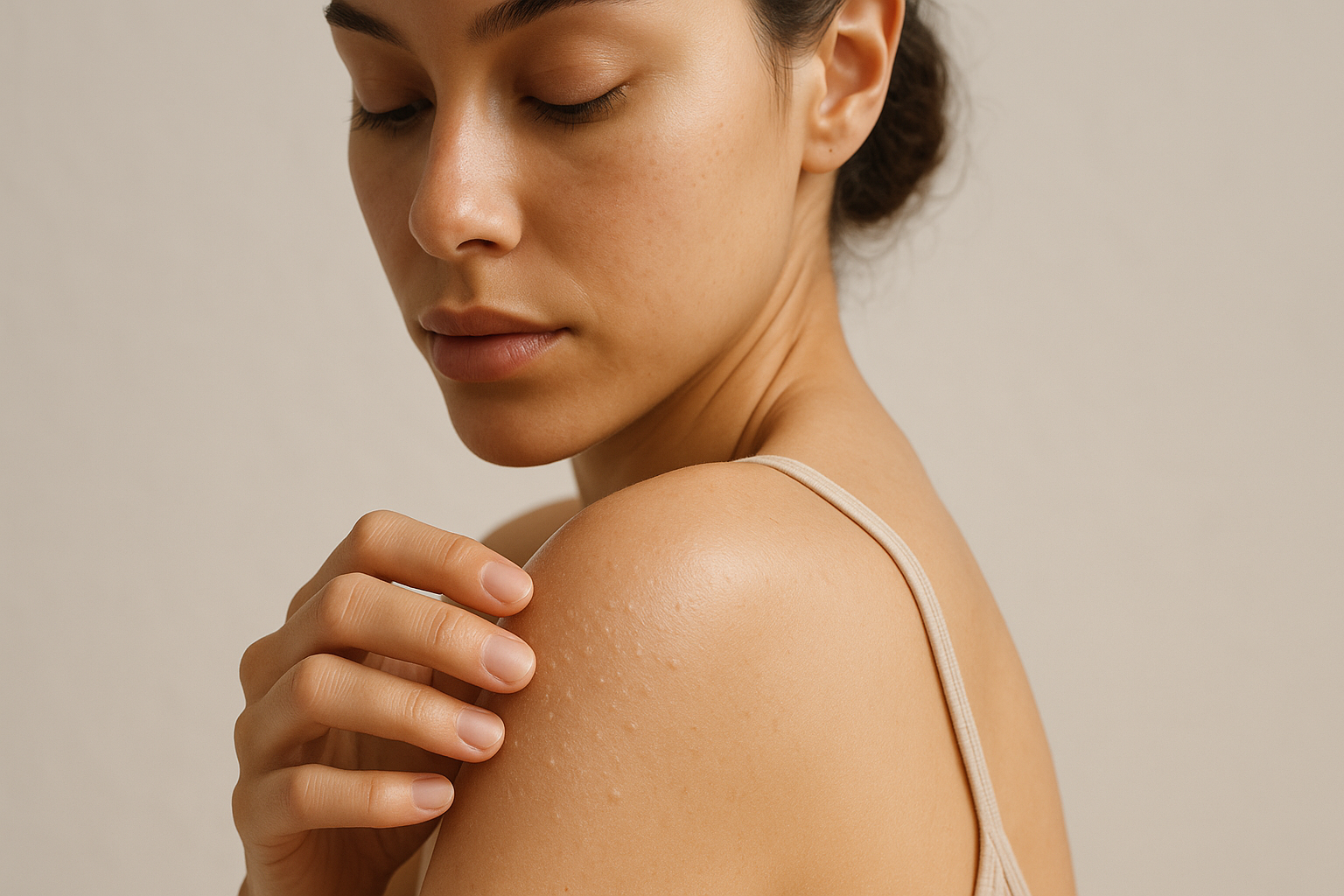
Keratosis pilaris is extremely common — estimated to affect 50–80% of teenagers and around 40% of adults — and is considered harmless (Cleveland Clinic). It happens when keratin builds up around hair follicles, most often on the backs of the upper arms and fronts of the thighs, and gives the classic small, rough, skin-colored "goosebump" look that tends to worsen in winter (DermNet NZ). There's no cure, but gentle exfoliation and moisturizers with urea or lactic acid are standard, and it often fades naturally through the twenties.
Eczema (Atopic Dermatitis)
Eczema is a different story: an inflammatory condition, not just a texture change. It can present as small, rough bumps — particularly common on darker skin tones — alongside dry, scaly patches, and is usually itchy before it looks different, which is why dermatologists sometimes call it "the itch that rashes." It tends to settle at the elbows, knees, wrists and hands in adults, and long-standing patches can thicken and crack (American Academy of Dermatology). Being inflammatory rather than simple dryness, it usually needs more than moisturizer alone, so a persistent itchy patch is worth mentioning to a doctor.
Folliculitis
Folliculitis looks most like a rash of pimples: small, itchy or tender bumps clustered around hair follicles, sometimes with a visible pus-filled center. It's usually caused by bacterial infection (commonly Staphylococcus aureus), though shaving, waxing, tight clothing and poorly maintained hot tubs can trigger it too, and it shows up most on the face, neck, back, chest and any shaved or waxed area (Mayo Clinic). Mild cases clear with basic hygiene, but it's worth medical advice if it spreads, is painful, or keeps recurring.
Milia
Milia are small, firm, white or yellowish bumps rather than skin-colored ones. They form when dead skin cells get trapped under a thin layer of new skin instead of shedding, hardening into tiny cysts, and appear most often on the face — eyelids, cheeks and around the nose. They are completely harmless, aren't caused by dryness the way the conditions above are, and typically clear on their own over weeks to a couple of months; there's no need to pick or extract them (Cleveland Clinic).
Contact Dermatitis
Contact dermatitis is triggered by direct exposure to something the skin reacts to, either an irritant (harsh soap, solvents, detergents) or an allergen (nickel, certain fragrances, poison ivy). It appears within minutes to hours of contact as an itchy, sometimes burning rash with bumps or blisters, confined to wherever the trigger actually touched the skin (Mayo Clinic). Avoiding the trigger is the main fix, and most cases clear within two to four weeks.
| Condition | Typical location | What it feels like | Usual cause |
|---|---|---|---|
| Keratosis pilaris | Upper arms, thighs | Small, rough, skin-colored, not itchy | Keratin buildup around follicles |
| Eczema | Elbows, knees, hands (adults); cheeks (infants) | Rough or scaly, itchy first | Barrier dysfunction plus inflammation |
| Folliculitis | Face, back, chest, shaved/waxed areas | Tender, pimple-like, sometimes pus-filled | Bacterial infection or irritation |
| Milia | Eyelids, cheeks, nose | Firm, white or yellow, painless | Trapped dead skin cells |
| Contact dermatitis | Wherever the trigger touched | Itchy, burning, sometimes blistered | Irritant or allergen exposure |
When Dry-Skin Bumps Need a Doctor, Not Just a Moisturizer
Plain dry-skin roughness and keratosis pilaris are generally safe to manage at home. The American Academy of Dermatology advises seeing a doctor when a bumpy area involves the eyes, lips or genital skin, covers most of the body, blisters, spreads rapidly, is painful, or comes with fever. Signs of infection — pus, golden crusting or spreading redness — also warrant a visit, as does anything not improving after a few weeks of gentle care (American Academy of Dermatology). Nothing here substitutes for that assessment.
Caring for a Compromised Skin Barrier
For everyday roughness from ordinary dryness or keratosis pilaris, the basics matter more than any single product: shorter, cooler showers and consistent moisturizing. It also helps to know what's in the products doing the moisturizing — fragrance and certain solvents can be unnecessarily drying for some people, so it's worth knowing whether fragrance in skincare is a problem and what alcohol denat actually does to skin.
Where SD7 Lipid Serum Fits In
It's worth being clear about what a cosmetic product can and cannot do here. If your bumps turn out to be keratosis pilaris, eczema, folliculitis or another named condition, the right next step is the guidance above and, where the signs point that way, a doctor — not a skincare purchase. SD7 Lipid Serum is a cosmetic formulated to support the skin's lipid layer and improve the look and feel of rough, dry-feeling texture; it is not a treatment for any diagnosed skin condition and should not replace medical care where that's what a bump needs.
Where the bumps really are just ordinary dryness — without itching, spreading or pain — a lipid-rich serum applied to clean, slightly damp skin can be a useful part of a barrier-supporting routine. See SD7 Lipid Serum to find out more about the formula.
Frequently Asked Questions
Are dry skin bumps the same thing as keratosis pilaris?
Not always. Both improve with moisturizing and gentle exfoliation, but keratosis pilaris specifically involves keratin building up around hair follicles and concentrates on the upper arms and thighs. Bumps there with a "goosebump" texture point to keratosis pilaris specifically.
Can moisturizer alone get rid of bumpy skin?
It depends on the cause. Moisturizer helps plain dryness and keratosis pilaris by restoring the skin barrier. It won't resolve folliculitis (often infectious), milia (trapped cysts) or eczema flare-ups on its own, since eczema involves inflammation that usually needs targeted treatment.
How do I know if it's eczema and not just dry skin?
Eczema is usually itchy before it looks different, settles at the elbows, knees, wrists or hands in adults, and can thicken or crack if it persists. Plain dry skin is more uniform, less intensely itchy, and improves within days of moisturizing.
Do dry-skin bumps ever need to be seen by a doctor?
Yes, when they spread rapidly, become painful, blister, weep, involve the eyes, lips or genital area, or come with fever. Bumps not improving after a few weeks of gentle care are also worth a professional opinion.
Can a lipid serum help with rough, bumpy skin texture?
A lipid-rich serum such as SD7 Lipid Serum is designed to support the skin's lipid barrier and help ordinary dry, rough texture feel smoother as part of a consistent routine. It is a cosmetic, not a treatment for keratosis pilaris, eczema, folliculitis or other diagnosed conditions.
This article is for general information and is not a substitute for professional medical advice, diagnosis or treatment. If you are concerned about a rash, bumps or any other skin change, please consult a doctor or dermatologist.