Essential Oils On Skin: Beneficial Or Harmful in Skincare?
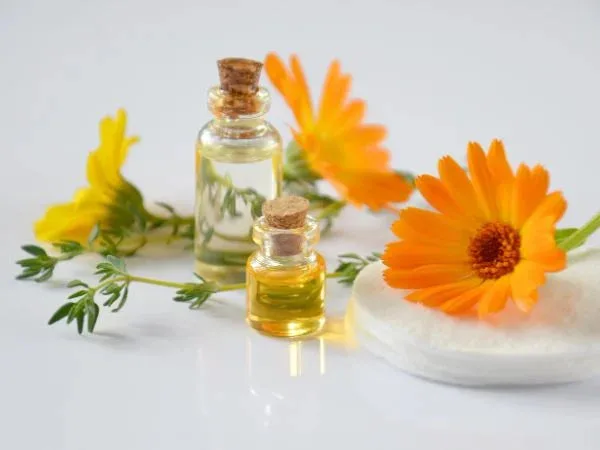
Last updated: 2026-06-25
Lavender, tea tree, rosehip, frankincense — essential oils turn up in countless skincare products, and opinions on them swing wildly between "miracle" and "menace." The truth sits in the middle and depends almost entirely on formulation. Here's what essential oils are, when they help, when they harm, and how to use them safely.
What are essential oils?
Essential oils are concentrated, volatile plant extracts — drawn from flowers, leaves, bark, roots or peel — prized for their aroma and their active plant compounds. Each one is a complex blend of dozens of molecules, some genuinely good for skin (antioxidants like rosmarinic and caffeic acid) and some that can irritate it. That mix is exactly why the same oil can be helpful or harmful depending on how it's used.
Are essential oils harmful to skin?
They can be, if misused. Common fragrance compounds in essential oils — limonene, citronellol, eugenol and linalool — are fine at low, well-formulated levels but can trigger irritation, dryness or contact dermatitis at high concentrations. As a firm rule, never apply neat (undiluted) essential oils directly to skin, and be cautious with strongly scented products: an intense mint or citrus smell often signals a heavy-handed formulation. Certain oils — peppermint, wintergreen, pennyroyal, balm mint and camphor — are particularly prone to irritating skin and are best avoided in leave-on products.
When essential oils genuinely help: the research
Formulated properly and kept well below irritant thresholds, several essential oils have encouraging evidence behind them:
- Safety, done right. A clinical and lab study of a diluted blend of common essential oils (tea tree, lavender, eucalyptus) found the combination non-cytotoxic and non-phototoxic at appropriate levels, and supportive of the skin barrier (PubMed 34986500).
- Anti-ageing. In a 2022 study, UV-aged mouse skin treated with coriander seed extract showed fewer wrinkles and signs of premature ageing, with activity against the enzymes that break down collagen and elastin (PMC9023561).
- Scars and skin damage. Research on Helichrysum italicum found topical formulations improved the appearance of damaged skin and supported wound healing in animal models (PMC8400224).
- Environmental protection. Indian sandalwood oil showed strong antioxidant activity against the environmental stressors that drive premature ageing (Cosmetics, 2021).
These are early or animal/lab studies in many cases, so they point to promise rather than proof — but they show why well-formulated botanical actives earn their place in skincare.
📋 Please note: The products below are daily-care cosmetics that support the appearance of skin. They are not medical treatments, and the studies above describe ingredient research, not product claims.
Choosing well-formulated botanical skincare
The takeaway isn't "avoid essential oils" — it's "choose products that formulate them expertly," keeping the active benefits while holding irritants very low. CallNature's formulas are built on that principle, using botanical lipids at carefully balanced levels:
- SD7 Lipid Serum — an anhydrous, bakuchiol-led facial serum that supports the appearance of smoother, firmer-looking skin.
- ScarDerma Pro — a lipid concentrate (including helichrysum and rosehip) that supports the look of softer, flatter-appearing scars and stretch marks.
How to use essential oils on skin safely
- Never use them neat. Always diluted in a carrier or a properly formulated product.
- Watch the strength. A very strong scent usually means too much fragrance — skip leave-on products that smell overpowering.
- Patch test. Try a small area first, especially if you have sensitive or reactive skin.
- Choose expertise. Buy from brands that understand low-irritancy formulation rather than just adding oils for scent.
Frequently Asked Questions
Are essential oils safe to put on your skin?
Diluted and well-formulated, many are safe and can benefit the skin. Undiluted (neat) essential oils are not safe to apply directly and can cause irritation or contact dermatitis. Concentration and formulation are everything.
Which essential oils help with ageing skin?
Research points to coriander seed, sandalwood and others for antioxidant and anti-ageing effects on the look of skin, when properly formulated. They support appearance rather than acting as a medical treatment.
Which essential oils should I avoid on skin?
Avoid neat oils entirely, and be cautious with peppermint, wintergreen, pennyroyal, balm mint and camphor in leave-on products, as they're more likely to irritate. Strongly fragranced leave-on products are best avoided.
Are the essential oils in SD7 and ScarDerma irritating?
They're formulated as balanced botanical lipid blends designed to keep irritant levels low while supporting the appearance of healthy-looking skin. As with any product, patch test if your skin is sensitive.