Can Tonsil Stones Cause Bad Breath? How to Tell If They're Behind Yours
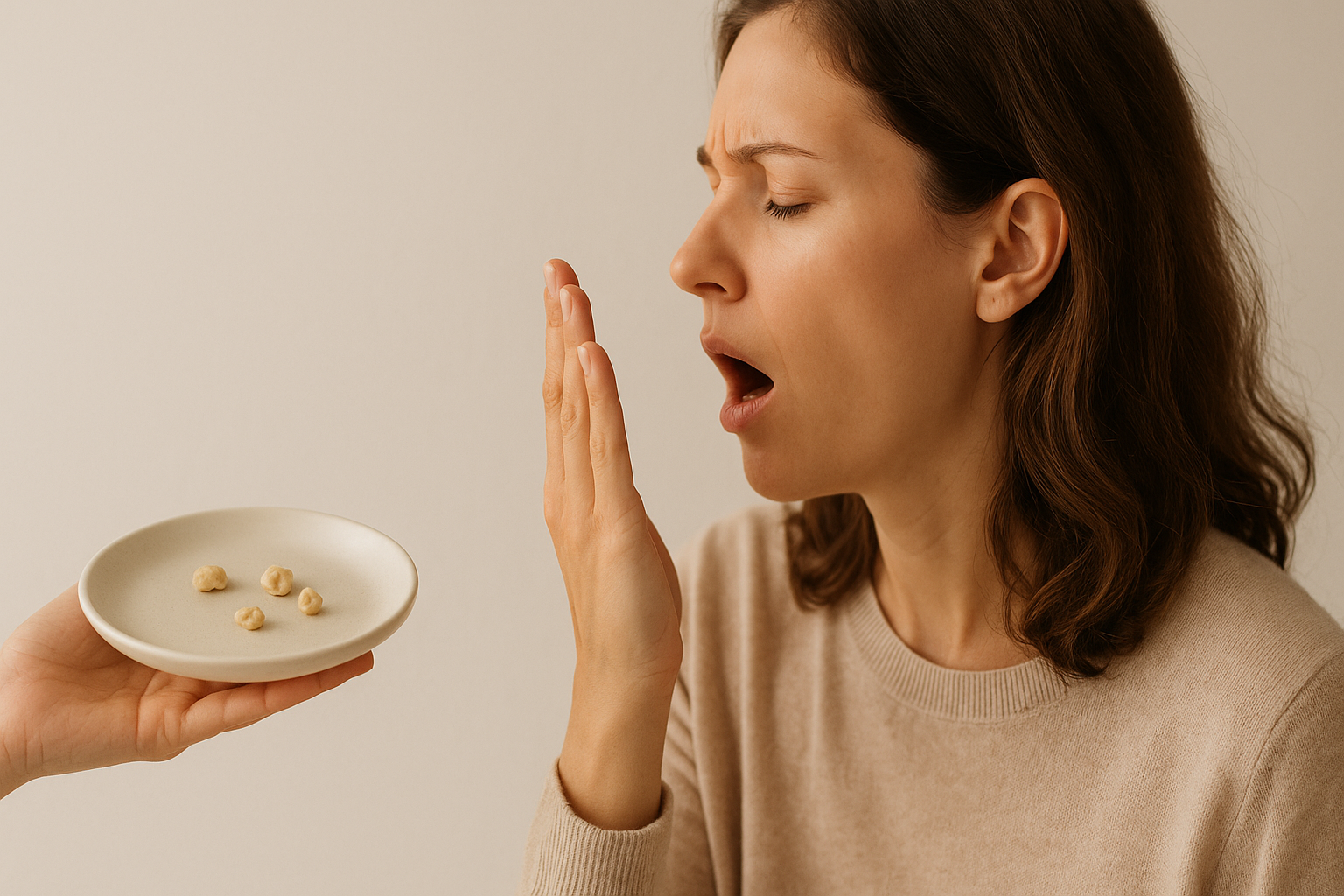
Last updated: 23 July 2026
Quick answer
Yes — tonsil stones are one of the most overlooked causes of persistent bad breath, and if yours survives brushing, flossing and mouthwash, they are a prime suspect. Tonsil stones (tonsilloliths) are small, off-white lumps of trapped food debris, dead cells and bacteria that harden in the crevices (crypts) of your tonsils. The bacteria inside them give off volatile sulfur compounds (VSCs) — the same rotten-egg gases behind most oral bad breath. In one study of patients with chronic tonsillitis, the presence of a tonsil stone was linked to a tenfold higher risk of an abnormal (bad-breath) sulfur reading (Rio et al., British Dental Journal, 2008).
The catch: because the smell comes from the throat, not the teeth, ordinary toothbrushing barely touches it. The fix is to gently dislodge the stones (salt-water gargling, a low-pressure water flosser, or an ENT for stubborn ones), stay hydrated, and keep the whole mouth fresh day to day — a step where an alcohol-free rinse like DP7 Pro Rinse, diluted in water and used as a daily gargle, fits as an example. No rinse dislodges a stone, though — that part is mechanical.
What tonsil stones are (and why they smell)
Your tonsils are not smooth — their surface is folded into pits and tunnels called tonsillar crypts. Food particles, dead cells, mucus and bacteria collect in those crypts, and over time some of that debris calcifies into a firm lump: a tonsillolith, or tonsil stone. They range from a barely-visible speck to a pea, are usually white or pale yellow, and often come loose on their own when you cough or swallow.
The smell is pure microbiology. The bacteria packed inside a tonsil stone are largely anaerobic — they thrive without oxygen and feed on proteins, releasing volatile sulfur compounds (mainly hydrogen sulfide and methyl mercaptan) as waste. Those are the exact gases that smell of rotten eggs and decay. A tonsillolith has been characterised as a dense polymicrobial biofilm — essentially a concentrated, sheltered colony of odour-producing bacteria sitting at the back of your throat (Tonsillolith: a polymicrobial biofilm, Microbiology, 2015). That is why a stone the size of a grain of rice can cause breath out of all proportion to its size.
How strong is the link, really?
Strong, and specifically documented. The most-cited study measured breath sulfur (halitometry) in 49 patients with chronic caseous tonsillitis and found that when a tonsillolith was present, the risk of an abnormal VSC reading rose roughly tenfold, with abnormal readings running about 5× higher than in the normal group (Rio, Franchi-Teixeira & Nicola, British Dental Journal, 2008). A later otolaryngology review likewise concluded that tonsils and tonsil stones are an under-recognised source of halitosis that dental-only work-ups routinely miss (Ferguson, Aydin & Mickel, Otolaryngol Head Neck Surg, 2014).
The practical takeaway: if a dentist has told you your teeth and gums are healthy but your breath still isn't fresh, the tonsils deserve a look. Broad halitosis reviews put the vast majority of bad breath as originating in the mouth and throat rather than the stomach, with the tongue and tonsils the two biggest reservoirs (Halitosis: from diagnosis to management, J Nat Sci Biol Med, 2013).
Is it your tonsils? A quick self-triage
Bad breath has several homes, and the fix depends on the source. Use this to narrow it down — then confirm with a professional.
| Clue | Points toward | First move |
|---|---|---|
| White/yellow specks on the tonsils; metallic or foul taste; smell worse from the throat; occasional "something stuck" feeling | Tonsil stones | Gargle, low-pressure water flosser; ENT if recurrent |
| Smell returns hours after brushing; heavy tongue coating at the back | Tongue bacteria | Tongue scraping + hydration |
| Bleeding, tender or receding gums; smell tied to the gum line | Gum disease | Dentist + daily gum-line care |
| Dry mouth on waking or on medication; "morning breath" all day | Low saliva | Water, sugar-free gum, review meds with GP |
| Sour/regurgitant taste, heartburn, smell after meals | Reflux/GI | See your GP |
A simple at-home check for the tonsil type: look in a mirror with a torch and say "ahh" — visible white flecks in the tonsil crypts, plus breath that seems to come from the back of the throat, is the classic pattern.
How to get rid of tonsil stones (safely) — methods compared
The stones themselves have to be physically dislodged; you cannot brush or swallow-away a calcified lump. Here are the realistic options, safest first.
| Method | How it works | Effectiveness | Safety notes |
|---|---|---|---|
| Salt-water gargle | ~1 tsp salt in warm water, gargle vigorously 15–30s, 2–3×/day | Good for small/loose stones; soothes the throat | Very safe; first-line |
| Low-pressure water flosser | Lukewarm water on the lowest setting, aimed at the crypt to flush the stone out | Good for visible stones you can target | Low pressure only — high pressure can damage tonsil tissue; don't do it if you gag easily |
| Damp cotton swab | Gently ease a visible stone out with a clean, wet swab | Works for accessible stones | Clean swab only (not fingers); stop if it hurts or bleeds — infection risk |
| Coughing / "flexing" the throat | A firm cough can pop loose stones free | Hit-or-miss | Harmless |
| ENT removal | In-office removal for large or deep stones | High | For stones you can't reach or that recur |
| Laser cryptolysis / tonsillectomy | Reshaping or removing the tonsils to stop stones forming | Definitive for chronic cases | Surgical — reserved for severe, recurrent tonsilloliths |
What not to do: don't gouge at your tonsils with hard or sharp objects or your fingernails — you can cut the tissue and drive bacteria deeper, risking infection. If stones are large, painful, or keep coming back, an ENT is the right call (Cleveland Clinic: Tonsil Stones).
Keeping them away (and keeping breath fresh in the meantime)
Prevention is about giving debris less chance to collect and calcify, and keeping the whole mouth–throat environment clean and moist.
- Gargle daily. A nightly salt-water or alcohol-free rinse gargle helps clear loose debris from the crypts before it hardens. Reach the back of the throat, not just the mouth.
- Scrape your tongue. The tongue's back is the other big VSC reservoir; a Cochrane review found tongue scraping produces a small but real short-term reduction in sulfur compounds (Outhouse et al., Cochrane systematic review, 2006).
- Stay hydrated. Saliva is your built-in antibacterial rinse; a dry mouth lets odour bacteria flourish. Sip water through the day and treat any dry-mouth cause.
- Skip harsh, alcohol-based mouthwashes. They dry the tissues and can make breath worse over time; choose alcohol-free.
- Keep teeth and gums genuinely clean. Less oral bacteria overall means less raw material feeding both tongue and tonsil odour.
- See an ENT for a recurring pattern. If stones keep returning despite good habits, get the tonsils assessed.
Where a daily fresh-breath rinse fits: DP7 Pro Rinse
Once the stones are cleared, the day-to-day goal is simple: keep the mouth and throat clean, moist and fresh so debris and odour bacteria have less of a foothold. A gargle you can reach the back of the mouth with is the useful format here — and it should be alcohol-free, because alcohol-based rinses dry the very tissues you want kept moist. DP7 Pro Rinse is one example: a concentrated, alcohol-free botanical rinse that you dilute in water and use as a daily rinse or gargle to help your whole mouth feel and smell fresher.
To be straight about it: no rinse dislodges or dissolves a tonsil stone — removing the stone itself is mechanical (gargling it loose, a low-pressure water flosser, or an ENT). What a daily fresh-breath rinse is for is the everyday freshness step alongside brushing, tongue-scraping and hydration, not a cure for tonsilloliths.
For breath that traces back to the gum line rather than the throat, the companion product is Dental Pro 7 — a water-free botanical lipid concentrate brushed on dry in place of toothpaste and left against the gum line rather than rinsed away, supporting the appearance of firmer, pinker, healthier-looking gums and fresher breath.
Why people trust the range: Dental Pro 7 holds a 4.81/5 rating from 190 verified buyers, is formulated by S. C. Aris, and is backed by a 90-day money-back guarantee, so you can try it against your own routine risk-free. It is free from water, fillers, SLS/foaming agents, fluoride and parabens, and is vegan and non-GMO. See Dental Pro 7 →
Frequently asked questions
Can tonsil stones cause bad breath even if they're tiny? Yes. The odour is from the sulfur-producing bacteria packed inside the stone, so even a rice-grain-sized tonsillolith can cause breath out of proportion to its size. In one study, having a stone was linked to a roughly tenfold higher chance of an abnormal breath-sulfur reading.
Why doesn't brushing fix it? Because the smell comes from the tonsil crypts at the back of the throat, not the teeth. Brushing, and even flossing, never reach the source, which is why tonsil-stone breath survives a normal oral routine.
What's the safest way to remove them at home? Salt-water gargling and a low-pressure water flosser aimed at the crypt are the safest first moves. Avoid hard or sharp objects, which can injure the tonsil and cause infection. See an ENT for large, painful or recurrent stones.
Will mouthwash get rid of tonsil stones? No. An alcohol-free rinse or gargle can help keep the area cleaner and breath fresher day to day, but it will not dislodge or dissolve an existing stone — that has to be done mechanically.
Do tonsil stones keep coming back? They often do if the tonsil crypts are deep. Daily gargling, tongue-scraping and hydration reduce how often they form; for a stubborn recurring pattern, an ENT can discuss options up to removing the tonsils.
This article is educational and about breath freshness and the appearance of healthy gums; it is not medical or dental advice. Persistent bad breath, painful tonsils, or recurring stones should be assessed by a dentist, GP or ENT.
Related reading
- Why does my breath still smell after brushing and flossing?
- Why does my breath smell metallic?
- Why can't I smell my own bad breath?
- Why do I have bad breath? Causes and how to fix it