Why Can't I Smell My Own Bad Breath? (And How to Actually Check)
Last updated: 9 July 2026
Quick answer
You can't smell your own bad breath because your brain deliberately tunes out any smell it is exposed to constantly — a normal, protective process called olfactory adaptation (or "nose-blindness"). The receptors in your nose desensitise to a steady odour within seconds, and your brain then stops flagging it so it can stay alert to new smells. Because your own breath is with you all day, it becomes the ultimate background scent: present but invisible to you, while still perfectly obvious to everyone else. There are also two anatomical quirks — you exhale away from your nose, and you can't inhale and exhale at the same moment — so your nose rarely gets a clean sample of your own breath.
The practical fix isn't to sniff harder; it's to sample your breath objectively (the wrist-lick and spoon tests below), then treat whichever source turns up — a coated tongue, an inflamed gum line and a dry mouth account for most cases. Once you've confirmed there's something to treat, a cosmetic routine such as Dental Pro 7 can round things out — what it can and can't do is covered below. If a test keeps confirming odor, see a dentist to rule out gum disease.
The real reason: your brain is built to ignore your own smell
This isn't a hygiene failing — it's neuroscience working exactly as designed. The scientific name is olfactory adaptation, and it happens in two stages that stack on top of each other.
First, at the nose itself. When odour molecules sit on your smell receptors for a sustained period, those receptors desensitise and stop firing as strongly. Recordings taken directly from the human olfactory epithelium show this peripheral fatigue building within seconds to minutes of continuous exposure (olfactory adaptation study, PMC). Second, in the brain. If a smell is constant and judged harmless, the brain allocates fewer resources to processing it — a filtering mechanism researchers call habituation, which frees up attention for new, potentially important smells (Scientific Reports). Together these mean any smell you are permanently surrounded by — your home, your perfume, your own breath — simply drops out of your awareness.
As the Washington Post puts it, this "nose-blindness" is why the last person to know about someone's bad breath is usually the person who has it. Notably, most people can still detect a new or temporary odour — it's chronic, ever-present breath odour that vanishes from self-perception most completely.
Two anatomical quirks that make it even harder
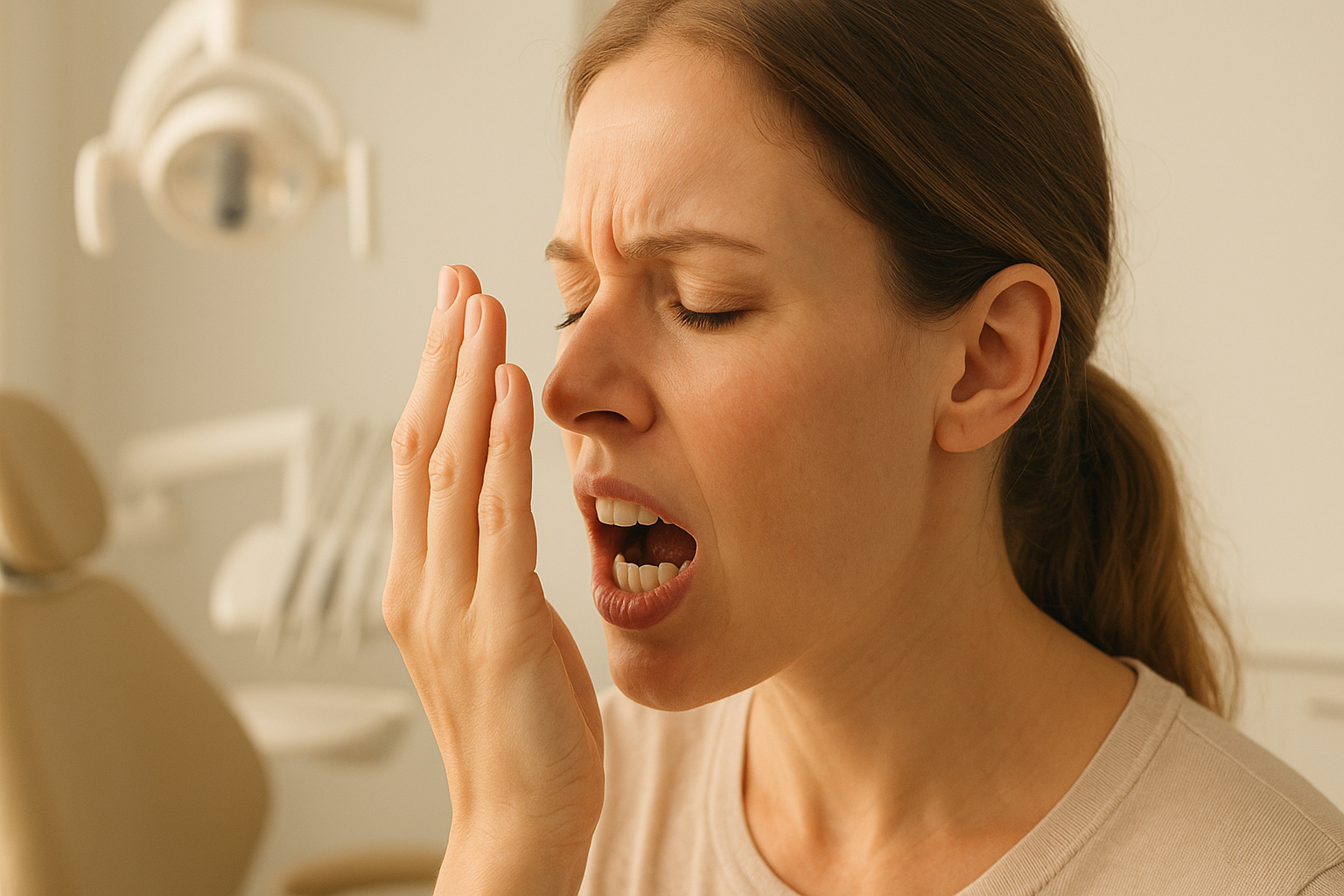
On top of adaptation, the plumbing works against you. As HowStuffWorks explains, when you exhale, air leaves your mouth travelling forward and down — not up into your nostrils. And because you cannot inhale and exhale at the same instant, you can't breathe out and sniff that same breath simultaneously. Cupping your hands over your mouth and "huffing" fails for the same reason: you're mostly smelling your palms, and the breath has already escaped by the time you inhale. Your nose almost never gets a clean, fresh sample of what leaves your mouth — which is why you need an indirect test.
How to actually check your own breath (ranked by accuracy)
Since you can't trust your nose in real time, you sample the odour onto a surface, let the volatile sulfur compounds concentrate, then smell that. Here's how the common home tests really compare.
Home breath-test accuracy, compared
| Test | How to do it | How reliable | Best for |
|---|---|---|---|
| Back-of-tongue wrist lick | Lick the inside of a clean, dry wrist using the back of your tongue, wait ~10 seconds for it to dry, then smell it. | Most reliable at home. Samples the odour-rich back of the tongue and lets sulfur compounds concentrate as saliva dries. | A quick, honest daily check. |
| Spoon / tongue-scrape test | Gently scrape the back third of the tongue with an upturned spoon; let the residue dry a few seconds; smell it. | High. Goes straight to the number-one source and shows the coating visually too. | Pinpointing a tongue-coating source. |
| Floss-sniff test | Smell the floss after cleaning between back teeth. | Moderate. Reveals gum-line and between-teeth odour, not tongue odour. | Checking a gum-line source. |
| Ask someone you trust | Ask a partner or close friend directly. | High — but awkward. Their nose isn't adapted to your breath, so they get the honest signal you can't. | A reality check when tests disagree. |
| Cup-hands and huff | Breathe into cupped hands and sniff. | Low — unreliable. You smell your palms; the breath escapes before you inhale. | Not recommended. |
| Dentist's halitometer | A clinical device that measures sulfur gases in parts per billion. | Gold standard. Objectively quantifies the odour and tracks change over time. | Persistent odour despite good hygiene. |
Key caveat: the wrist and spoon tests tell you whether volatile sulfur compounds are present — not where they come from. And because most odour is made at the very back of the tongue, if your home test smells bad, what others actually smell is usually a little worse. Portable breath-meter studies confirm home and even portable devices are useful screens but not diagnostic on their own (portable halitosis-meter accuracy study, PMC).
A few rules make these tests fairer. Test when your mouth is at "baseline" — a few hours after eating, not straight after coffee, mints or mouthwash, which mask the result (Healthline). Make sure the wrist is clean and free of lotion or perfume. And use the back of the tongue for the lick test — the front is fairly self-cleaning and will under-report. One rinse habit skews results in particular: a strong alcohol-based mouthwash can leave a test reading falsely fresh for a few minutes, then falsely bad once the drying rebound sets in — so give it a few hours' gap before you test (more on why so many mouthwashes fail this way in the long run).
If the test confirms it — what's behind it
A positive wrist-lick or spoon result confirms that volatile sulfur compounds are present — it doesn't say why. In practice the source is almost always one of a short, familiar list: tongue coating, the gum line, a dry mouth, tonsil stones, sinus drainage, or, less often, reflux, diet or medication. Each has a different fix, and we cover the full cause-by-cause picture — including exactly why brushing and flossing miss each one — in our companion guide, why breath still smells after brushing and flossing (see also our broader roundup, why do I have bad breath).
Once you've confirmed it: what a cosmetic routine can (and can't) do
If your wrist-lick or spoon test comes back positive, the obvious next question is what to actually reach for. Dental Pro 7 is a water-free botanical lipid concentrate you brush on dry in place of toothpaste and leave in place rather than rinse away; DP7 Pro Rinse is the diluted, swish-and-spit companion for anyone who prefers a rinse.
Here's the honest framing, precisely because this article is about learning what your breath actually smells like rather than guessing: Dental Pro 7 and DP7 Pro Rinse are cosmetics. They're formulated to support fresh breath, the appearance of healthier-looking gums and a clean feel after use — they do not treat halitosis, gum disease or any other condition, and they are not formulated to target or kill bacteria. If your self-test keeps coming back positive after a couple of weeks of consistent use, that's a signal to see a dentist, not a reason to brush harder or use more. Used alongside brushing, flossing and a daily tongue habit, a routine like this is the finishing step for a mouth you already know is clean — it isn't a substitute for finding out why it wasn't.
Across 190 verified buyers it averages 4.81 out of 5, with over 500,000 bottles sold and a 90-day money-back guarantee behind it. Explore Dental Pro 7.
Self-check FAQ
Why can't I smell my own bad breath even when others notice it? Your smell receptors desensitise to any constant odour within seconds, and your brain filters it out to stay alert to new smells — a normal process called olfactory adaptation, or nose-blindness. Because your breath is always with you, it becomes invisible to you but not to others.
What's the most accurate way to check my own breath at home? Lick the inside of a clean, dry wrist with the back of your tongue, wait about ten seconds, and smell it — or scrape the back of your tongue with a spoon and smell the residue. Both sample the odour zone your nose ignores. A dentist's halitometer is the objective gold standard.
Is the cup-your-hands-and-breathe method reliable? No. You mostly smell your palms, and the breath escapes before you inhale. Use the wrist-lick or spoon test instead.
Can mouthwash throw off a self-test? Yes. Alcohol-based rinses dry the mouth, which encourages the bacteria that cause odor, so a strong rinse can read fresh for a few minutes and then worse an hour later — give it a few hours' gap before you test, and switch to alcohol-free for everyday use.
When should I see a dentist? If a test keeps coming back positive after a few weeks of consistent tongue-cleaning and hydration, or your gums bleed, book a dentist — gum disease, decay, tonsil stones and reflux are all worth ruling out.
The bottom line
You can't smell your own bad breath because your brain is doing its job: it filters out constant smells so it can notice new ones, and your own breath is the most constant smell there is. Don't try to sniff harder — sample it objectively with the back-of-tongue wrist or spoon test, then treat the real source: the tongue coating, the gum line or a dry mouth. Clean the back of the tongue daily, stay hydrated, skip the drying alcohol rinse, and if a confirmed odour lingers, let a dentist take a look.
This piece is about finding out, objectively, what your own breath actually smells like. A home test is a screening step, not a diagnosis, and this isn't medical or dental advice in any form. Product mentions describe cosmetics only, judged by feel and scent, never as a treatment. If a test keeps confirming odor, that's worth a dentist's opinion.