Private vs NHS Dentist for Periodontal Care, Which Should You Choose?
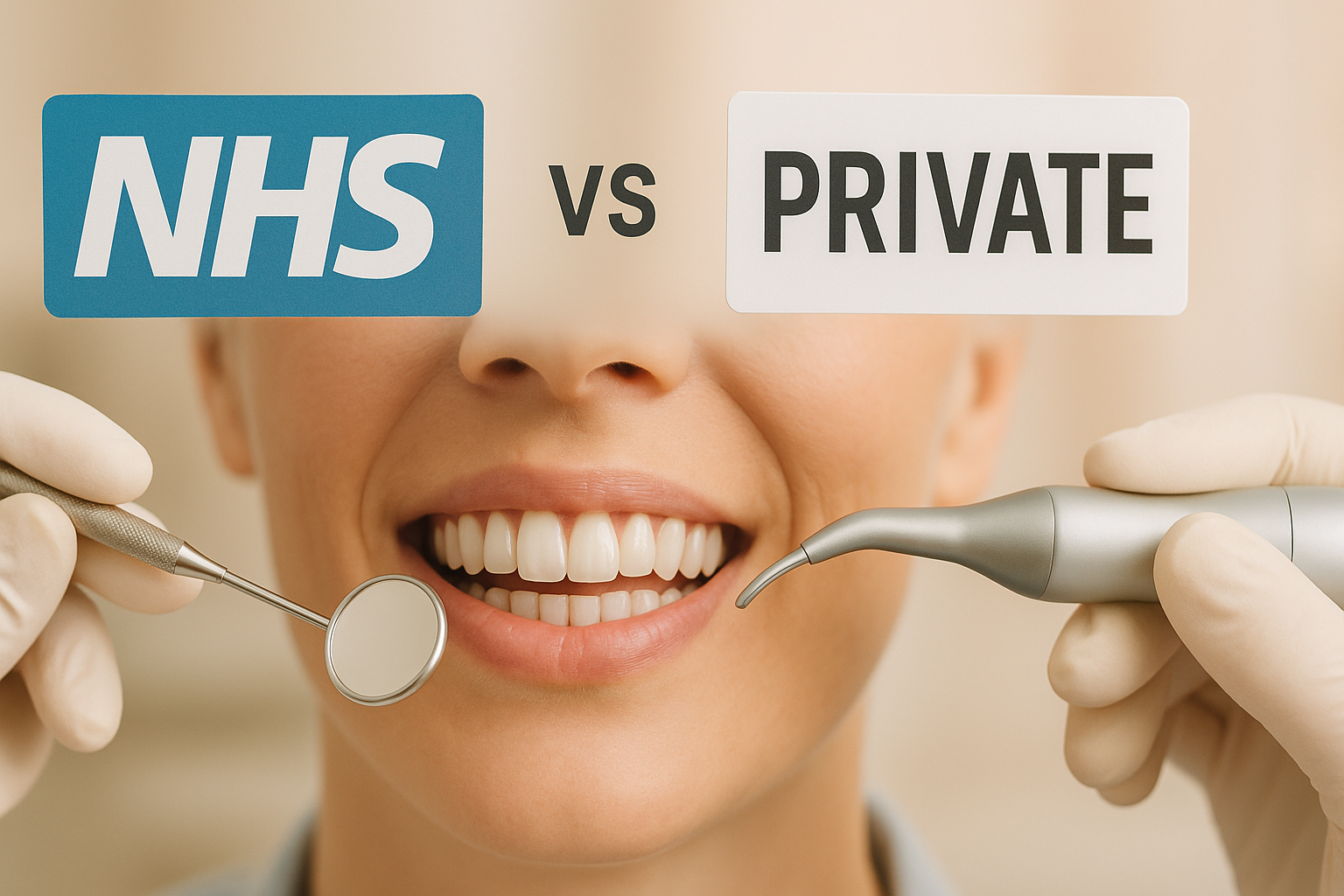
Quick Answer. Private vs NHS Dentist for Periodontal Care, Which Should You Choose? In short, choose the pathway that reliably gives you access, enough time in the chair, and clear home‑care coaching. NHS dentistry delivers clinically necessary periodontal care at set fees, but appointments can be limited. Private clinics often provide shorter waits, longer sessions, and optional refinements (like air‑polishing) that many people appreciate for a freshly‑polished feel and a more defined gum line. [1]
What’s the real difference between NHS and private periodontal care in the UK?
Both NHS and private dentists follow evidence‑based periodontal protocols. The core steps—assessment, biofilm and calculus removal, and structured maintenance—are consistent. The bigger differences usually lie in time allocation, how often you’re reviewed, and whether optional extras are offered to enhance comfort, finishing, and freshness. [2]
The NHS focuses on care that is clinically necessary to secure oral health, delivered within a nationally defined charging framework. Private care can add extended assessments, longer or more frequent hygiene sessions, and adjunctive options designed to leave teeth feeling freshly polished and the gum line looking more defined. Neither route guarantees results on its own; outcomes depend heavily on your daily plaque control and how well you follow tailored guidance. [3]
Recent research strengthens this point. An intensive at‑home plaque‑control regimen can influence the oral microbiome after nonsurgical periodontal care, underscoring how much value there is in clear, practical coaching between visits (Li et al., 2025, J Periodontol, PMID 39925335). So, when comparing routes, ask as much about maintenance planning and home‑care support as you do about the in‑chair procedures.
96% of Dental Pro 7 customers reported visible improvement in gum appearance Source: 303 approved product reviews for Dental Pro 7 product line (2023–2025)
How do access and appointment length typically compare—and why does this matter?
In many parts of the UK, NHS appointment availability is tight. Private practices may offer shorter waits and more flexible scheduling. Longer sessions aren’t just a luxury—they allow careful, unhurried instrumentation, detailed review of brushing technique, and finishing steps that leave a high‑shine feel.
If you build deposits quickly, have challenging root anatomy, or simply prefer a slower, more methodical pace, visit length can make a visible difference to how clean and refined your mouth feels after each session. In my experience, patients who receive enough time for tailored coaching do better between visits because they understand exactly what to do at home—and why.
| Aspect | NHS | Private |
|---|---|---|
| Typical wait to start care | Variable; can be longer in high‑demand areas | Often shorter with greater scheduling flexibility |
| Minutes per hygiene/periodontal session | Commonly 20–30 minutes (local variation) | Commonly 40–60+ minutes (practice dependent) |
| Maintenance interval options | Clinically necessary recalls; may be 3–12 months | Wider choice; 6–12 weeks to 6 months based on risk |
| Adjunctive finishing (e.g., air‑polishing) | Less commonly available | More commonly available |
| Home‑care coaching time | Focused essentials within appointment limits | Often expanded, with personalised kits and reviews |
| Costs | Set NHS bands for necessary care | Fee per item or plan; varies by time and technology |
Before you decide, ask each practice three practical questions: What is the usual wait to start? How many minutes are allocated per visit for my case? How often will maintenance be offered over the first 12 months?
Which technologies and adjuncts might appear privately more than on the NHS?
Private clinics may offer air‑polishing with different powders to disrupt biofilm and refine surfaces, which many people find comfortable and effective for stain removal. A recent narrative review discussed antimicrobial performance and soft‑tissue safety considerations for various powders (Ifrim et al., 2025, PMID 41590778).
Some practices explore electrolyzed saline as a chairside aid for biofilm disruption; in vitro work shows activity against periodontal pathogens, but real‑world use varies (Zayed et al., 2024, PMID 38185942). These adjuncts aren’t a must for everyone, but they can be valuable options for select cases where added refinement or comfort is desired.
Equally important, many private clinics emphasise intensive home‑care programmes. That aligns with evidence showing that robust at‑home plaque control can shape the post‑therapy microbiome (Li et al., 2025). Regardless of where you’re seen, ask for a clear daily plan tailored to your mouth—brush type, interdental sizes, rinse timing, and how to track progress.
How should people with diabetes, high blood pressure, or obesity choose between NHS and private care?
Medical history matters. Diabetes and obesity are linked with higher periodontal risk profiles; many people in these groups benefit from closer maintenance intervals and reinforced daily plaque control (Rahman et al., 2023, PMID 36839184). Research also explores adjuncts used alongside nonsurgical care in diabetes—for instance, trials looking at melatonin as an add‑on strategy (Sarac Gul et al., 2024, PMID 38055628). These are clinical decisions that should be made jointly with your dentist and GP.
There is active interest in the relationship between periodontal status and blood pressure regulation (Lima et al., 2024, PMID 39264471). Disclose your medications and overall health so your dentist can coordinate safe appointment timing and monitoring.
Choosing a route—NHS or private—comes down to reliability of access, the ability to book the review frequency you need, and how well the practice will support your day‑to‑day routine. If NHS access is limited where you live, private maintenance visits can fill the gap while you remain registered for essential NHS care.
When to see a dentist or periodontist
If you notice ongoing bleeding on brushing, gum soreness, recession that seems to be progressing, a wobbly tooth, or a bad taste that doesn’t shift, book a dental appointment promptly. Early professional care and a strengthened home routine can prevent problems from escalating. If access is delayed locally, seek an urgent slot or consider a private assessment to get started.
What does effective aftercare look like, and who provides stronger coaching and maintenance planning?
Sustained plaque control after in‑chair care is pivotal. The quality of your daily routine is what stabilises gums between visits. Evidence now shows that an intensive antiplaque approach can even influence the microbiome after periodontal care (Li et al., 2025).
Ask how each practice structures maintenance: Will you have periodontal indices measured again? What’s the interval plan (for example, 8–12 weeks initially, then 3–6 months)? How much time is reserved for personalised instruction on brushing, interdental cleaning, and rinsing? Private plans often include more frequent hygiene sessions and personalised home‑care kits, while NHS practices provide clinically necessary follow‑up within available appointment time. Local variation is significant—so always ask.
Between visits, consider a simple, high‑impact routine:
- Use a powered brush with a soft head for two minutes, angling towards the gum margins.
- Size and use interdental brushes where they fit; floss tight contacts daily.
- Use a dentist‑recommended mouthwash as directed, keeping it separate from brushing if advised.
- Optional: a supportive concentrate can be massaged along the gum line to maintain a freshly‑polished feel and help neutralise odour‑causing impurities for long‑lasting fresh breath. One example is Dental Pro 7—a professional‑strength, lipid‑based gum care concentrate with 100% Lipid Potency, designed to complement your daily routine for healthier‑looking gums and a visually elevated gum line. It is not a medical fix.
How do costs, payment models, and value compare for ongoing periodontal management?
NHS fees follow set bands for clinically necessary care in England; see the official overview for current charges (NHS dental charges). Private fees vary by region, practice, time per visit, and adjunctive options. Many private clinics offer plans that spread the cost of hygiene and check‑ups across the year.
Value isn’t just price per session—it’s whether the plan matches your risk level. If you have higher risk factors or rapidly accumulating deposits, shorter intervals and extended visits can be worthwhile. In some areas, that’s easier to schedule privately. Always request a written 12‑month plan with estimated total costs for both routes so you can compare like‑for‑like.
For general background on gum disease, the NHS has a clear overview of causes and care options (NHS: gum disease), and the World Health Organization outlines oral health basics (WHO oral health fact sheet).
Can you mix and match NHS essentials with private add‑ons for periodontal care?
Yes, many people do exactly this. Use the NHS for essential periodontal care and add occasional private hygiene or finishing visits for enhanced freshness and appearance. This hybrid approach can be cost‑effective while still delivering the longer sessions or adjuncts you prefer.
To make it work, ask both providers to share records and agree on roles. Clarify which elements are essential and which are optional upgrades so you avoid duplicated appointments or conflicting advice. In my practice, shared care works best when we all communicate clearly—especially around maintenance intervals and home‑care goals.
If you’re weighing home‑care extras, see our guide to everyday products that support gum line appearance: What Is the Best Toothpaste for Receding Gums, and How Do You Choose?
What should you ask at a consultation to make a confident choice?
Arrive with a short list and request specifics, not generalities. Helpful questions include:
- How many minutes are allocated per periodontal session for my case, and how often will I be reviewed over the next year?
- Which adjunctive options are available (for example, air‑polishing), and what is the expected benefit for biofilm control and a freshly‑polished result?
- What home‑care programme will you coach me through—brush type, interdental sizes, rinse timing—and how will we measure visible improvement over time?
- What will my 12‑month plan and total estimated cost look like on the NHS versus privately?
What questions come up most often about NHS vs private periodontal care?
Is NHS periodontal care enough if I have moderate gum disease signs?
Often, yes—if you can access appointments and commit to meticulous home care. The NHS provides clinically necessary procedures. If you need longer sessions, closer reviews, or optional finishing, private add‑ons can complement NHS care.
Why do private periodontal visits sometimes feel longer or more detailed?
Private clinics often schedule more time per visit, allowing slower instrumentation, more personalised coaching, and optional adjuncts like air‑polishing. This can be helpful for heavy deposits or complex sites.
Can I have my essential care on the NHS and pay privately for extra hygiene polishing?
Yes. Many people use the NHS for essential procedures and add private hygiene sessions or finishing for a freshly‑polished feel and a more defined gum line. Ask both providers to share records to avoid duplication.
How often should I book maintenance if I have diabetes or I’m overweight?
You may be advised to attend more frequently and maintain a reinforced plaque‑control routine. Discuss interval length with your dentist or hygienist and ensure it suits your medical history and daily schedule.
Are new adjuncts like air‑polishing or electrolyzed saline necessary for everyone?
Not for everyone. They are options that some clinics offer to refine biofilm control and comfort. Your dentist will advise if these align with your case and goals.
What home‑care routine gives the biggest visible improvement between visits?
Consistent twice‑daily brushing with a powered brush, daily interdental cleaning matched to your spaces, and a guided rinse plan typically deliver the most visible gains in cleanliness and freshness.
Bottom line: choose the pathway that reliably provides timely access, enough minutes per visit, and practical coaching you can act on every day. For some, that’s NHS care alone. For others, it’s a hybrid plan or fully private maintenance with optional adjuncts and finishing. Either way, your daily routine is the anchor. A supportive addition—such as a professional‑strength, lipid‑based gum care concentrate like Dental Pro 7—can sit neatly alongside your brushing and interdental work to keep teeth feeling freshly polished and breath fresh, without replacing clinical care. If you’re still unsure, book two consultations—one NHS, one private—and compare written 12‑month plans, minutes per session, adjunct availability, and how your home‑care will be reviewed.
| Metric | Finding | Source |
|---|---|---|
| Gum disease prevalence (US adults) | 47.2% | CDC, 2024 |
| Adults with severe periodontitis | 9.0% | CDC, 2024 |
| Link to systemic health | Established association | NEJM, 2017 |