Why Did My Gums Start Bleeding After I Quit Smoking? (The Unmasking Effect)
Last updated: 5 August 2026
Quick answer
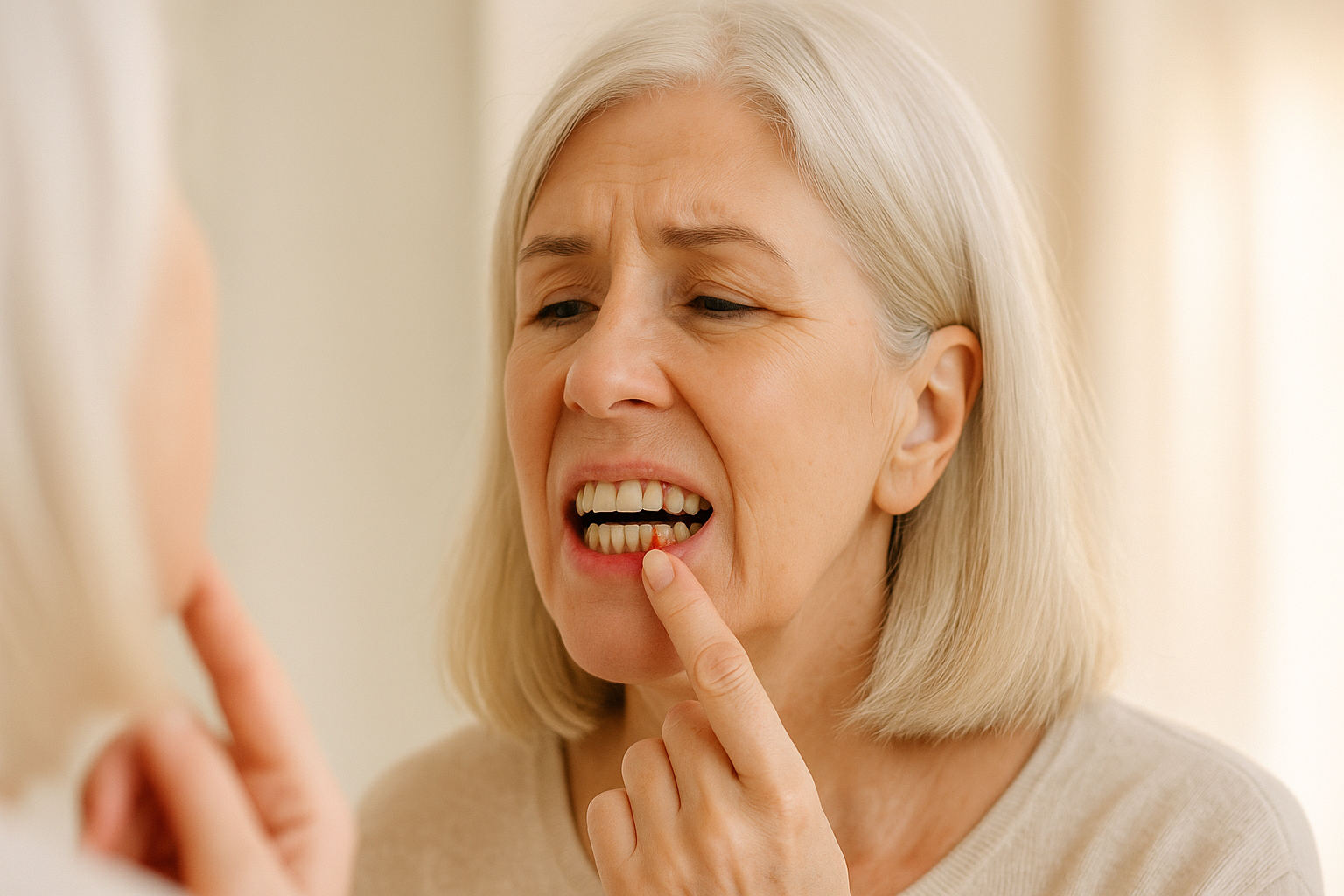
If your gums started bleeding in the weeks after you stopped smoking, the most likely explanation is not that something got worse — it is that something became visible. Nicotine constricts the small blood vessels in the outer layers of the gum, which suppresses the bleeding and redness that inflamed gums would otherwise show. The American Academy of Periodontology states plainly that the chemicals in tobacco "can hide the symptoms commonly associated with periodontal disease, such as bleeding gums." When the nicotine goes, the concealment goes with it. A frequently cited 2003 study in the Journal of Clinical Periodontology followed 27 people through a quit programme and found bleeding on probing rose from 16% of sites to 32% of sites over four to six weeks — and that happened despite the participants' oral hygiene improving.
So the practical rule is this: new bleeding in the first six to eight weeks after quitting, alongside better brushing, that is settling rather than spreading, is usually the unmasking effect. Bleeding that is still worsening after two to three months, or that comes with loosening teeth, pus, or gums pulling away from the teeth, is a reason to book a dental appointment rather than wait it out. Whatever the cause, this is the period when a gentle, non-abrasive daily routine matters most — some people at this stage switch to a water-free botanical concentrate such as Dental Pro 7 in place of foaming toothpaste, which we cover further down.
Why nicotine hides bleeding gums
Gum bleeding is an inflammatory signal. When plaque sits along the gum line, the tissue responds by increasing blood flow and becoming more permeable — which is why inflamed gums look redder and bleed when disturbed. That whole response depends on blood actually reaching the surface tissue.
Smoking interferes with exactly that step. The Australian & New Zealand Academy of Periodontics describes it directly: the traditional signs of periodontal disease — redness, bleeding, bad taste — are "masked by smoking, misleading the patient into thinking they do not have periodontal disease," and it does this "mainly by reducing blood flow to the outer layers of the gums." Their write-up goes on to describe precisely the situation you are in: "patients able to quit smoking often see a sudden and transient increase in bleeding, not because the disease is getting worse but because the mask has been removed, allowing the redness and bleeding that is occurring deep within the gums to also be seen on the surface." (Australian & New Zealand Academy of Periodontics)
The AAP adds the consequence of that masking: because the usual warning sign is muted, "necessary treatment is often delayed, allowing the disease to advance in severity." (American Academy of Periodontology)
This matters because smoking is not a minor risk factor here. The National Institute of Dental and Craniofacial Research puts it in one sentence: "There are several risk factors for gum disease, but smoking is the most significant." (NIDCR) The ANZ Academy estimates smokers are between 270% and 700% more likely to have significant periodontal disease than non-smokers. So a smoker whose gums never bled was not a smoker with unusually good gums — more often, they were a smoker whose gums could not show their hand.
The study that put a number on it
The clearest measurement of this comes from Nair and colleagues at Guy's, King's and St Thomas' School of Dentistry, published in the Journal of Clinical Periodontology in 2003. Twenty-seven people on a quit-smoking programme were examined over a four-to-six-week period. Bleeding on probing — measured with a constant-force probe, so the pressure applied was standardised rather than left to the examiner's hand — increased from 16% of sites to 32% of sites. Crucially, the paper notes this happened "despite improvements in the subjects' oral hygiene." (Nair et al., J Clin Periodontol 2003;30(5):435–7)
That last clause is the whole point, and it is the sentence most articles on this topic leave out. The people in the study were brushing and flossing better, and their gums bled more. If bleeding were a simple readout of how clean your mouth is, that result would be impossible. It is only explicable if bleeding is a readout of the inflammatory response — and if smoking had been suppressing that response.
The authors' conclusion is that tobacco smoking affects the inflammatory response, and that these changes settle back once someone quits.
The first 12 weeks: what is actually happening
Here is a timeline that assembles what named authorities say about the mouth and the body over the same period. Most quit-smoking timelines cover lungs and heart; most gum-bleeding articles cover neither. This puts the oral events on the same axis as the systemic ones.
| Time since your last cigarette | What the body is doing | What you may notice in your mouth |
|---|---|---|
| 8–48 hours | Oxygen levels recovering; carbon monoxide in the blood halves by 8 hours and reaches non-smoker levels by 48 hours (NHS) | Taste and smell start improving from around 48 hours (NHS) — which is also when some people first notice they can taste that their breath is off |
| Week 1–2 | Peak nicotine withdrawal | The window in which mouth ulcers most commonly appear — around 40% of quitters get them, mostly in these first two weeks (McRobbie et al.) |
| Week 2–6 | Circulation improving through the 2–12 week window (NHS) | The bleeding-on-probing rise measured by Nair et al. — 16% to 32% of sites over 4–6 weeks. Gums may look pinker and more obviously inflamed simply because blood is reaching them |
| By week 4 | — | Ulcers have resolved in 60% of those who got them (McRobbie et al.) |
| Week 6–12 | Circulation improvement completing (NHS) | The window in which unmasking-type bleeding should be levelling off and then reducing as plaque control takes effect. Still bleeding more each week? That is your cue to get assessed |
| 3–9 months and beyond | Lung function improving by up to 10% (NHS) | The AAP's position: "Quitting seems to gradually erase the harmful effects of tobacco use on periodontal health." The ANZ Academy is blunter — "ultimately the gums of ex-smokers become the same as never smokers" |
Systemic timings from NHS Better Health; ulcer data from McRobbie, Hajek & Gillison, Nicotine & Tobacco Research 2004; bleeding data from Nair et al. 2003.
Unmasking, or getting worse? How to tell them apart
This is the question that actually matters, and it is the one the top search results tend to answer with "it's probably fine." It is not always fine. The honest answer is that the two look similar in week two and quite different by week ten. Use the trajectory, not the snapshot.
| Signal | Consistent with unmasking | Warrants a dental assessment |
|---|---|---|
| Timing of onset | Started within days to a few weeks of quitting | Started months after quitting, or long predates the quit |
| Direction of travel | Peaks in the first month or two, then eases as plaque control improves | Still increasing at 8–12 weeks despite good, gentle cleaning |
| Where it bleeds | Fairly widespread and even, especially between teeth | Concentrated at one or two teeth — see why gum problems localise to a single tooth |
| What comes with it | Mild soreness, tenderness while brushing, gums looking redder | Loose teeth, pain on chewing, pus, or gums pulling away so teeth look longer — all listed by NIDCR as symptoms of gum disease |
| Breath | Improves as taste, smell and cleaning improve | Persistent bad breath that does not shift — NIDCR lists this among gum disease symptoms; see breath that persists after brushing and flossing |
| Response to better cleaning | Bleeding sites reduce over 4–8 weeks of consistent gentle cleaning | No change, or worse, after two months of genuinely consistent cleaning |
One more thing worth stating clearly: unmasking does not mean nothing is wrong. It means the inflammation was already there and you could not see it. If bleeding appears after quitting, the correct interpretation is not "my gums have got worse" and it is not "everything is fine" — it is "I now have accurate information about my gums for the first time in years, and I should act on it." A periodontal assessment measures pocket depths with a probe; NIDCR notes that in a healthy mouth those pockets are usually between 1 and 3 millimetres, and deeper pockets can be a sign of periodontal disease.
The mouth ulcers nobody warned you about
While we are here: if you have also developed mouth ulcers since quitting, you are in a very large group — and it is not the medication. McRobbie, Hajek and Gillison studied 1,234 smokers attending a large cessation clinic who had achieved at least a week of biochemically validated abstinence. Around 40% developed mouth ulcers after stopping, mostly in the first two weeks. The problem was generally mild, though 8% reported severe ulceration, and the ulcers had resolved within four weeks in 60% of those affected.
Their conclusion is worth quoting because it addresses the exact worry people have: "Patients should be reassured that the lesions are a result of stopping smoking and not a side-effect of smoking cessation medication." Ulcer ratings were slightly higher in the first week for people using oral nicotine replacement products than for those on patches, nasal spray or bupropion — but not after that. The NHS lists mouth ulcers among the less common effects of quitting and notes that these symptoms are temporary.
If ulcers are the issue rather than bleeding, our guide to what causes canker sores covers the sodium lauryl sulfate angle, which is relevant here: a foaming toothpaste is a poor companion to an already-sore mouth.
What to actually do in the first 90 days
The window immediately after quitting is unusually productive for gum health, for a mechanical reason: the AAP notes that smoking "reduces the delivery of oxygen and nutrients to the gum tissues, weakening the body's defense mechanisms," slowing healing and making treatment results less predictable. Removing that handicap is why the ANZ Academy calls quitting "the single most important action a patient can take to help control their periodontal disease." The work you do now lands better than the same work would have done six months ago.
1. Book the assessment, and say you have just quit. This is the single highest-value action. Tell the practice you stopped smoking recently and have started bleeding — it changes how they read your chart, because they will know your previous readings were probably flattered.
2. Do not stop cleaning the bleeding areas. The near-universal instinct is to avoid the tender, bleeding spots. That leaves plaque exactly where the inflammation is. Clean them gently and thoroughly rather than avoiding them.
3. Go gentler, not harder. Bleeding gums invite aggressive scrubbing, which causes its own damage — see receding gums from brushing too hard. Soft bristles, light pressure, angled towards the gum line, small movements.
4. Clean between the teeth daily. Interdental brushes or floss reach the sites a brush misses, which are disproportionately the sites that bleed. NIDCR lists interdental brushes, picks and water flossers alongside floss as acceptable options.
5. Reconsider what is on the brush. A mouth in this state — possibly ulcerated, definitely inflamed — is a poor match for a high-foaming, high-abrasion paste. This is where a water-free formula has a structural advantage, covered below.
6. Track it weekly, not daily. Bleeding varies day to day. Note roughly how many sites bleed once a week. The trend over six weeks is the signal; a single bad morning is noise.
7. Do not resume smoking to stop the bleeding. It would work, in the sense that a blindfold works. The bleeding would subside because the blood supply to the surface tissue would be constricted again — while everything the CDC documents continues. Adults 65 or older who currently smoke are twice as likely to have untreated cavities as those who never smoked, and about 43% of them have lost all their teeth. (CDC)
Why a water-free formula suits this particular window
Most toothpastes and mouthwashes are water-based. Water-based actives dilute in saliva and are gone within seconds of spitting or rinsing. For a mouth that is inflamed, tender, possibly ulcerated and being cleaned more carefully than it has been in years, that is a poor delivery model — and the foaming agents in conventional paste are an added irritation on already-sore tissue.
Dental Pro 7 is built on the opposite principle. Formulated by S. C. Aris, it's a water-free botanical lipid concentrate brushed on gently in place of toothpaste and left against the gum line rather than rinsed away — a gentler match for tissue that's already tender than a foaming, water-based paste — and it supports the appearance of firmer, pinker, healthier-looking gums as things settle. There is no water, no SLS or foaming agents, no fluoride, no parabens or preservatives and no fillers. It is vegan and non-GMO. (It naturally contains eugenol, limonene and linalool; the facility also handles nut lipids.)
Dental Pro 7 is rated 4.81 out of 5 from 190 verified buyers, with over 500,000 bottles sold, and is backed by a 90-day money-back guarantee — which is roughly the length of the window this article is about.
Dental Pro 7 is a cosmetic product. It supports the appearance and feel of the gums and mouth; it is not a treatment for any dental or medical condition and does not replace professional dental care. If your gums are bleeding, see a dentist.
Frequently asked questions
How long do gums bleed after quitting smoking?
The measured increase in Nair and colleagues' study occurred over a four-to-six-week window. In practice, unmasking-type bleeding tends to peak in the first one to two months and then ease as plaque control takes effect. Bleeding still increasing at eight to twelve weeks despite consistent gentle cleaning warrants a dental assessment.
Does bleeding after quitting mean I have gum disease?
It means inflammation is present and is now visible. Whether that amounts to gingivitis or something more established depends on findings a dentist measures — pocket depths, attachment levels and bone on X-ray. NIDCR notes healthy pockets are usually 1–3 mm and that deeper ones can indicate periodontal disease. Gingivitis — the earliest stage — typically settles fully with professional cleaning and good daily care; once things have progressed further, the condition can be controlled and stabilised with treatment. Our guides to early gum disease and gingivitis cover the distinction.
My gums never bled when I smoked. Doesn't that mean they were healthy?
Unfortunately, no — that is the trap. The AAP states that tobacco chemicals "can hide the symptoms commonly associated with periodontal disease, such as bleeding gums," which is why detection is harder in tobacco users and treatment is often delayed. The absence of bleeding in a smoker is weak evidence of gum health.
Will my gums fully recover now that I've quit?
The direction of travel is good. The AAP says quitting "seems to gradually erase the harmful effects of tobacco use on periodontal health and overall health," and the ANZ Academy states that while it may take some time, "ultimately the gums of ex-smokers become the same as never smokers." What quitting cannot do on its own is restore bone or attachment already lost — that is why the dental assessment matters alongside the quit.
Should I switch to vaping to protect my gums?
The ANZ Academy's position is that although data is limited, the current consensus is that vaping is still detrimental to the gums and should be viewed only as a stepping stone to quitting, noting that the damaging effects are not confined to tobacco alone.
Why do I have mouth ulcers as well?
Because roughly two in five quitters do. In a study of 1,234 abstaining smokers, about 40% developed mouth ulcers, mostly in the first two weeks, resolving within four weeks in 60% of those affected. The researchers specifically concluded that these are a result of stopping smoking rather than a side effect of cessation medication.
Related reading
- Why do my gums bleed? — the wider set of causes
- Early gum disease: causes, symptoms and options
- How gum disease is treated
- Receding gums from brushing too hard
- Why teeth look longer after a deep cleaning
- Why do I have bad breath?
This article is for general information and is not a substitute for professional dental or medical advice. Bleeding gums should be assessed by a dentist. If you are quitting smoking and struggling, your GP or a national stop-smoking service can help with medication and support.
Sources
- National Institute of Dental and Craniofacial Research. Periodontal (Gum) Disease. Last reviewed November 2024.
- American Academy of Periodontology. Gum Health and Tobacco Use.
- Marshall R. Smoking and Gum Diseases. Australian & New Zealand Academy of Periodontics.
- Nair P, Sutherland G, Palmer RM, Wilson RF, Scott DA. Gingival bleeding on probing increases after quitting smoking. J Clin Periodontol. 2003;30(5):435–7.
- McRobbie H, Hajek P, Gillison F. The relationship between smoking cessation and mouth ulcers. Nicotine Tob Res. 2004;6(4):655–9.
- Centers for Disease Control and Prevention. Tobacco Use and Oral Health Facts. May 2024.
- NHS Better Health. What could happen when you quit smoking. Updated February 2026.