Do Face Oils Actually Absorb Into Your Skin — or Just Sit on Top? What Penetration Studies Show
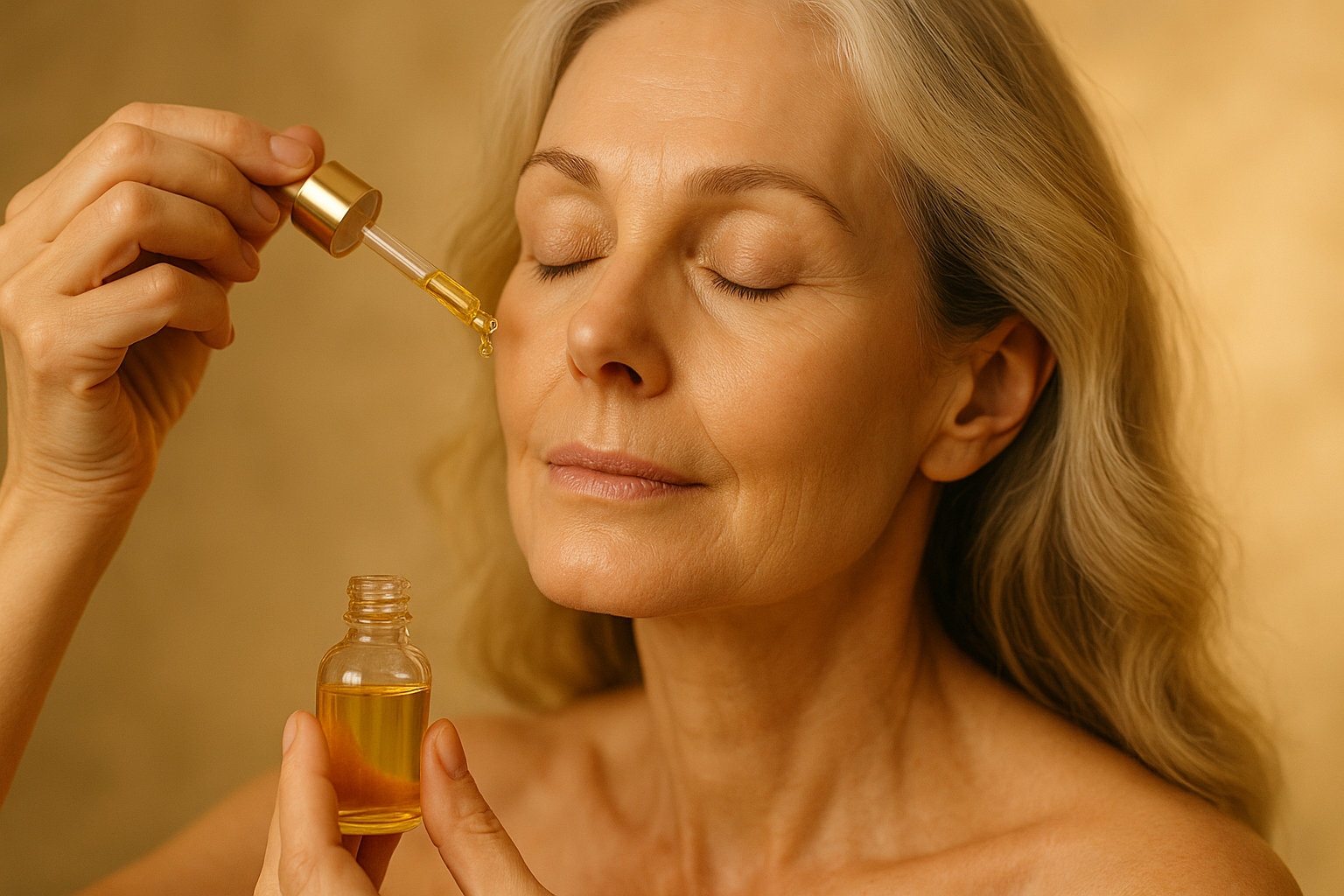
Last updated: August 7, 2026
Quick Answer
Both — and it depends on the oil. Peer-reviewed penetration research shows that whole plant oils are mostly triglycerides, and triglycerides largely stay in the skin's outermost layer (the stratum corneum) or on its surface, where they still do real work: slowing water loss, softening the surface, and delivering free fatty acids and antioxidants. How far an oil's components actually travel depends chiefly on its fatty-acid profile — oleic-rich oils move into the stratum corneum's lipid "mortar" the most (and can even carry other ingredients with them), while linoleic-rich oils tend to stay put and support the barrier. So "it just sits on top" is partly true, partly myth — and "sitting on top" is not the failure people assume. Serums formulated as pure botanical lipid blends, such as SD7 Lipid Serum, are built around exactly this chemistry: lipid-compatible ingredients that saturate the stratum corneum rather than evaporating off it.
First, what does "absorb" actually mean?
When people say an oil "absorbed," they usually mean it stopped feeling greasy. But feel is about spreadability and finish, not depth. In skin science there are really three destinations for anything you apply:
The surface film — sitting on top of the skin, mixed with your own sebum. The stratum corneum — the outermost layer, a fraction of a millimetre thick, built like a brick wall: corneocytes are the "bricks" and a matrix of lipids (ceramides, free fatty acids and cholesterol) is the "mortar" holding it together, as described in a detailed review of plant-oil skin effects by Lin, Zhong and Santiago in the International Journal of Molecular Sciences (2018). The living epidermis and beyond — below the stratum corneum, which very few cosmetic ingredients meaningfully reach, and which whole oils essentially do not.
Because the stratum corneum's mortar is made of lipids, oils have a genuine structural affinity with it — like dissolves like. Water-based products face the opposite problem: much of their content simply evaporates (we've covered that in our guide to serums for mature skin). But affinity doesn't mean every oil dives in. The research is more specific than that.
What the penetration studies actually found
The Lin review pulls together the measured evidence, and three findings answer this question directly:
1. Whole oils mostly stay high. Studies found that almond, jojoba, soybean and avocado oils, applied topically, "mostly remain at the surface of the skin, without deep penetration into the first upper layers of the stratum corneum." Triglycerides — the bulk of any plant oil — do not penetrate deeply.
2. Free fatty acids are the travellers. The free fatty acids within an oil behave differently from its triglycerides. Monounsaturated oleic acid in particular interacts with the stratum corneum's lipid mortar and acts as a penetration enhancer — and the ratio of free fatty acids to triglycerides in an oil correlates with how far its components get. Separate pharmaceutical research found that oleic acid fluidises the stratum corneum's lipid bilayers to enhance penetration (PubMed). This is why oleic-rich oils have been studied as delivery vehicles for other ingredients.
3. Oils differ measurably. Comparative work cited in the review (Viljoen et al.) ranked lipid penetration within the epidermis: olive > coconut > grape seed > avocado. Penetration isn't automatically good, though — the same review notes that continuously applied oleic acid can disrupt the barrier (olive oil raised transepidermal water loss in volunteer studies), while linoleic-rich sunflower seed oil preserved stratum corneum integrity and improved hydration.
Where common face oils actually end up
This is the comparison the "oils just sit on top" debate usually skips — what the research says oil by oil:
| Oil | Dominant fatty acids | Where it mostly goes | What studies report |
|---|---|---|---|
| Olive | Oleic (majority) | Deepest of the oils compared | Top of the Viljoen penetration ranking — but repeated use increased water loss and can disturb the barrier (Lin 2018) |
| Sunflower seed | Linoleic-rich | Upper stratum corneum | Preserved stratum corneum integrity and improved hydration without irritation; linoleic acid supports the skin's own lipid production (Lin 2018) |
| Jojoba | Wax esters (not a true triglyceride oil) | Surface + upper layers | Highly oxidation-stable; shown to enhance the absorption of other topical ingredients (Lin 2018) |
| Coconut | Lauric/saturated | Second in the penetration ranking | Effective, well-tolerated moisturiser in clinical studies (Lin 2018) |
| Avocado, almond, soybean | Mixed, triglyceride-heavy | Mostly the surface | "Mostly remain at the surface of skin" in penetration work — classic occlusive softeners (Lin 2018) |
| Rosehip seed | Linoleic 36–55%, α-linolenic 17–27%, oleic 15–22% | Upper layers; barrier-supporting profile | Rich in unsaturated fatty acids and antioxidants (Lin 2018); a natural source of trans-retinoic acid, with small studies suggesting modest improvement in the look of wrinkles |
| Pomegranate seed | 63% unsaturated; linoleic 29%, oleic 10% | Upper layers | Notably high in polyphenols; seed extract stimulated keratinocyte renewal in laboratory research (Aslam et al., J Ethnopharmacol 2006) |
The pattern worth noticing: the oils that "absorb" most aggressively are not automatically the best for skin, and the ones that linger at the surface are not doing nothing. The profile matters more than the finish.
"Sitting on top" is not a failure
Here's the part the myth gets backwards. Even where an oil doesn't penetrate deeply, the Lin review notes that its occlusive effect measurably decreases water loss from the stratum corneum — and a hydrated stratum corneum is precisely what makes skin look smoother and feel supple. Fine lines look most pronounced when the outer layer is parched (we've written about why fine lines look worse at the end of the day). A breathable lipid layer that slows evaporation while feeding the surface fatty acids and antioxidants is doing exactly the job the outer skin needs done.
Meanwhile, the "fast-absorbing" sensation many products chase is often achieved with volatile silicones or drying alcohols that give a powder-dry finish while adding nothing — and sometimes taking something away (see our piece on alcohol denat in skincare).
Why this matters for anti-aging actives
Where penetration does matter is delivery. Actives dissolved in a lipid vehicle can ride along with the fatty acids that interact with the stratum corneum — which is why oleic acid's enhancer effect is used deliberately in formulation. And several of the best-studied botanical anti-aging actives are themselves lipid-soluble:
Bakuchiol — in a randomized, double-blind trial matched retinol for improvement in the appearance of wrinkles and pigmentation with less irritation (Dhaliwal et al., British Journal of Dermatology 2019), and is photostable, usable morning and evening without added sun sensitivity (Chaudhuri & Bojanowski, Int J Cosmet Sci 2014). Argan — a 2015 randomized study found cosmetic argan improved skin elasticity in postmenopausal women (Boucetta et al., Clinical Interventions in Aging). Pomegranate seed — stimulated keratinocyte renewal in the Aslam laboratory work above, and its polyphenols are studied for inhibiting the collagenase and elastase enzymes that break down firmness proteins.
In other words: the intelligent question isn't "does my oil absorb?" but "is my formula's fatty-acid profile chosen deliberately — and are there proven actives dissolved in it?" A well-designed blend pairs oleic-containing carriers (movement into the stratum corneum) with linoleic-rich seed lipids (barrier support) and puts the actives in the vehicle best suited to carry them. For a deeper look at two of the most talked-about seed lipids, see our cacay vs rosehip comparison and rosehip vs retinol.
Getting the most from a facial oil or lipid serum
A few practical points that follow from the science above. Apply to clean skin — a lipid layer applied over the day's grime seals the wrong things in. Use a small amount and press rather than drag; the stratum corneum is thin and saturates quickly. If you use water-based products too, apply them first and let them settle — lipids applied underneath will slow anything water-based from reaching the skin. And give the surface time: the useful work (slowed water loss, surface saturation) happens over hours, which is an argument for evening application.
Formulated for the lipid route: SD7 Lipid Serum
Most serums are mostly water — and water evaporates off the skin within minutes, taking the "absorbed" feeling with it. SD7 Lipid Serum takes the opposite route described in this article: it is 100% botanical lipids with 0% water, formulated by S. C. Aris to saturate the stratum corneum, where lipid-compatible ingredients naturally belong — an argan and sunflower base in oleic/linoleic balance, linoleic-rich rosehip and pomegranate seed, and lipid-soluble actives led by bakuchiol (99.9% pure Sytenol® A) plus cacay, black cumin seed, sea buckthorn and Japanese camellia.
In a customer survey, 93% reported smoother-looking fine lines and texture within 45 days, and 100% reported softer-feeling skin within the first week. SD7 is rated 4.89/5 from 35 verified buyers and comes with a 90-day money-back guarantee. It's vegan, non-GMO and free from water, fillers, preservatives, parabens and synthetic retinols.
SD7 is a cosmetic product that supports the appearance of smoother, plumper-looking skin. It does not treat or prevent any medical condition — see a doctor or dermatologist for any skin concern.
FAQ
Which face oils absorb the fastest?
In comparative research, oleic-rich oils (olive highest) moved furthest into the epidermis, followed by coconut, grape seed and avocado. But the fast "absorbed" feeling of a product is a poor guide — it reflects finish and volatile ingredients more than genuine movement into the skin.
Is it bad if an oil just sits on top of my skin?
No. Even at the surface, an oil's occlusive effect measurably slows water loss from the outer layer, which is a large part of what makes skin look smoother and feel softer. Surface work is real work.
Should I apply an oil or lipid serum before or after my moisturizer?
After any water-based products. Lipids applied first will slow water-based formulas from reaching the skin; applied last, they seal everything beneath a breathable layer.
Do lipid serums replace retinol?
They're a different route. Bakuchiol — the lead active in SD7 — matched retinol for the appearance of wrinkles and pigmentation in a randomized trial, with less irritation and no added sun sensitivity. People who find retinol drying often choose the lipid route for that reason.
Sources
Lin TK, Zhong L, Santiago JL. Anti-Inflammatory and Skin Barrier Repair Effects of Topical Application of Some Plant Oils. Int J Mol Sci. 2018 · Oleic acid as a skin penetration enhancer — PubMed 12520175 · Dhaliwal S, et al. Prospective randomized double-blind assessment of topical bakuchiol and retinol. Br J Dermatol 2019 · Chaudhuri RK, Bojanowski K. Bakuchiol: a retinol-like functional compound. Int J Cosmet Sci 2014 · Boucetta KQ, et al. The effect of dietary and/or cosmetic argan oil on postmenopausal skin elasticity. Clin Interv Aging 2015 · Aslam MN, et al. Pomegranate as a cosmeceutical source. J Ethnopharmacol 2006