Are Sleep Wrinkles Permanent? How to Prevent Sleep Lines on Your Face
Last updated: 10 July 2026
Quick answer
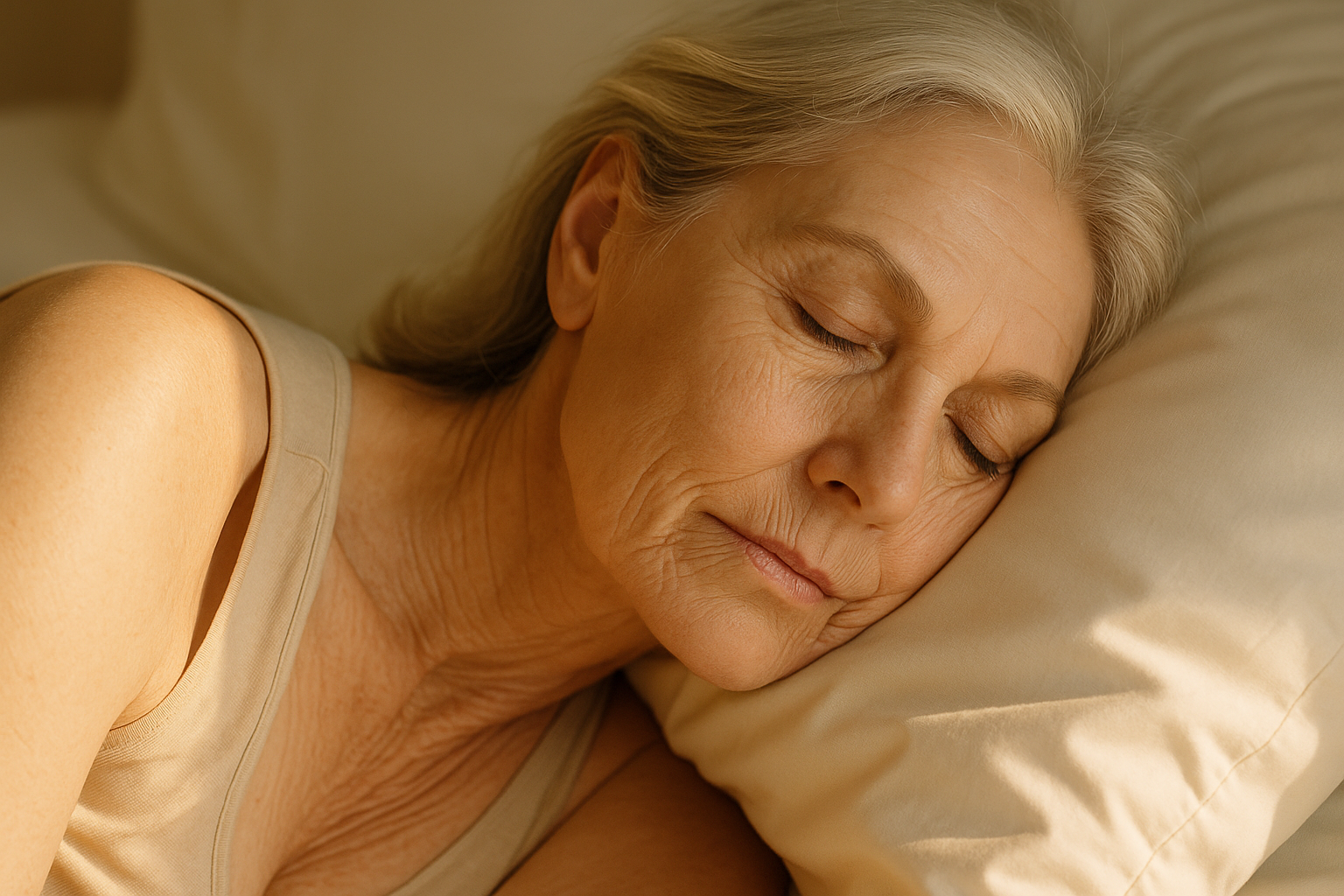
Are sleep wrinkles permanent? Not at first. A sleep wrinkle (or "pillow line") is a crease pressed into your face when you sleep on your side or front and your skin folds against the pillow for hours. In younger, springier skin these lines relax within minutes to an hour of waking. The problem is repetition: press the same fold into the same spot every night for years, and as skin gradually loses its elastic "recoil" with age, the temporary crease can etch in and start to linger — especially on the cheeks, upper lip and between the brows. The two most effective things you can do are physical: sleep on your back and switch to a silk or satin pillowcase so skin slides instead of bunching. Supporting your skin's overnight barrier helps too — a well-formulated lipid serum such as SD7 Lipid Serum is one example of a product designed to keep the skin surface saturated and looking plumper and more resilient overnight, so morning creases have an easier time smoothing out.
What a sleep wrinkle actually is (and how it differs from other lines)
Most of the lines we worry about on our faces are expression wrinkles — crow's feet, frown lines, marionette lines — caused by the same muscle movements repeated over decades. Sleep wrinkles are different. They are mechanical: they form when the face is compressed, sheared and stretched against a pillow, not when a muscle contracts. That distinction matters, because it changes what does and doesn't help.
In a 2016 review in the Aesthetic Surgery Journal, plastic surgeons Anson, Kane and Lambros described how sleep wrinkles "form in response to distortion created when the face is compressed against any sleep surface," and noted they tend to run in different directions from expression lines — often vertical on the cheeks or across the forehead rather than following a muscle. Crucially, because they are not muscle-driven, they cannot be softened by botulinum toxin (Botox) the way expression lines can (Anson et al., Aesthetic Surgery Journal, 2016).
It's also worth ruling out a look-alike. Dehydration lines — fine, crinkly, "crumpled tissue-paper" texture that shows up when skin is short of water — are surface-level and temporary, and they respond quickly to hydration and lipids rather than to changing how you sleep. If your fine lines look like fine mesh all over rather than a few defined creases in one spot, you may be looking at dehydration rather than true sleep wrinkles.
So — are they permanent?
The honest answer is: they start out temporary and can become semi-permanent with time. Two factors decide which way it goes.
First, your age and skin quality. Young skin is rich in collagen and elastin and snaps back almost immediately — the crease you see in the mirror at 7am is gone by 8am. As we get older, collagen and elastin decline and the skin's elastic recoil slows, so the same overnight fold takes longer to relax and, with enough nightly repetition, can settle into a persistent line. Dermatologists describe this as the crease "outlasting" the skin's ability to bounce back.
Second, consistency of position. Sleep-position research consistently finds that most people are side sleepers. Summarising the data, the review above put the lateral (side) position at roughly 65% of sleepers, back at about 30%, and stomach at around 5% — and it's the side and stomach positions that press the face into the pillow. The more nights you spend crushing the same cheek into the pillow, the more likely that side is to develop a lasting line (The Aesthetic Society).
One controlled study that tested this directly — Kotlus, Dermatologic Surgery, 2013 — actually found no significant correlation between which side people preferred to sleep on and where wrinkles or facial sagging appeared, so treat the sleep-position link as biologically plausible rather than proven; the Aesthetic Society data above remains the stronger evidence. And as science writers at The Conversation summed it up: sleep wrinkles are real, and repetition is what turns a morning line into a lasting one.
Sleep wrinkles vs. expression wrinkles vs. dehydration lines — how to tell them apart
| Sleep wrinkles | Expression wrinkles | Dehydration lines | |
|---|---|---|---|
| Cause | Face compressed / folded against a pillow | Repeated muscle movement (smiling, frowning) | Lack of water & lipids at the skin surface |
| Typical spots | Cheeks, upper lip, brow — often one-sided | Crow's feet, frown lines, marionette lines | Fine mesh anywhere, worse when skin is stretched |
| Direction | Vertical / diagonal, cutting across expression lines | Perpendicular to the muscle that makes them | No fixed pattern; shallow and crumpled |
| Worse when… | You wake up; fade through the morning (at first) | You make the expression | Skin is dry, cold, or after harsh cleansing |
| Responds to Botox? | No | Yes | No |
| What actually helps | Back-sleeping, silk pillowcase, resilient/hydrated skin | Muscle relaxants, retinoids, time | Hydration + barrier lipids (fast) |
Information-gain note: most articles on this topic cover sleep wrinkles alone. The table above exists because the single most common mistake is treating a sleep wrinkle like an expression wrinkle (e.g. expecting Botox to fix it) or like a dehydration line — each needs a different fix.
How to prevent sleep wrinkles: a practical protocol
- Train yourself to sleep on your back. This is the single highest-impact change — it takes your face off the pillow entirely. A small pillow under each arm, or a slightly firmer pillow that discourages rolling, helps you hold the position. Specialty "back-sleeping" and cut-out pillows exist for exactly this.
- Switch to a silk or satin pillowcase. On cotton, skin grips and bunches; on silk it slides. Less friction means less folding and less overnight crease. It's a low-effort change with a real mechanical rationale.
- If you must sleep on your side, alternate sides. Don't spend every night crushing the same cheek. Alternating spreads the load so no single fold is reinforced night after night.
- Keep the skin surface saturated and resilient overnight. Springy, well-hydrated skin recovers its shape faster than dry, depleted skin. Overnight is when your skin does most of its barrier repair, so it's the ideal window for a rich, occlusive lipid layer that holds moisture in place and keeps the surface looking plump and elastic (more on the ingredients that matter below).
- In the morning, help the creases relax. Once you're up and your face is moving, pillow lines fade on their own. To speed it along, gently massage the area and lightly tap over the fold with your fingertips; a hydrating serum or a cool compress can make the surface look smoother faster.
Why overnight skincare matters for this specific problem
Sleep wrinkles become lasting when skin loses its elastic recoil — its ability to spring back after being folded. You can't buy back youthful elastin from a jar, but you can support the look and feel of firmer, more resilient skin, and you can keep the surface hydrated so creases don't get "set" by dryness. That's a barrier-and-lipid job, and it's where the ingredients in a good overnight serum earn their place.
Several plant lipids studied in cosmetic research are relevant here. Cosmetic argan is one of the few with a randomised human trial behind it: a 2015 study in Clinical Interventions in Aging found that argan improved skin elasticity in postmenopausal women (Boucetta et al., 2015) — directly relevant to the "recoil" that decides whether a pillow line fades or lingers. Bakuchiol, a gentle plant alternative to retinol, matched retinol for the look of wrinkles with less irritation in a 2019 randomised trial, and gene-expression work shows it supports collagen types I, III and IV (Dhaliwal et al., Br J Dermatol, 2019). Coriander seed has been studied for inhibiting the collagenase and elastase enzymes that break down collagen and elastin, helping defend the firmness you already have (Scientific Reports, 2022). And pomegranate seed stimulates keratinocyte renewal in the epidermis, supporting a smoother-looking surface (Aslam et al., J Ethnopharmacol, 2006). Rosehip seed — a natural source of trans-retinoic acid, sometimes called "natural tretinoin" — rounds out the renewal story, with small studies suggesting modest improvement in the look of wrinkles.
An overnight lipid serum built for resilient-looking skin: SD7 Lipid Serum
SD7 Lipid Serum is built for exactly this overnight job: an anhydrous, 100% botanical lipid concentrate that saturates the skin's outer layer instead of evaporating off it, so the surface stays hydrated and springier by morning — giving pillow creases an easier time relaxing. It holds a real customer rating of 4.89/5 from 35 verified buyers, is vegan and non-GMO, and is backed by a 90-day money-back guarantee. In a customer survey, 93% reported smoother-looking fine lines and texture within 45 days, and 100% reported softer-feeling skin within the first week.
Frequently asked questions
Do sleep wrinkles go away? In younger skin they fade within minutes to an hour of waking as your face moves. With age and nightly repetition on the same side, they can start to linger and become semi-permanent. Prevention — back-sleeping, silk pillowcases and keeping skin resilient — is far easier than reversing an established crease.
Can a serum remove sleep wrinkles? No product "removes" a mechanical crease. What a good overnight serum can do is support the appearance of firmer, plumper, more hydrated skin, so temporary morning lines smooth out faster and the surface looks more resilient. SD7 is designed for that surface-saturation job.
Does sleeping on your back really prevent them? It's the most effective single step, because it takes your face off the pillow. Combined with a silk pillowcase, it removes most of the compression and friction that create the fold in the first place.
Will Botox fix sleep wrinkles? Not usually. Botox relaxes the muscles behind expression lines. Sleep wrinkles are caused by mechanical compression, not muscle movement, so they don't respond the same way.
Is a silk pillowcase actually worth it? For friction and creasing, yes — skin slides on silk instead of gripping and bunching as it does on cotton. It's a low-effort change with a sound mechanical rationale.
SD7 Lipid Serum is a cosmetic product intended to support the appearance and feel of the skin. It is not intended to diagnose, treat, cure or prevent any disease. If you have a skin concern, see a dermatologist.
Related reading
- The anti-aging myth: why your serum evaporates before it works
- What is the best anti-aging serum for mature skin?
- Rosehip vs retinol for ageing skin: a scientific comparison
- Marionette lines: causes and treatments
- Crow's feet: what they are and how to soften them