Will a Loose Tooth From Gum Disease Tighten Back Up? The Two Kinds of Looseness — and Which One Comes Back
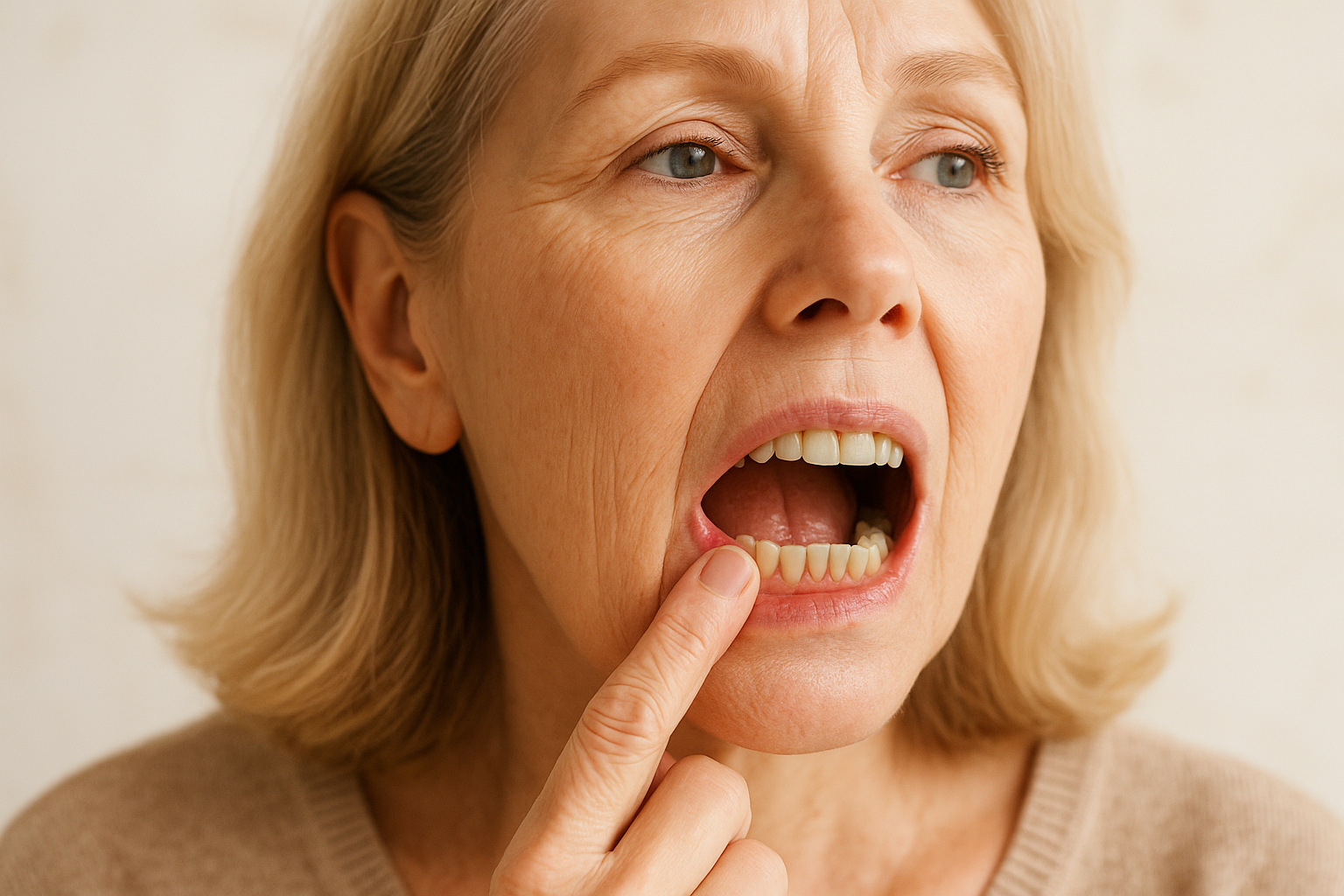
Last updated: 2 September 2026
Quick answer
Partly — and which part depends on what is actually producing the wobble. Looseness in an adult tooth is almost never one thing. It is usually two things stacked on top of each other:
- The part that can settle: inflammation in the gum and ligament, plus a bite that is overloading the tooth. Both are changeable. Periodontal reviews describe increased mobility from excessive bite forces as something that resolves when the forces are removed, and StatPearls notes that as oral hygiene improves and smoking stops, prognosis improves “along with a decrease in tooth mobility.”
- The part that does not come back on its own: lost bone. The CDC is blunt that periodontitis can be slowed down and managed with professional treatment, but not undone. A tooth standing in less bone has a longer lever above its anchorage, so it will keep a little give even after every trace of inflammation is gone.
So the honest target is not rock solid. It is stable: slightly mobile, no longer getting worse, comfortable to bite on, and holding steady year after year. Plenty of teeth live in that state for decades.
Getting there is a dental job — professional cleaning below the gum line, a bite check, sometimes splinting or surgery. Nothing you buy tightens a tooth, and any product that says otherwise is not telling the truth. Home care has a different and narrower job: keeping the gum line genuinely clean between appointments. That is where a water-free gum-line concentrate such as Dental Pro 7 fits — as a daily hygiene and appearance step alongside treatment, not as anything that changes how much a tooth moves.
If a permanent tooth is loose, book a dental appointment now rather than waiting to see what happens. Cleveland Clinic puts it plainly: a loose adult tooth is never typical, and it always points to an underlying issue.
Why “will it tighten back up?” is the wrong first question
Search that phrase and you will get a wall of yes-and-no. Some pages say loose teeth firm up all the time. Others say once it wobbles it is finished. Both are describing real patients — they are just describing different patients, and neither explains how to tell which one you are.
The useful question is not will it tighten. It is how much of this wobble is inflammation and force, and how much of it is missing bone? Answer that and the prognosis follows almost automatically. That is the framing your periodontist is using in their head, and it is the thing the consumer pages leave out.
The two kinds of looseness
A tooth is not cemented into the jaw. It is suspended in its socket by the periodontal ligament — a sling of collagen fibres running from root surface to bone. That sling is meant to have a small amount of give; it is a shock absorber, not a weld. Looseness becomes abnormal when either the sling is inflamed and stretched, or the bone the sling attaches to has shrunk away.
| Type A — inflammatory & force-driven | Type B — bone-loss-driven | |
|---|---|---|
| What is happening | Ligament fibres inflamed and disorganised; ligament space widened by excessive bite force | The alveolar bone that held the root has been destroyed and the attachment level has dropped |
| Typical story | Came on over weeks; gums red, puffy, bleeding; you clench or grind; a crown or filling feels “high”; pregnancy | Came on over years; gums have receded; teeth look longer; there are deep pockets; there may be gaps opening between front teeth |
| Does it settle? | Yes, substantially. Remove the inflammation and the excess force and periodontal tissues recover | No, not on its own. Bone lost to periodontitis does not regrow spontaneously |
| What changes it | Professional cleaning, better daily plaque removal, bite adjustment, a night guard, stopping smoking | Halting further loss; sometimes grafting or regenerative surgery; splinting to share the load |
| Realistic end point | Back to normal, or close to it | Permanently slightly mobile but stable — and stable teeth last |
Almost everyone with a loose tooth from gum disease has some of both. That is exactly why the answers online conflict: someone whose wobble is 80% Type A gets dramatic improvement and writes that loose teeth tighten up; someone whose wobble is 80% Type B improves a little and writes that they do not.
The mechanism nobody explains: the lever
Here is the part that makes bone loss feel unfair. Imagine a fence post. Sink it 60 cm into the ground and it is rigid. Dig away 20 cm of soil and the post has not changed at all — but now there is more post above ground and less below, and the same push at the top produces far more movement at the base.
A tooth works the same way. Losing bone does not just remove attachment; it lengthens the lever arm above whatever attachment remains. This is why a tooth can be completely free of infection, with pink, healthy-looking, non-bleeding gums, and still move slightly when you push it. That residual movement is not a sign that treatment failed. It is arithmetic.
It also explains a clinical distinction worth knowing. Periodontal literature separates primary occlusal trauma — excessive force on a tooth with normal support — from secondary occlusal trauma, where normal everyday chewing force is enough to overload a tooth that has reduced support. Secondary trauma is much harder to settle, because the force is not excessive; the foundation is small. That is the situation most people with advanced gum disease are actually in, and it is the reason bite management and splinting matter so much at that stage.
A self-check that will not make it worse
First, the important instruction: stop wiggling it. Nearly everyone with a loose tooth pushes at it with their tongue or finger many times a day to check whether it has got worse. Repeated jiggling is itself a force applied to an already-compromised ligament, and it makes an honest assessment impossible because you never let anything settle.
Check once a week, at the same time of day, and record it. Then leave it alone in between. Here is a structure that gives you something genuinely useful to hand your dentist.
- The two-handle test. Do not use your finger and do not use your tongue. Take two firm, blunt objects — the back ends of two toothbrush handles work — and place one on the outside (cheek side) of the tooth and one on the inside. Apply gentle, steady pressure from one side, then the other. A fingertip is soft and compresses, so it exaggerates movement; two rigid handles let you feel whether the tooth moves or your fingertip does. Do this once. Do not repeat it five times.
- The depression test. With one handle, press gently straight down on the biting surface. Does the tooth sink into the socket at all, even fractionally? Movement in the up-and-down direction is a different and more serious category than side-to-side movement, and it is the single most important thing to report.
- The bite test. Tap your teeth together lightly, then bite normally, then slide your jaw side to side. Does this one tooth make contact before the others? Does it feel “high”? Does it hurt on release rather than on pressure? A tooth that contacts first is being asked to do work meant for several teeth.
- The mirror test. Bright light, mirror. Is the gum around this specific tooth redder, puffier or more swollen than around its neighbours? Does it bleed when you clean it? Has the gum edge moved down compared to the tooth next door? Is there a gap opening between this tooth and the one beside it that was not there a year ago?
What to write down
Keep four lines in your phone notes each week: (1) side-to-side movement — none / slight / obvious; (2) up-and-down movement — yes / no; (3) bleeding at that tooth — yes / no; (4) any change in how it feels when you bite. Four weeks of that is worth more to a clinician than any description you can give from memory, because direction of travel is the thing that matters — and it is the thing you cannot judge if you have been prodding the tooth hourly.
Your dentist will do a more formal version of this and record mobility as a graded score in your notes, alongside pocket depths and X-rays showing how much bone is actually there. Ask to see the numbers. Ask specifically: how much of this movement do you think is inflammation, and how much is bone? That single question will get you a far more useful conversation than “will it tighten up?”
Red flags: stop reading and call a dentist
- The tooth can be pressed down into the socket, or feels like it moves vertically at all.
- Pus, a swelling or a lump on the gum near the tooth, or a bad taste that keeps returning to one spot.
- Facial swelling, fever, or difficulty swallowing — urgent, same day.
- The looseness followed a knock or a fall. Cleveland Clinic notes that stabilisation after an injury is most successful when treatment begins within an hour, and a fully or partially knocked-out tooth is a dental emergency.
- Several teeth have become loose at once, or your bite has changed noticeably in a short period.
What actually reduces the wobble — and how long each thing takes
This is the table the top results are missing. Nothing here is a home remedy; it is a realistic sequence with realistic timescales, so you know whether what you are seeing is normal progress or a reason to go back.
| Intervention | What it targets | When you would notice | Effect on mobility |
|---|---|---|---|
| Genuinely effective daily plaque removal at the gum line | Type A — gum inflammation | Bleeding and puffiness usually settle over the first couple of weeks; StatPearls records that experimental gingivitis is reversible within 7–10 days of oral hygiene being re-established | Small to moderate, and it is the foundation everything else depends on |
| Scaling and root planing (“deep cleaning”) by a dentist or hygienist | Type A — inflammation driven by tartar below the gum line | Weeks to a few months as tissues firm up | Often the single biggest change, especially if the tooth has never been treated |
| Bite adjustment | Type A — excessive or badly directed force | Immediately for comfort; weeks for the ligament to recover | Can be dramatic when one tooth was taking the load. Occlusal therapy is described in the periodontal literature as reducing tooth mobility and improving comfort and chewing function |
| Night guard for clenching or grinding | Type A — overnight force you cannot consciously control | Weeks to months | Protective more than corrective, but grinding is a listed risk factor for gum disease and removing it stops you undoing your own progress |
| Stopping smoking | Both — the largest modifiable risk factor there is | Months | Improves prognosis and, per StatPearls, is associated with decreased mobility |
| Splinting | Type B — shares load across neighbouring teeth | Immediate stabilisation | Does not rebuild anything; it makes a mobile tooth usable and comfortable. Cleveland Clinic notes splinting may help if the tooth has not pulled away from the gums |
| Bone or gum grafting, regenerative surgery | Type B — the missing foundation | Months | The only route that addresses lost support, and it is case-dependent, not universally possible |
| Salt-water rinses, oil pulling, “tightening” gels | Nothing structural | — | None. Cleveland Clinic is explicit that home measures will not tighten a loose tooth — they only reduce the risk of extra complications until you are seen |
What your dentist’s “stage” tells you about the odds
Since 2018, periodontitis has been described by stage (how much has been lost, and how complex it will be to manage) and grade (how fast it is moving). It is worth asking for yours, because staging carries an explicit prognosis, and prognosis is really what you were asking about when you asked whether the tooth will tighten. The American Academy of Periodontology’s own guidance summarises it like this:
| Stage | Roughly | Expected tooth loss | Prognosis going into maintenance |
|---|---|---|---|
| I | Mild; pockets up to about 4 mm; non-surgical treatment | None expected after treatment | Good |
| II | Moderate; pockets up to about 5 mm | None expected after treatment | Good |
| III | Severe; pockets 6 mm or more, attachment loss 5 mm or more; may involve surgery | Potential loss of 0–4 teeth | Fair |
| IV | Very severe; fewer than 20 teeth may remain; advanced or regenerative surgery likely | Potential loss of 5 or more teeth | Questionable |
Two lines from that same guidance are worth quoting because they reframe the whole thing. First: “a periodontitis patient is a periodontitis patient for life” — treated and stable is a real, good outcome, but it comes with a higher level of ongoing monitoring than someone who never had it. Second: the stage “typically does not regress or move to a lower stage,” with one narrow exception where regenerative surgery genuinely rebuilds a defect. That is the clearest professional statement you will find that the goal is control, not rewind.
Context for the odds: the ADA reports that chronic periodontitis affects 47.2% of adults over 30 in the United States, and CDC surveillance found around 4 in 10 US adults aged 30 and over had some level of periodontitis, rising to about 60% of adults aged 65 and over. Loose teeth are the late chapter of a very common story — not a rare catastrophe.
The one cause that genuinely does resolve on its own
Pregnancy. Cleveland Clinic notes that surges of progesterone and oestrogen can temporarily loosen the tissues that hold teeth in place, and that people with pregnancy gingivitis usually find symptoms go away after childbirth. It still needs checking — hormonal change makes gums overreact to plaque rather than replacing the need to remove it — but of all the causes of a loose adult tooth, this is the one with a built-in end date.
Where daily gum care fits — honestly
Every source above agrees on the same unglamorous point: the thing that decides whether Type A inflammation settles is how thoroughly plaque is removed from the gum line every single day. StatPearls calls effective oral hygiene “the most critical factor in the shift from periodontal disease to health.” That is where a home product can matter, and it is the only place it can.
The practical problem is contact time. Water-based toothpastes and rinses are mostly water and surfactant; they froth, they dilute in saliva, and you rinse most of what is left straight down the sink. Whatever benefit the active ingredients might offer, they are at the gum line for seconds.
Dental Pro 7 — a water-free gum-line concentrate
Dental Pro 7 approaches that problem from the opposite direction. It contains no water at all. It is a 100% botanical lipid concentrate built so that it clings to the gum line rather than washing away — the formulator’s “Lipid-Lock” idea: stay in contact for hours rather than seconds.
Inside are eleven botanicals in a grapeseed, sunflower and vitamin E lipid base — immortelle helichrysum, pomegranate seed, black cumin seed, Indian myrrh, wild clove, white thyme and eucalyptus, with peppermint, spearmint and wild mint for freshness. There is no water, no SLS or foaming agent, no fluoride, no parabens or synthetic preservatives and no fillers; it is vegan and non-GMO. (It naturally contains eugenol, limonene and linalool, and is made in a facility that handles nut lipids.)
How to use it: four drops on a dry toothbrush in place of toothpaste, brush gently for about two minutes, then spit — do not rinse with water. Rinsing washes the lipid layer away, which defeats the entire point. (Its sibling product, DP7 Pro Rinse, is the opposite: that one you dilute in water and rinse with.)
What it is for, precisely: supporting the appearance of firmer, pinker, healthier-looking gums and a cleaner, fresher-feeling mouth as part of a daily routine. What it is not for: tightening a loose tooth, rebuilding bone, or replacing the professional cleaning and bite assessment that a mobile tooth actually needs. No topical formula — ours or anyone else’s — changes how much a tooth moves, and we would rather say so than sell you a sentence you would later resent.
It was formulated by S. C. Aris, is rated 4.81 out of 5 from 190 verified buyers with more than 500,000 units sold, and comes with a 90-day money-back guarantee — long enough to judge it against a real dental treatment timeline rather than a fortnight.
Frequently asked questions
Can a loose tooth from gum disease ever become completely firm again?
If the movement is mostly inflammation and bite force, yes — it can return to normal or close to it, because those tissues recover once the cause is removed. If a significant amount of supporting bone is gone, no: the CDC describes periodontitis as something that can be slowed down and managed with treatment but not undone, so some residual movement usually remains. A stable, slightly mobile tooth is a successful outcome, not a failed one.
How long should I wait to see if it tightens on its own?
Do not wait at all before booking. You can reasonably expect bleeding and puffiness to improve within a couple of weeks of properly effective cleaning, but the assessment that tells you which kind of looseness you have — probing depths and an X-ray — cannot be done at home, and delay is the main reason savable teeth are not saved.
Does wiggling a loose tooth make it worse?
Repeatedly applying force to a ligament that is already inflamed or poorly supported is exactly what you are trying to stop, and constant prodding also destroys your ability to judge whether anything is changing. Check once a week with a defined test and record the result, then leave it alone.
Will a deep cleaning make my loose tooth worse?
Teeth can feel temporarily more mobile or more sensitive after scaling and root planing as swollen tissue shrinks back and firms up, which can also make teeth look longer for a while. That is the inflammation leaving, not new damage. Ask your clinician what to expect over the following weeks, and go back if movement is still increasing after that.
Can gum disease that has already loosened a tooth be turned around?
The inflammation can be settled and the process halted — that is what treatment is for, and it is genuinely achievable at almost any stage. What cannot be restored spontaneously is the bone already lost. Gingivitis, the earlier stage before any bone is involved, is reversible with professional cleaning and good daily care.
Is a loose tooth always caused by gum disease?
No. Trauma, clenching and grinding, and pregnancy hormones are all recognised causes, and grinding and crooked teeth are listed risk factors for gum disease in their own right. But periodontitis is described by Cleveland Clinic as the most common cause of loose teeth and tooth loss in adults worldwide, so it is the first thing a dentist will check.
The bottom line
Split the wobble into its two parts, and the confusion disappears. The inflammatory and force-driven part is genuinely recoverable, and often more of the total than people fear. The bone-loss part is not, but a tooth on reduced support that has stopped getting worse can serve you for a very long time. What decides the outcome is not whether you find the right rinse; it is how quickly you get assessed, and how completely the gum line gets cleaned every day thereafter.
This article is general information about the appearance and care of gums and teeth, not medical or dental advice. Cosmetic products support the look and feel of gums; they do not diagnose, treat or cure any condition. If a permanent tooth is loose, see a dentist.
Related reading
- Can Gum Disease Go Away? The Honest Answer, Stage by Stage
- Can You Reduce Gum Pocket Depth Naturally? What Moves the Numbers
- How Do You Brush Your Teeth With Gum Disease? The Gumline-First Routine
- Why Do My Teeth Look Longer After a Deep Cleaning?
- Can Black Triangles Between Your Teeth Fill Back In Naturally?
- Early Gum Disease: Signs, Self-Check & Progression
- Why Do My Gums Bleed?
Sources
- Cleveland Clinic, “Loose Tooth”, medically reviewed, last updated 18 June 2024.
- Centers for Disease Control and Prevention, “About Periodontal (Gum) Disease”, last reviewed 15 May 2024.
- American Academy of Periodontology, “Gum Disease Information”.
- American Academy of Periodontology / American Dental Association, “Frequently Asked Questions on the 2018 Classification of Periodontal and Peri-Implant Diseases and Conditions”, © 2019 AAP.
- Mehrotra N, Singh S, “Periodontitis”, StatPearls, updated 1 May 2023.
- Georgieva I, “Trauma from Occlusion — Types, Clinical Signs and Clinical Significance. A Review”, Scripta Scientifica Medicinae Dentalis 2021;7(1):7–11.
- National Institute of Dental and Craniofacial Research, “Periodontal (Gum) Disease”, last reviewed August 2026.
- ADA MouthHealthy, “Gum Disease”.