What's in Your Toothpaste and Mouthwash? An Ingredient-by-Ingredient Guide
Last updated: 7 October 2026
Walk down the oral-care aisle and the labels read like a chemistry set. Most of what's there is harmless and does a useful job — but a handful of ingredients are genuinely worth understanding, especially if you have a sensitive mouth or a problem that won't settle. Here's a level-headed tour of the ingredients people ask about most, with links to the full story on each.
First, some perspective
Oral disease is common: the CDC reports that 42% of adults aged 30 and over have periodontitis, with severe periodontitis affecting about 8% (CDC), and tooth decay is more widespread still — most adults have had at least one cavity. That isn't proof that toothpaste is the villain — most of it comes down to plaque control and diet — but it does mean it's worth using products that suit your mouth rather than ones that irritate it.
Every ingredient at a glance
The last column links to our fuller guide on each ingredient.
| Ingredient | What it's for | Potential concern | Who might avoid it | Read more |
|---|---|---|---|---|
| SLS | Foaming detergent | Dryness, canker-sore irritation | Sensitive or ulcer-prone mouths | Foaming agents |
| Cocamidopropyl betaine | Milder foaming agent | Occasional sensitivity — gentler than SLS but not zero | Those still reactive after switching off SLS | CAPB, examined |
| Alcohol (rinses) | Dissolves flavors; gives the "clean" sting | Drying — can worsen breath later | Dry mouths; daily-rinse users | Alcohol-free vs regular |
| Chlorhexidine | Prescription-strength antiseptic | Staining, taste changes with prolonged use | Anyone using it long-term without dental advice | Why rinses stain teeth |
| Triclosan | Antibacterial (largely phased out) | Environmental/health scrutiny | Easy to skip — alternatives abound | Is it still in toothpaste? |
| Fluoride | Rebuilds enamel, prevents decay | Only at very high exposure | Most people should keep it | Fluoride, balanced |
| Hydrated silica | Mild abrasive that polishes | Abrasivity varies by formula (RDA) | Exposed roots / heavy scrubbers | Silica & RDA |
| Glycerin | Keeps paste moist and smooth | "Blocks remineralization" claim — not supported | No one, on the evidence | The glycerin myth |
| Titanium dioxide | Whitens the paste itself | Debate centers on swallowing exposure | Anyone who'd rather avoid it — plenty of pastes leave it out | TiO₂ & swallowing |
| Parabens & phthalates | Preservatives / plasticizers | Ongoing scrutiny; many prefer to avoid | Personal choice | Parabens · Phthalates |
The ingredients people ask about most
Sodium lauryl sulfate (SLS)
The detergent that makes toothpaste foam. The foam is sensory, not cleaning — and in some people SLS can dry the mouth or aggravate canker sores. Harmless for most, but an easy thing to drop if you're sensitive.
Alcohol (in mouthwash)
Gives a sharp "clean" feeling but is drying, and a drier mouth can actually mean worse breath later. Alcohol-free rinses are a gentler everyday choice — and the evidence says you give up less than you'd think (see alcohol-free vs regular mouthwash). For why rinses often disappoint in general, see why mouthwash fails.
Chlorhexidine
A powerful prescription-strength antiseptic that genuinely helps in specific situations (after gum surgery, for short courses). The catch is that it's meant for short courses. Used every day for weeks on end, it can stain teeth brown and change how food tastes (more on why rinses stain teeth). It's a tool for a job, not a daily habit.
Triclosan
An antibacterial once common in toothpaste that has largely been phased out of many products amid wider scrutiny over its environmental and health profile. If you see it, you can reasonably choose an alternative. For why it disappeared, see is triclosan still in toothpaste?
Fluoride
The outlier — this one is protective, not a concern at normal levels. Fluoride helps enamel rebuild and reliably reduces cavities; the genuine debate is only about very high exposure.
Parabens and phthalates
Preservatives and plasticizers that show up in some personal-care products and that many people now prefer to avoid. The evidence on each is covered in its own guide, linked in the table above.
The part that's genuinely interesting: your oral microbiome
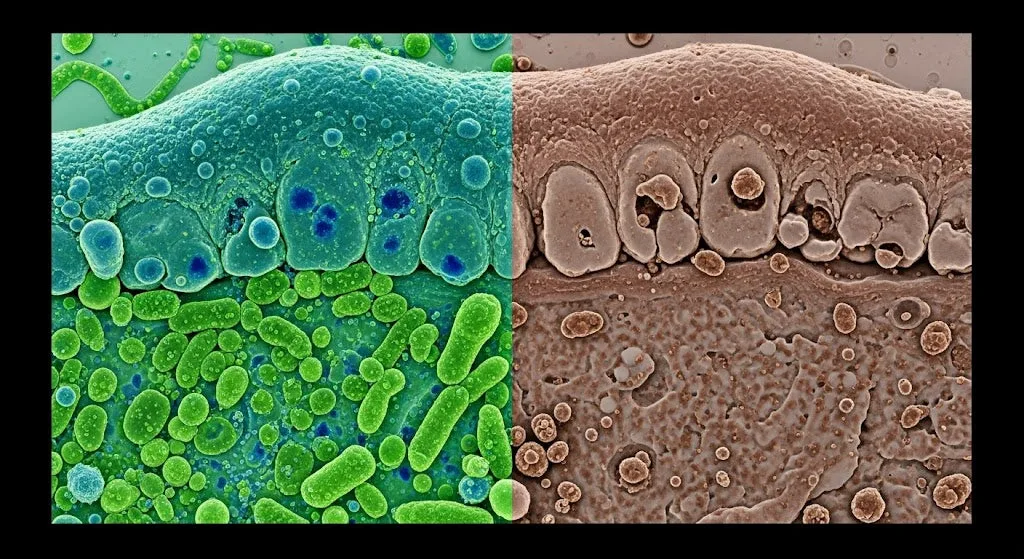
Your mouth hosts a community of bacteria, most of them harmless or helpful. One nice example of why balance matters: some of the bacteria on the back of your tongue convert dietary nitrate (abundant in leafy green vegetables) into nitrite, which your body then turns into nitric oxide, a molecule that supports healthy blood flow. Research has found that strong antiseptic mouthwashes can blunt this nitrate-to-nitric-oxide pathway — which is another reason to reserve harsh antiseptic rinses for when they're actually needed, rather than swilling them several times a day out of habit. The everyday goal isn't to sterilize your mouth; it's to keep plaque under control while leaving the broader balance intact.
📋 Please note: Dental Pro 7 is a daily-care cosmetic concentrate that supports the appearance of healthy-looking gums. It is not a treatment for gum disease or any condition, and is not a substitute for professional dental care.
If you'd rather keep it simple
You don't need an exotic routine — just one that suits your mouth. If you're avoiding SLS, alcohol and preservatives, a detergent-free format is one option: Dental Pro 7 is SLS-free, alcohol-free, preservative-free and fluoride-free — a 100% lipid (water-free) botanical concentrate used in place of toothpaste. Rather than foaming, it clings to the gum line to support the look and feel of firmer, pinker, healthier-looking gums and fresher breath. Put four drops on your toothbrush, brush gently, then spit — don't rinse. (If you want fluoride's anti-cavity protection, keep a fluoride toothpaste in your routine too — the two aren't mutually exclusive.)
How to choose your oral-care products
- Read the front, then the back. "Natural" is a marketing word; the ingredient list is the real information.
- Match products to your mouth. Sensitive or ulcer-prone? Go SLS-free and alcohol-free. No issues? You don't need to change much.
- Keep fluoride unless you've a reason not to. It's the most reliable cavity protection there is.
- Save the heavy antiseptics for when your dentist recommends them.
Frequently Asked Questions
Are the chemicals in toothpaste actually harmful?
Most are harmless. The ones worth knowing about are SLS (can irritate sensitive mouths), alcohol in rinses (drying), and strong antiseptics like chlorhexidine (intended for short-term use). Fluoride is protective at normal levels, not a concern.
Should I use natural or chemical-free toothpaste?
"Chemical-free" isn't really a thing — water is a chemical. What matters is whether specific ingredients suit you. If you're sensitive or ulcer-prone, SLS-free and alcohol-free options can help; otherwise a standard fluoride toothpaste is fine.
Does mouthwash damage the oral microbiome?
Strong antiseptic rinses can shift the balance of mouth bacteria and blunt the nitrate-to-nitric-oxide pathway, which is why they're best reserved for short-term or specific use rather than daily habit. Alcohol-free rinses are gentler for everyday use.
Is Dental Pro 7 free from these ingredients?
Yes. Dental Pro 7 is SLS-free, alcohol-free, preservative-free and fluoride-free — a water-free, lipid-based concentrate for daily gum-line care.