How Long Do Bitten Nails Take to Grow Back? The Real Recovery Timeline
Last updated: 27 July 2026
Quick Answer
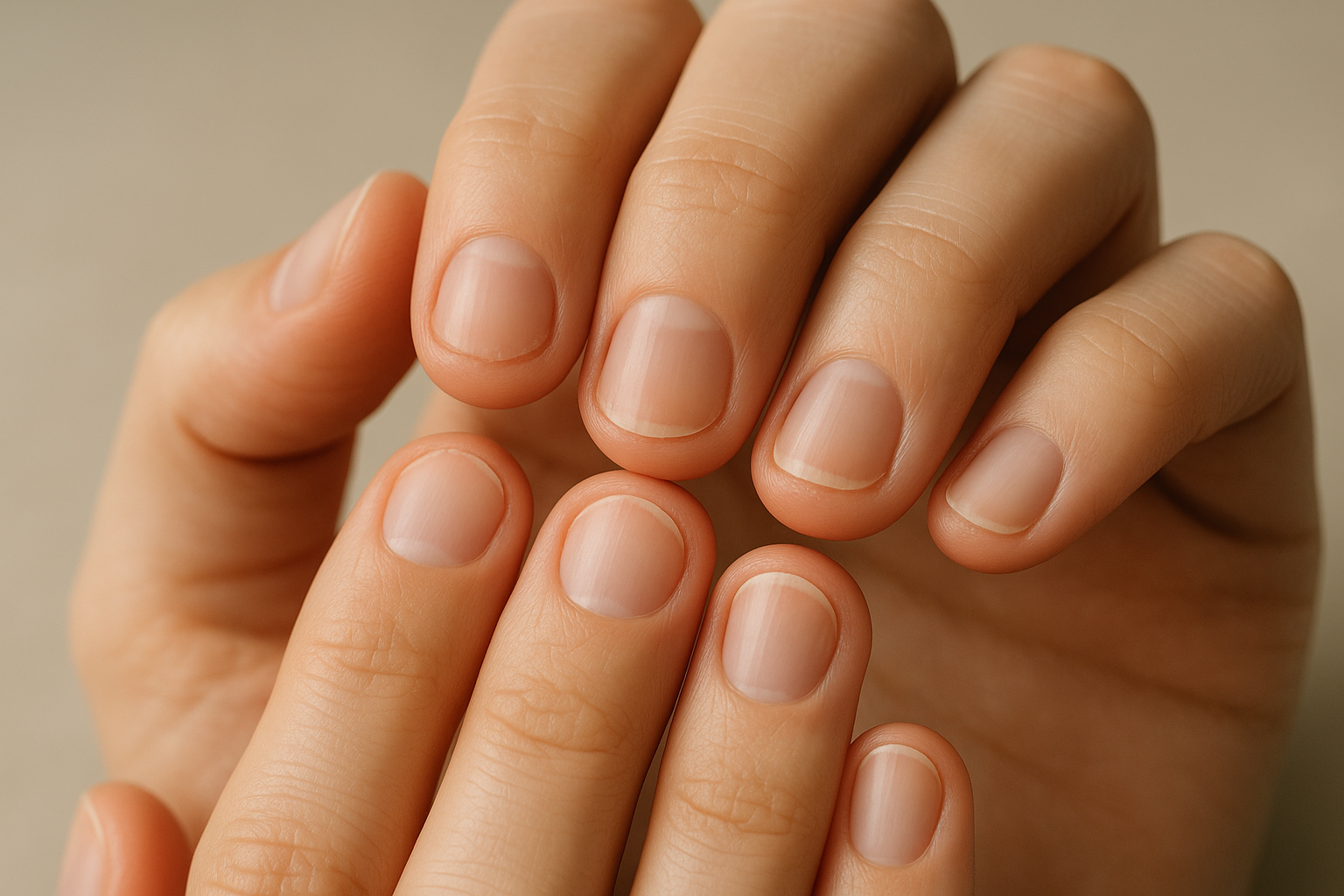
Bitten nails start regrowing the day you stop — fingernails advance at an average of about 3.47 mm per month, so you'll usually see a real free edge in 4 to 6 weeks, a filable, groomed-looking nail by 8 to 12 weeks, and a nail plate that is 100% post-biting keratin at around 6 months. The nail plate itself almost always recovers, because the matrix that makes it sits protected under the cuticle and is rarely destroyed by biting. The part that may not fully return is the nail bed: if biting exposed the skin under the nail for years, that bed can keratinise and shorten, leaving a permanently shorter, wider-looking nail even after the habit stops. So the honest answer is yes, they grow back — but the shape of the recovery depends on how much bed you still have. Keeping the new free edge flexible rather than glass-hard is what stops the cycle restarting; a formaldehyde-free lipid conditioner such as Provité Nail Elixir is one example of that approach, though the two-week protocol below matters far more than any bottle.
First, what biting actually damages
Nail biting — onychophagia to a dermatologist — is far more common than people assume. A review in the Journal of Dermatological Treatment puts prevalence at roughly 20–30% of the population, with around 19–22% of young adults biting habitually and rates falling with age (Halteh, Scher & Lipner, 2017). If you're reading this at 34 wondering whether two decades of biting has ruined your hands, you are in extremely large company.
To predict your recovery you need to know which of four structures took the damage, because they heal on completely different clocks:
- The nail plate — the hard part you bit off. Already dead keratin. It doesn't "heal"; it gets replaced from behind. Recovery is guaranteed and purely a matter of time.
- The matrix — the living factory tucked under the cuticle and the proximal nail fold. It makes the plate. Biting rarely destroys it, but chronic inflammation there produces the ridging, pitting and washboard grooves that show up months later.
- The cuticle and proximal fold — the waterproof seal. Almost always damaged in biters. Recovers in weeks once left alone.
- The nail bed and hyponychium — the pink skin under the plate and the seal at the fingertip. This is the one that can change permanently, and it is the reason some ex-biters have short, stubby-looking nails years later despite perfect habits.
The Merck Manual's nail-trauma chapter, authored by nail specialist Shari Lipner of Weill Cornell Medicine, states it plainly: chronic biting inflames the matrix and can produce horizontal ridging, depressions and raised areas; the cuticles are "almost always damaged," disrupting the nail's waterproof seal; and "nails can become shortened permanently because the distal nail bed becomes keratinized" (Merck Manual Professional Edition, 2025). That single sentence explains almost every disappointed "but they still don't look normal" post on the internet — and almost none of those posts mention it.
The month-by-month regrowth timeline
Nail growth is one of the most predictable things about the human body. A study of healthy American young adults published in the Journal of the European Academy of Dermatology and Venereology measured average fingernail growth at 3.47 mm per month (toenails: 1.62 mm) — and, interestingly, found nail biters trended slightly faster, not slower (Yaemsiri et al., 2010). Complete replacement of a fingernail takes roughly six months, which is why clinicians tell patients with bruising near the cuticle to expect about half a year for it to grow out (Merck Manual Professional Edition, 2025).
Put those two facts together and you can build an actual calendar instead of a vague "be patient." Here is what to expect from the day of your last bite, assuming an average adult index finger with roughly 13 mm of visible nail plate:
Bitten-Nail Recovery Calendar
| Time since last bite | New nail grown | What you'll actually see |
|---|---|---|
| Days 1–7 | ~0.8 mm | Nothing visible on the plate. Soreness and redness around the folds settles. Ragged skin edges stop catching. |
| Week 2 | ~1.7 mm | The cuticle begins re-forming as an intact seal — the first genuine sign of progress, and the easiest one to wreck by picking. |
| Week 4 | ~3.5 mm | A thin white free edge appears past the fingertip, if the hyponychium is intact. This is the most fragile moment; the new edge is thin and snaps easily. |
| Weeks 6–8 | ~5–7 mm | Enough edge to file and shape. Any ridging from the last bites is now visible in the middle of the plate and moving forward. |
| Weeks 10–13 | ~8–11 mm | Roughly two-thirds to three-quarters of the visible plate is post-biting nail. Most people call this the "they look normal now" point. |
| Month 6 | ~21 mm | Full turnover. Every millimetre you can see was grown after you stopped. Ridging from matrix inflammation has grown out and gone. |
| Months 6–12 | — | The slow phase: any recovery of nail-bed length happens here, gradually and only partially. What you have at 12 months is close to your new baseline. |
Figures calculated from the 3.47 mm/month average above; individual growth varies with age, finger and season, and the little fingernail is consistently the slowest. Treat the milestones as the shape of the curve, not a promise of exact dates.
Two practical consequences fall out of this table. First, the four-week mark is where most relapses happen — not because willpower fails, but because the first thin free edge catches, tears, and hands you a jagged edge that is almost irresistible to bite off. Second, ridges are not new damage. When a ripple appears mid-plate in week eight, that is old matrix inflammation from your biting days finally becoming visible, roughly two months after the fact. It is evidence of a problem you already solved.
The part almost nobody tells you: the disappearing nail bed
If your nails look short, wide and stubby even after months of clean growth, the plate isn't the problem — the bed underneath it is.
When the nail plate stops covering the bed for a long period, the exposed bed can epithelialise: it hardens, keratinises and even develops fingerprint-like ridges, behaving like ordinary fingertip skin instead of a nail bed. Dermatologists call this the disappearing nail bed, first characterised by Daniel, Tosti, Iorizzo and Piraccini in Cutis (Daniel et al., 2005). A follow-up study in Skin Appendage Disorders defined it formally as a nail at least 20% shorter and/or narrower than the matching nail on the other hand, and found it in 71 of 540 patients examined — about 13% (Daniel & Tosti, 2017). Once the bed has cornified, the advancing plate has nothing to adhere to, so it simply stops there.
That literature was written mainly about long-standing onycholysis, but the mechanism is identical to what years of biting past the fingertip does: it strips the plate's cover from the bed and keeps it stripped. It's also exactly what Merck describes as the cause of permanently shortened nails in biters.
The 20% Test: check your own nail bed in 30 seconds
Because the clinical definition is comparative, you can run a rough version of it yourself:
- Pick a nail you bit hardest and the same nail on the opposite hand — or, if you bit all ten equally, compare a finger you bit less (many people spare the thumb or little finger).
- Measure the pink portion only — cuticle to the point where the nail stops being pink and becomes white free edge. That pink length is your nail bed.
- If one is 20% shorter or narrower than its twin — say 9 mm versus 12 mm — that difference is bed loss, not a growth problem, and no amount of extra waiting will change it.
- If the pink lengths match, you have your full bed. Everything you're unhappy about is plate quality, and plate quality is on the six-month clock above.
Is bed loss reversible? Cautiously, sometimes, partially. Two published case reports in the Journal of Cosmetic Dermatology describe a shortened, trauma-related nail bed improving with a combination of taping, orthonyxia (a nail brace) and topical treatment (Adamczyk et al., 2023). Two case reports are a long way from proof, and this is firmly a see-a-dermatologist conversation rather than a home project — but "keep the plate attached as far forward as possible and give it time" is the consistent theme.
What recovers, what may not
| Damage | Recovers? | Realistic timeframe |
|---|---|---|
| Short, chewed nail plate | Yes — fully | 4–12 weeks to look normal; 6 months to full turnover |
| Torn cuticles, damaged seal | Yes | 2–4 weeks if left completely alone |
| Ridges, dips and washboard grooves | Usually — they grow out | Up to 6 months, moving forward as they go |
| Thin, peeling free edge | Yes, with protection | 4–8 weeks of consistent conditioning and one-direction filing |
| Shortened, keratinised nail bed | Often not, or only partly | Months to years; may be permanent |
| Scarred matrix (rare, after abscess or severe chronic trauma) | No — dystrophy can be permanent | Needs a dermatologist |
That last row deserves a word rather than alarm. Merck notes that eventual scarring of the cuticle and matrix can make dystrophy irreversible, and that bacterial abscesses around bitten nails occasionally require surgical drainage — after which permanent deformity is still possible (Merck Manual Professional Edition, 2025). This is uncommon, but it's the reason a red, swollen, painful finger fold is a same-week appointment, not a wait-and-see.
The first 14 days: a protocol built around the relapse window
Everything above says the same thing: the nail will regrow on schedule if you can survive the fortnight in which there is nothing to show for it and the fortnight after that in which the new edge keeps tearing. So the protocol targets exactly those.
- Days 1–3 — remove the triggers, not just the habit. Cut every nail level with a clipper and file the corners smooth in one direction. A snag is a trigger; a smooth edge isn't. The American Academy of Dermatology's own list starts here, and adds identifying your specific triggers — hangnails, boredom, stress — rather than relying on general resolve (American Academy of Dermatology).
- Days 1–14 — put something in the way. Bitter-tasting polish, a long-wearing manicure, tape, or gloves in the evening all work by the same logic: they insert a half-second of conscious thought between impulse and bite. Merck specifically lists foul-tasting polish and obstructive manicures such as dip powder as first-line habit-breaking techniques (Merck Manual Professional Edition, 2025).
- Days 1–14 — give the hand a competing job. This is the evidence-backed half. In a randomised comparison with a placebo control, habit reversal training — awareness training plus a physically incompatible competing response — increased nail length by 22% versus 3% for placebo, holding at 19% versus 0% at follow-up (Twohig et al., 2003). A stress ball or fidget object is the cheap home version.
- Every day — condition the free edge and the folds, twice. The new edge arriving in week four is the thinnest nail you will own all year. Nail fragility is common in its own right — a dermatology review in Dermatology and Therapy notes it affects up to about 20% of people — and layer separation at the tip is what turns a fresh edge into a jagged one (Chessa et al., 2019). Conditioning morning and night is the single highest-leverage habit of the whole first month.
- Weeks 2–8 — protect from water, not with it. Gloves for washing up and cleaning. The AAD recommends this for anyone growing nails out, and repeated swelling and drying of the free edge is precisely what loosens the keratin layers (American Academy of Dermatology).
- If it isn't working, escalate. Biting is classified among the body-focused repetitive behaviours and is frequently underrecognised, partly because patients are embarrassed to raise it. Dermatology reviews cover behavioural therapy and, in some cases, supplements such as N-acetylcysteine or referral for comorbid anxiety (Lee & Lipner, 2022). If you have tried repeatedly and can't stop, that is a clinical conversation worth having, not a character flaw.
Where a flexible-strength conditioner fits: Provité Nail Elixir
Regrowth after biting fails at one specific point — the thin new free edge in weeks four to eight, which tears, leaves a snag, and hands the habit its way back in. Keeping that edge supple is worth more than making it hard.
That is the idea behind Provité Nail Elixir: a 100% botanical-lipid, formaldehyde-free conditioner designed to saturate between the nail's keratin layers rather than shellac over the top. Classic hardeners work by cross-linking keratin, which makes a stiff, glassy tip that can shatter — the opposite of what a recovering nail needs. Provité is built for flexible strength: nails that bend around a knock instead of snapping. It works on bare nails or under gel and acrylic, and supports the appearance of stronger-looking, better-groomed, more resilient nails while your own growth does the actual work.
It's blended from 13 botanical lipids — including hemp seed, grapeseed, sesame seed, jojoba, avocado, camellia tea and carrot seed, with vitamin E — with no formaldehyde, no harsh solvents and no fillers. Like the rest of the range it was formulated by S. C. Aris and is backed by a 90-day money-back guarantee. Provité holds a 4.73 out of 5 rating across 15 verified buyers. In a customer survey, 88% reported stronger, less-brittle-feeling nails within four weeks, 9 in 10 said their nails looked longer and more resilient, and 91% said they were no longer self-conscious about their hands.
Related reading: why your nails won't grow past a certain length, why your nails are weak and brittle, and cuticle care and natural nail care.
Frequently asked questions
How long does it take for bitten nails to grow back?
A visible free edge usually appears in about four weeks, a filable and normal-looking nail in eight to twelve weeks, and complete replacement of the whole plate at around six months, based on an average fingernail growth rate of 3.47 mm per month (Yaemsiri et al., 2010).
Will my nails ever look completely normal again?
The nail plate almost always does, because the matrix that makes it is rarely destroyed by biting. What may not fully return is nail-bed length: if the bed was exposed for years it can keratinise, leaving a permanently shorter nail (Merck Manual Professional Edition, 2025). Use the 20% test above to tell which situation you're in.
Why are my nails ridged now that I've stopped biting?
Ridges and dips reflect earlier inflammation of the matrix under the cuticle, and only become visible once that section of plate has travelled forward — typically weeks or months after the damage. They usually grow out entirely within about six months.
Does anything make nails grow back faster?
Not meaningfully. Growth rate is remarkably fixed in healthy adults; the practical lever is losing less length to breakage, not gaining more speed. If nails are genuinely growing slowly alongside colour, shape or thickness changes, see a doctor.
Can Provité repair the damage from nail biting?
No — it's a cosmetic conditioner, not a treatment. It's designed to support the appearance of stronger, more flexible nails so the fragile new edge is less likely to tear while your own growth replaces the plate.
This article is for general information about the appearance and care of nails and is not medical advice. Provité Nail Elixir is a cosmetic product; it is not intended to diagnose, treat or cure any condition. See a doctor or dermatologist for a red, swollen or painful finger, for nails that change colour, shape or thickness, or if you have tried repeatedly to stop biting without success.