What Should a Natural Gum Health Routine Include? The Core Four, the Optional Extras — and What to Skip
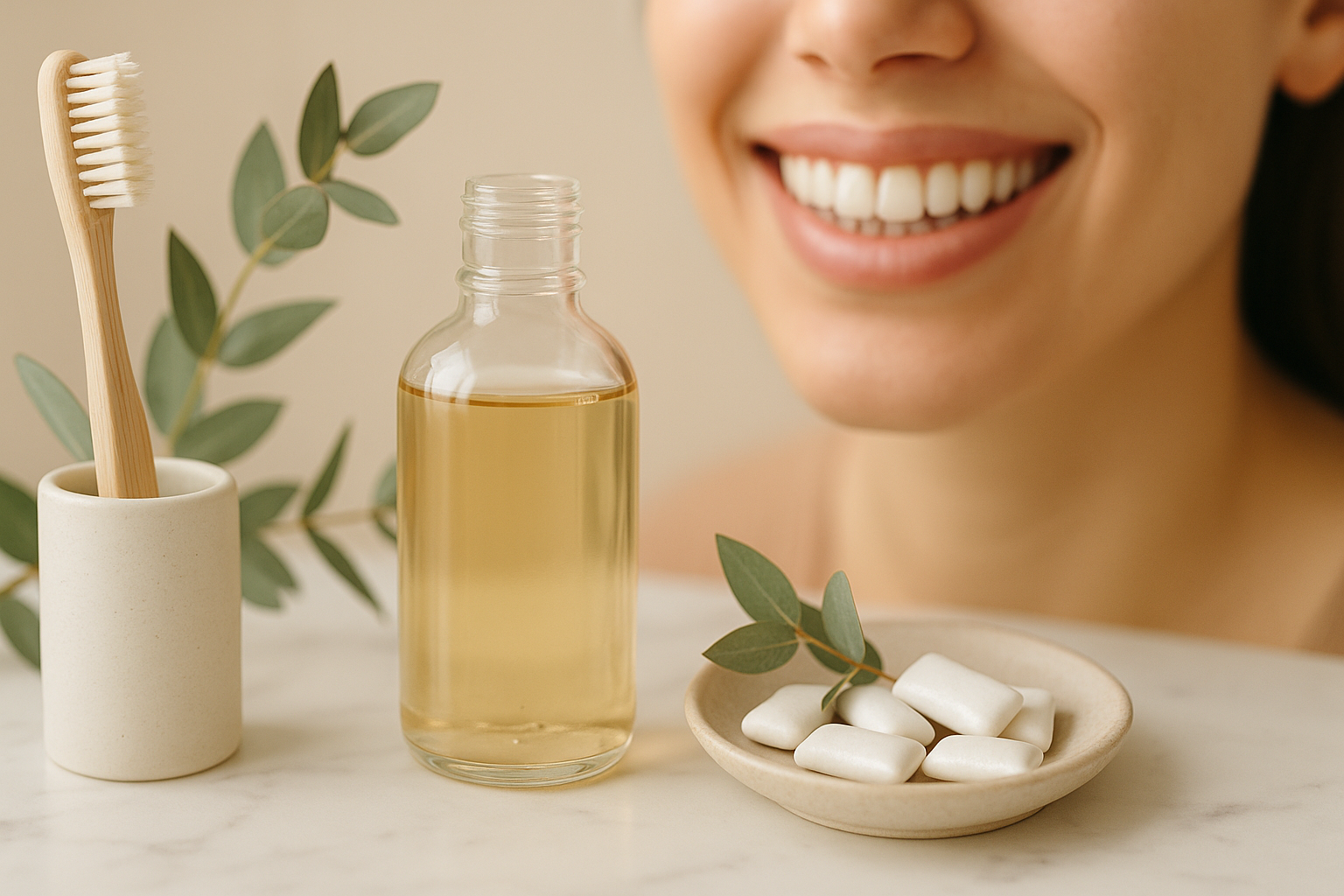
Last updated: 3 September 2026
Walk down any oral care aisle and "natural gum care" looks like a shopping list: rinses, oils, powders, sprays. But healthy gums don't come from owning more products — they come from disrupting dental plaque, gently and completely, every single day. This guide sorts the whole "natural routine" question into three honest piles: the core four steps that do the real work, the supporting habits and optional extras that can earn a place around them, and the things you can comfortably skip.
Why a better routine beats a bigger routine
Gum trouble almost always starts the same way: plaque — a soft, sticky film of bacteria — collecting along the rim where tooth meets gum. Left undisturbed, it irritates the gum margin; according to the CDC, nearly half of US adults aged 30 and older show some form of gum disease, and everyday plaque is the main driver.
Here's the part the product aisle doesn't tell you: plaque is soft. It doesn't need to be dissolved, burned off, or overpowered — it needs to be wiped away with well-aimed, light contact. That's why the mechanical steps below are the backbone of every credible gum routine, natural or otherwise, and why nothing you swish, chew, or apply afterward can substitute for them. A "natural" approach done well isn't about adding gentler versions of more products; it's about doing a short list of things precisely, then choosing add-ons with a clear job.
The core four: the non-negotiables of any gum routine
- Clean between your teeth once a day. This is the step most people skip, and it's the one a toothbrush can't cover — the surfaces between teeth and just under the gumline curve. Floss, interdental brushes, or a water flosser all work; the best tool is the one that fits your spaces and that you'll use daily. If you're weighing the options, our comparison of interdental brushes vs. floss walks through which suits which gaps.
- Brush for two full minutes, twice a day, softly. Use a soft-bristled, compact head — the American Dental Association recommends soft bristles for good reason — and angle the bristle tips toward the gum line with light pressure. Technique matters more than force or gadgetry; if your gums are tender or you want the full gumline-first method, our step-by-step brushing guide covers it in detail.
- Sweep your tongue. A quick daily pass with your brush or a tongue scraper clears the debris that collects on the tongue's surface and contributes to stale breath. Ten seconds is plenty.
- Spit — don't rinse. After brushing, spit out the toothpaste and skip the water chaser, so the fluoride keeps working on your enamel. (If fluoride itself is the ingredient you're unsure about, we've looked at the evidence on fluoride in a balanced deep-dive.)
Morning and night, the core never changes. Everything else in this article is arranged around it.
The supporting habits that quietly matter
A handful of unglamorous habits multiply what the core four achieve. Drink water steadily through the day — saliva is your mouth's built-in rinse and buffer, and it needs you hydrated. Keep sugary or acidic drinks and snacks to mealtimes instead of grazing, so plaque bacteria get fed occasionally rather than continuously. After meals, ten minutes of sugar-free gum boosts saliva flow and helps clear food debris — a genuinely useful "natural" habit that costs almost nothing.
And replace your brush or brush head every three months, sooner if the bristles splay. Splayed bristles clean poorly at the gum line — and bristles that splay within a few weeks are a sign you're pressing too hard.
The optional extras: which natural add-ons earn a place?
Botanical and plant-based rinses. A rinse can be a pleasant supporting act, but treat it as a flexible extra, not a daily requirement — the American Dental Association is clear that brushing and between-teeth cleaning remain the foundation. A sensible pattern is a short swish on some days rather than reflexively after every snack, and alcohol-free formulas tend to feel gentler on gum tissue — we've compared alcohol-free vs. regular mouthwash if you're choosing one. If a rinse stings, that's a reason to stop, not push through.
Oil pulling. Swishing an edible oil is a traditional practice some people enjoy as a pre-brush ritual. The honest summary: it may freshen the mouth's feel, the supporting research is limited, and it removes nowhere near what bristles and interdental tools do — so it can only ever be an add-on. Our complete oil pulling guide covers how to do it sensibly if you're curious.
A nightly botanical finishing step. If you'd like your routine to end with something applied to the gum line rather than swished past it, Dental Pro 7 is a professional-strength, 100% water-free botanical lipid concentrate designed for exactly that job. Brushed gently along the gum line after your evening core four — a few drops on a dry brush, then spit without rinsing — its lipid base clings where water-based products wash away in seconds, carrying botanicals such as immortelle helichrysum, pomegranate seed, black cumin seed, Indian myrrh, and wild clove.
To be clear about its place in the pile: Dental Pro 7 is a cosmetic finishing step that supports the appearance of firmer, pinker, healthier-looking gums and long-lasting fresh breath. It does not treat or cure gum disease, and it never replaces the cleaning steps above. It's rated 4.81 out of 5 across 190 verified buyers and comes with a 90-day money-back guarantee. Shop Dental Pro 7 →
What you can comfortably skip
- Hard-bristled brushes and gritty, abrasive pastes. They don't remove plaque better; they wear at enamel and the gum edge.
- Harsh DIY mixes. Straight vinegar, undiluted hydrogen peroxide, lemon rubs — acidic or caustic "hacks" irritate the tissue you're trying to care for.
- Stacking several strong products at once. Introduce one change at a time and give it a week or two, so you can tell what's helping and what's just stinging.
- Rinsing away your toothpaste. A water rinse straight after brushing undoes the spit-don't-rinse advantage.
- Upgrading products instead of technique. If plaque or tenderness lingers, the fix is usually aim, angle, and consistency — not a stronger bottle.
The weekly self-check: three signals to track
Once a week, take thirty seconds in good light. First, breath: is it staying fresher through the day? Second, the gum line: any visible film or chalky buildup along the margins? A disclosing tablet — a dye tablet that tints leftover plaque — will show you exactly where your technique is missing. Third, comfort: any spots that feel tender or bleed when you brush or clean between teeth?
A little bleeding when you first tighten up a routine is common and usually settles as plaque comes under control — we've mapped the typical day-by-day timeline for bleeding gums. If you want to know what early trouble looks like so you can catch it, our early gum disease self-check shows the signs most people miss. And if your gums are already sore right now, start with our step-by-step plan for soothing sore gums — it's the gentle on-ramp to everything in this article.
One extra note if you wear clear aligners or a retainer: the appliance collects its own film, so clean it daily and brush the gum line right after you take it out — our guide to aligner and retainer breath explains why that margin matters.
When a home routine isn't enough
Even a flawless natural routine has honest limits. Plaque that mineralizes into tartar can't be brushed off — it needs a professional cleaning, which is why a checkup every six to twelve months belongs inside your routine, not outside it. Your dental team can also size interdental brushes to your gaps and fine-tune technique in minutes.
See a dentist promptly — rather than adjusting products — if bleeding or tenderness persists beyond two weeks of careful daily care, if gums are pulling away from teeth, if breath stays stubbornly bad, or if a tooth feels loose. The National Institute of Dental and Craniofacial Research has a plain-language overview of the warning signs, and our guide to how gum disease is treated, stage by stage covers what professional care involves. Home care and professional care are teammates: one controls the daily film, the other handles what home tools can't reach.
Frequently asked questions
What's the most important part of a natural gum health routine?
Daily plaque removal — cleaning between your teeth once a day and brushing gently at the gum line twice a day. Plaque is a soft film that lifts off with well-aimed, light contact, and no rinse, oil, or supplement can substitute for physically disrupting it. If you improve just one thing, make it the between-teeth step most people skip.
Do you need mouthwash every day for healthy gums?
No. Mouthwash is an optional add-on, not a required step — daily brushing and between-teeth cleaning are the foundation. If you enjoy a rinse, an alcohol-free formula on some days is a reasonable pattern; treat it as a helper you can skip, not a requirement, and stop using anything that stings.
Does oil pulling replace brushing or flossing?
No. Swishing oil can't remove plaque the way bristles and interdental cleaning physically do, and the research behind oil pulling is limited. If you enjoy it, treat it as an optional extra before your normal routine — never as a replacement for any of the core steps.
How long does it take for a gum care routine to show results?
Give it about two weeks of consistent daily care. Tenderness and bleeding from early, plaque-driven irritation usually ease noticeably within one to two weeks, and breath often improves sooner. If bleeding, soreness, or swelling persists beyond two weeks of careful cleaning, book a dental exam rather than adding more products.
Can a natural routine handle gum disease on its own?
Early, gum-level irritation (gingivitis) generally settles with thorough daily cleaning plus a professional cleaning to remove hardened tartar. More advanced gum disease — deeper pockets, receding gums, loose teeth — needs a dentist's care, because no home routine can reach the bottom of deep pockets. Home care and professional care work together, not in place of each other.
This article is general educational information about daily gum care, not dental or medical advice. Dental Pro 7 is a cosmetic product that supports the appearance of healthy-looking gums; it does not treat, prevent, or cure any disease. For diagnosis or treatment of gum problems, see a dentist or dental hygienist.