Receding Gums From Brushing Too Hard: How to Stop It (and What Actually Helps)
Last updated: 1 July 2026
Quick answer
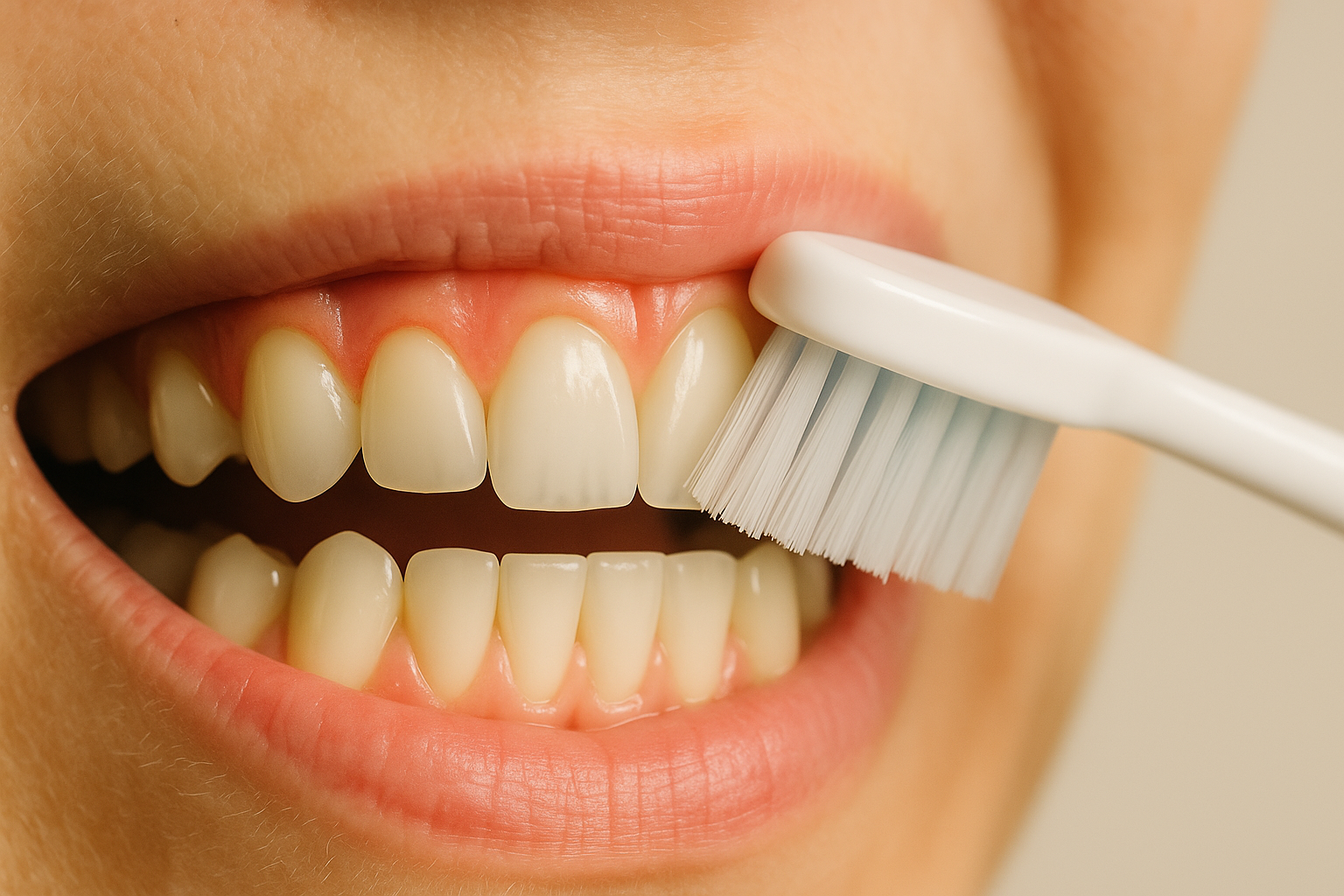
Yes — brushing too hard is one of the most common mechanical causes of gum recession. Scrubbing with heavy pressure, a hard- or medium-bristled brush, or a fast back-and-forth sawing motion gradually wears the delicate gum margin away from the tooth, exposing the root. The gum tissue that has already receded does not grow back on its own, so the priority is to stop the damage from getting worse. You do this by switching to a soft (or extra-soft) toothbrush, holding it like a pencil, keeping the pressure light — roughly the force it takes to hold a ripe tomato without bruising it — angling the bristles at 45° to the gum line, and using small circular or gentle vibratory movements instead of a hard scrub. Once your technique is corrected, a gentle, gum-focused care routine helps the exposed area look calmer and the gum margin look firmer and healthier. A water-free botanical concentrate such as Dental Pro 7 is one example of a gentle, low-abrasion alternative to foaming toothpaste for people who want to be kinder to a worn gum line.
How brushing too hard causes gum recession
Your gum margin — the thin scalloped edge of tissue where the gum meets each tooth — is only a couple of millimetres of soft tissue over bone. It is not built to withstand repeated heavy abrasion. When you press hard, use stiff bristles, or scrub in a fast horizontal sawing motion, you subject that margin to mechanical trauma every single day. Over months and years, the tissue is worn down and pushed back, and the root surface underneath becomes exposed. Dentists call this pattern toothbrush abrasion, and it often shows up as recession that is worse on the side of the mouth opposite your writing hand (a right-handed person tends to press harder on the left side).
A 2015 systematic review by Heasman and colleagues in the Journal of Clinical Periodontology examined the evidence linking toothbrushing to gum recession and non-carious cervical lesions, and concluded that although a mechanical relationship is biologically plausible and widely observed clinically, much of the human evidence is observational rather than from controlled trials (Heasman et al., 2015, PMID 25495508). In plain terms: aggressive brushing is very consistently associated with worn, receded gums in the dental chair, even if the exact dose-response is hard to pin down in a lab. Consumer guidance from the Colgate oral-health library and Delta Dental both list over-brushing and hard bristles as direct contributors to gum recession and enamel wear.
Two things worth understanding up front, because most articles skip them:
- The recession itself is usually permanent. Once gum tissue has been abraded back and root surface is exposed, that tissue does not spontaneously return to its old position. Worn enamel and root structure do not regenerate either. This is why prevention and stopping further loss matters so much — you are protecting what you still have. (For the full picture on regrowth, see our guide to whether receding gums grow back.)
- Abrasion recession is different from gum-disease recession. They look similar but have opposite drivers — and mixing them up leads people to brush harder to "clean away" a problem that hard brushing is actually causing.
Is it brushing damage or gum disease? A self-check
This is the single most useful thing to get right, and it is the asset most competing articles leave out. Recession from over-brushing and recession from periodontal (gum) disease need almost opposite responses. Use the table below as a starting point — it does not replace a dental exam, but it helps you frame the conversation.
| Clue | More like brushing abrasion | More like gum disease |
|---|---|---|
| Gum colour & texture | Firm, pale-pink, not swollen | Red, puffy, tender, glossy |
| Bleeding when you brush or floss | Uncommon (unless you just scrubbed hard) | Common, even with gentle contact |
| Pattern of recession | Often V-shaped notches at the gum line, worse on one side of the mouth | More generalised, follows plaque/tartar build-up |
| Toothbrush condition | Bristles splayed & frayed within weeks | Bristles wear normally |
| Breath & taste | Usually normal | Persistent bad taste / odour more likely |
| Notch you can feel with a fingernail | Yes — a wedge-shaped groove at the neck of the tooth | Less typical |
Those V-shaped grooves at the neck of the tooth are called non-carious cervical lesions, and they frequently sit alongside brushing-driven recession. They can leave the exposed root feeling sensitive to cold, sweet, or touch. If you have bleeding, swelling, or a bad taste that will not settle, treat that as a possible gum-health issue rather than a brushing one, and see a dentist — our overview of why gums bleed and how gum disease is treated both walk through that side of things. Left unmanaged, gum disease can be one of the drivers behind open gingival embrasures — the "black triangles" between teeth that Healthline notes affect roughly two-thirds of adults over 20.
How hard should you actually brush? The numbers
Most people who over-brush have no idea they are doing it, because "clean" feels like it should require effort. It does not. Plaque is soft and lifts off with very little force; scrubbing harder mainly removes gum and enamel, not more plaque.
Brush with a light touch — most people press far harder than they need to. The clearest sign you are pressing too hard is your brush head: if the bristles splay out within a few weeks, ease off. Here is how the common variables stack up:
| Variable | Gentler on the gum line | Harder on the gum line |
|---|---|---|
| Bristle firmness | Soft or extra-soft | Medium or hard |
| Pressure | Light touch | Heavy, scrubbing pressure |
| Motion | Small circles / gentle jiggle | Fast back-and-forth sawing |
| Grip | Fingertips, like a pencil | Full fist |
| Brush angle | 45° toward the gum line | Flat, 90°, hammering the margin |
| Abrasive load | Low-abrasion paste or a non-foaming concentrate | Highly abrasive "whitening" pastes |
The gentle-brushing protocol (modified Bass technique)
The technique most widely taught for protecting the gum margin is the modified Bass method. It replaces scrubbing with a controlled jiggle-and-sweep. Here is the step-by-step:
- Pick the right brush. A soft or extra-soft manual brush, or an electric brush with a pressure sensor that alerts you when you press too hard. The American Dental Association recommends soft bristles for exactly this reason.
- Grip it like a pencil, not a fist. This alone cuts the force most people use.
- Angle the bristles at 45° toward the gum line so the tips gently reach the little groove where gum meets tooth.
- Jiggle in place, using tiny circular or vibratory movements over two or three teeth at a time — no long horizontal strokes.
- Roll or sweep the bristles away from the gum toward the biting surface to clear what you have loosened.
- Move along tooth by tooth for a full two minutes, covering outer, inner, and chewing surfaces.
- Let the tools do the work. If your bristles splay within a few weeks, you are still pressing too hard.
Do this twice a day, and floss once daily with a gentle, hug-the-tooth motion rather than snapping the floss down onto the gum — the ADA emphasises careful flossing precisely to avoid gum trauma.
What helps a worn gum line look and feel better
Correcting your technique stops further loss. Alongside that, a few things can help the area look calmer and the gum margin look firmer and healthier while the tissue settles:
- Drop the abrasion. Swap highly abrasive whitening pastes for a low-abrasion product. Foaming agents (like SLS) and grit do nothing for your gums — see our piece on whether foaming agents harm your gums.
- Manage sensitivity. Exposed root can twinge with cold or sweet. A sensitivity-oriented approach and avoiding acidic over-brushing helps day to day.
- Be consistent and gentle. A calm, low-friction routine morning and night is far kinder to a receded margin than an occasional vigorous scrub.
- See a dentist for the notches. Wedge-shaped cervical lesions can sometimes be smoothed or filled, and significant recession can be assessed for grafting. That is a professional decision.
A gentler alternative to foaming toothpaste: Dental Pro 7
If part of your problem is a highly abrasive, foaming paste being scrubbed hard against an already-worn gum line, a low-abrasion, water-free option can make the daily routine kinder. Dental Pro 7 is a 100% water-free botanical lipid concentrate designed to support the appearance of firmer, pinker, healthier-looking gums — without the grit, foaming agents (SLS), fluoride, or preservatives found in conventional toothpaste.
Because it's lipid-based rather than water-based, a few drops go on the brush dry and stay clinging to the margin for hours after you spit — no rinse, no foam, just quiet contact time long after a paste would have washed off.
Dental Pro 7 is formulated by S. C. Aris, is vegan and non-GMO, holds a 4.81 out of 5 rating from 190 verified buyers, and is backed by a 90-day money-back guarantee. It is a cosmetic product intended to support the appearance of healthier-looking gums and fresh breath; it is not a medicine and does not treat or cure gum disease. If you have bleeding, swelling, pain, or loose teeth, see a dentist. View Dental Pro 7 →
Frequently asked questions
Can gums grow back after brushing too hard?
No — gum tissue that has receded from abrasion does not grow back to its original position on its own, and worn enamel does not regenerate. That is why stopping further damage with a soft brush and light technique is the priority. In advanced cases a periodontist can assess whether a gum graft is appropriate.
How do I know if I'm brushing too hard?
The clearest tell is your toothbrush: if the bristles splay out and fray within a few weeks, you are pressing too hard. Gums that look worn with V-shaped notches at the gum line, or feel sore right after brushing, are other signs.
Is an electric toothbrush better for receding gums?
It can be, mainly because many electric brushes have a pressure sensor that warns you when you push too hard and does the movement for you, which retrains a heavy hand. A soft manual brush used with light, correct technique is also fine.
Will switching toothpaste fix it?
Switching to a lower-abrasion product and correcting your technique together protect the gum line better than either alone. A non-foaming concentrate like Dental Pro 7 removes the abrasive-grit factor, but gentle brushing pressure is what actually stops the mechanical wear.
The bottom line
Receding gums from brushing too hard are common, and the good news is the cause is entirely within your control. The tissue you have already lost will not return by itself, but you can stop the recession advancing today: switch to a soft brush, hold it like a pencil, keep the pressure light, angle at 45°, and swap scrubbing for small gentle circles. Add a low-abrasion, gum-friendly routine and your gum margin has the best chance to look firmer, calmer and healthier over time. If there is any bleeding, swelling or a bad taste that will not settle, book a dental check — that points to gum health rather than brushing, and it responds best when caught early.
This article is general information about the appearance and care of gums, not dental or medical advice. For diagnosis or treatment of gum disease or tooth wear, see a dentist.