Why Is My Gum Receding on One Tooth Only? The 7 Causes — and How to Tell Which One You Have
Last updated: July 15, 2026
Quick Answer
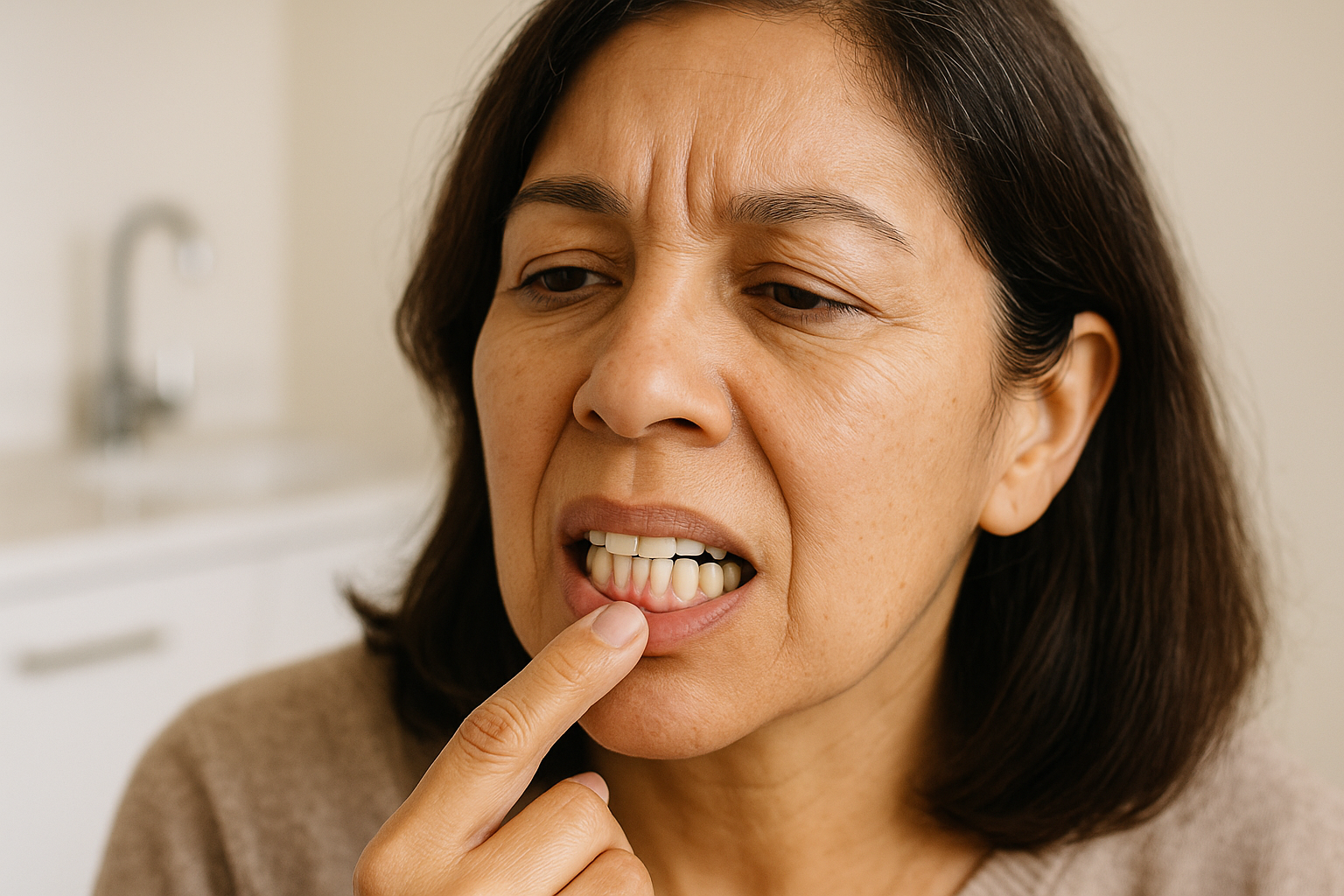
When your gum is receding on one tooth only — while the rest of your gum line looks normal — the cause is almost always localized, not general gum disease. The seven usual suspects are: brushing that tooth too hard, a tooth that sits slightly outside the arch (thin bone and tissue over its root), a tugging frenum (the little band of tissue inside your lip), bite overload or grinding, an old injury, an oral piercing, or an isolated deep pocket. Receded tissue does not grow back on its own, but once you identify and remove the cause, single-tooth recession usually stops progressing — and a periodontist can restore coverage with a graft if needed. Day to day, be gentle with the area and care for the gum line you still have; some people use a botanical lipid concentrate such as Dental Pro 7 as part of their routine to support the appearance of firmer, healthier-looking gums.
One Tooth vs. Every Tooth: Why the Pattern Is the Biggest Clue
Gum recession comes in two very different patterns, and telling them apart is half the diagnosis. Generalized recession — creeping down across many teeth — is usually driven by periodontal problems or years of cumulative wear, and is covered in depth in our guide to whether receding gums grow back. Localized recession — a single tooth whose gum line sits visibly lower than its neighbours — points instead to something mechanical or anatomical acting on that one spot, according to a clinical review of gingival recession in Cureus (2022).
That's actually good news. A localized cause can usually be found, and once found, removed. The rest of this article walks you through the seven causes, the clues that separate them, and a five-minute mirror check you can do tonight.
The 7 Causes of Single-Tooth Gum Recession
1. Brushing that spot too hard (the most common)
Overzealous scrubbing — especially a back-and-forth sawing motion with a medium or firm brush — is the cause dentists suspect first. It typically shows up on canines and premolars, which stick out slightly and take the brunt of the brush stroke, and on the side opposite your dominant hand (right-handed people scrub their left side hardest). A 2007 systematic review in the Journal of Clinical Periodontology (Rajapakse et al.) found the evidence too mixed and inconclusive to confirm or rule out a link between brushing habits and this kind of non-inflammatory recession. If this is your cause, you'll often also see a worn notch at the base of the tooth. We cover the fix in detail in receding gums from brushing too hard.
2. Tooth position: a root with thin cover
A tooth that erupted slightly forward, rotated, or outside the ideal arch often has thinner bone and gum tissue over its root — sometimes almost none. The Journal of the American Dental Association's patient page on gingival recession lists tooth position as a primary cause. Thin tissue over a prominent root is fragile: normal brushing forces that healthy tissue shrugs off can slowly push a thin gum margin down. Clue: the affected tooth visibly juts out or is rotated compared with its neighbours.
3. Frenum pull
The frenum is the small band of soft tissue connecting your lip or cheek to your gum. If it attaches too close to the gum margin of one tooth, every lip movement gives that gum edge a tiny tug — thousands of times a day. Clue: lift your lip outward and watch the gum edge of the affected tooth; if it blanches or moves as you pull, a frenum attachment may be involved. A periodontist can release it with a minor procedure called a frenectomy.
4. Bite overload and grinding (bruxism)
When one tooth meets its opposite number harder than the rest — a "traumatic bite" — or when you clench and grind at night, that tooth absorbs disproportionate force. Excess occlusal force is a recognised contributor to localized gum and bone changes, as outlined in the NIH's StatPearls review of periodontal disease. Clues: a flattened or chipped edge on the tooth, jaw tension in the morning, or a wedge-shaped notch at the gum line (abfraction).
5. Old trauma
A knock from sport, a fall, or even a hard food injury years ago can damage the thin bone plate over one root. The gum follows the bone — so tissue over that spot slowly settles lower. Clue: you can often remember the injury, and the tooth may be slightly darker or have a repaired chip.
6. An oral piercing
Lip and tongue jewellery rubs the same patch of gum all day. Recession confined to the tooth directly behind a labret stud or in the tongue-bar's contact zone is one of the most recognisable patterns dentists see. Clue: the receded tooth lines up exactly with where your jewellery rests.
7. An isolated deep pocket
Occasionally, plaque and tartar establish a deep pocket at a single site — often where floss never quite reaches, beside a crowded contact, or around an old filling or crown margin. Unlike the six mechanical causes above, this one is inflammatory: the gum will usually look red or puffy and bleed when you brush or floss that spot. The Cleveland Clinic notes that gum problems can present locally before they show anywhere else — which is why one bleeding, receding site deserves a professional look. If you smoke, your risk roughly doubles, according to the CDC — and smoking also masks the bleeding that would normally warn you.
Which Cause Do You Have? The Clue-by-Clue Table
Here is the diagnostic shortcut — match what you see in the mirror to the most likely cause and your first move:
| What you notice | Most likely cause | Your first move |
|---|---|---|
| Canine/premolar, opposite your writing hand, worn notch at the base | Brushing too hard | Switch to a soft brush + feather-light circles today |
| The tooth visibly sticks out or is rotated | Tooth position / thin tissue | Be extra gentle there; ask your dentist about tissue thickness |
| Gum edge moves or blanches when you pull your lip out | Frenum pull | Periodontist assessment (possible frenectomy) |
| Flattened tooth edge, morning jaw tension, wedge notch at gum line | Grinding / bite overload | Ask about a night guard and a bite check |
| You remember an injury to that tooth | Old trauma | Dental exam with an X-ray of that root |
| Recession lines up with lip/tongue jewellery | Piercing friction | Remove or shorten the jewellery; monitor |
| That one spot is red, puffy, or bleeds when cleaned | Isolated deep pocket | Book a dental visit promptly for pocket measurement |
The 5-Minute Mirror Self-Check
Do this once, in good light, before your dental visit — it will make the appointment far more productive:
- Photograph it. Take a close-up of the tooth with your phone, and repeat monthly from the same angle. Recession moves slowly; photos catch what memory can't. This is your progression baseline.
- Compare the gum margins. Is only one tooth lower, or are neighbours subtly affected too? One tooth = localized cause. Several = read our full gingival recession guide.
- Do the lip-pull test. Pull your lip out and up (or down) away from the tooth. Watch whether the gum edge tugs or whitens — that implicates the frenum.
- Look for the notch. Run a clean fingernail gently from the tooth's biting edge down to the gum. A ledge or groove near the gum line suggests brushing abrasion or bite stress (abfraction).
- Check for inflammation. Healthy receded tissue is pale pink and firm even though it sits low. Redness, puffiness, or bleeding on gentle flossing points to the pocket cause — the one that most needs a prompt professional visit.
- Note sensitivity. Cold-water wince at that tooth means exposed root surface. Root surfaces lack enamel, so this is common with any cause — but worsening sensitivity is a sign the recession is progressing.
What Your Dentist Will Actually Do (and What "RT1" Means)
A dentist or periodontist will measure the pocket depth around the tooth, check your bite, look at the frenum, and usually classify the recession. Modern practice uses the Cairo classification, from a 2011 study in the Journal of Clinical Periodontology, which sorts recession into three types — RT1 (no loss of attachment between the teeth), RT2 (some interproximal loss), and RT3 (more loss between the teeth than on the front surface). It matters because the study found the type strongly predicts how completely a gum graft can re-cover the root: RT1 defects can often achieve full coverage, while RT3 generally cannot. So if you're told "RT1," that's genuinely encouraging news.
Treatment then depends on cause and severity: correcting the habit or bite, a frenectomy for frenum pull, monitoring for mild stable cases, or root-coverage surgery (connective-tissue grafting and similar techniques) for progressing or sensitive sites, per the Cureus review of when and how to treat gingival recession. If your recession appeared after a professional deep cleaning, that's usually a different phenomenon — swollen tissue shrinking back to a true healthy level — explained in why teeth look longer after a deep cleaning.
Will the Gum Grow Back on Its Own?
No — and any page that tells you otherwise is selling something. Gum tissue that has been lost does not regenerate by itself, whatever toothpaste or rinse you use. What home care can do is remove the cause so the recession stops where it is, keep the remaining margin healthy, and keep the exposed root clean. (Gum inflammation is a different story — early gingivitis is reversible with good care.) For the full picture on what helps and what doesn't, see do receding gums grow back?
Protecting the Gum Line You Still Have: A Daily Protocol
- Go soft and slow. Soft-bristle brush, held like a pen (not a fist), light circular strokes angled 45° toward the gum line. If you use an electric brush, let its pressure sensor be the boss.
- Guard the night. If grinding is your cause, a night guard protects both the tooth and its gum from nightly overload.
- Clean the exposed root gently but daily. Exposed root surfaces gather plaque faster than enamel and are softer, so they need consistent, gentle cleaning.
- Retire the culprit. Piercing out (or a shorter bar), frenum assessed, bite checked — whichever the table above pointed to.
- Re-photograph monthly. If the margin is still moving despite the fix, escalate to a periodontist.
A Gentler Way to Care for a Receding Gum Line: Dental Pro 7
One frustration with caring for a single receding spot is that most gum products are water-based — they rinse away seconds after they touch the gum line. Dental Pro 7 is a water-free botanical lipid concentrate, formulated by S. C. Aris, that's brushed on dry over the receded spot and left in place rather than rinsed away, giving it hours of contact with the margin you're protecting instead of the seconds a rinse-away product manages.
Dental Pro 7 is rated 4.81/5 from 190 verified buyers, with over 500,000 bottles sold, and every order carries a 90-day money-back guarantee — try it for a full three months and judge the look and feel of your gum line for yourself.
Frequently Asked Questions
Is gum recession on one tooth serious?
It's rarely an emergency, but it's always worth investigating, because it tends to progress until the cause is removed. Mild, stable recession with a healthy margin is often simply monitored; recession that is advancing, very sensitive, or inflamed should be assessed by a dentist or periodontist promptly.
Can gum recession on one tooth fix itself?
No. Lost gum tissue doesn't grow back on its own. However, if you remove the cause — softer brushing, a night guard, releasing a tight frenum, removing a piercing — single-tooth recession usually stops progressing, and a periodontist can often restore coverage surgically if needed.
Why is my gum receding on one tooth but I have no pain?
That's typical. Recession is usually painless because it happens slowly; the first symptom for most people is cold sensitivity or simply noticing the tooth "looks longer." Painless doesn't mean harmless — the exposed root is softer than enamel and more vulnerable to wear and decay.
Does Dental Pro 7 make gums grow back over the tooth?
No — no product can regrow lost gum tissue, and we won't tell you otherwise. Dental Pro 7 is a cosmetic botanical lipid concentrate that supports the appearance of a firmer, pinker, healthier-looking gum line as part of a gentle daily routine. For tissue coverage itself, speak to a periodontist about grafting options.
Related Reading
- Do Receding Gums Grow Back, and What Helps Them?
- Receding Gums From Brushing Too Hard: How to Stop It
- Why Do My Teeth Look Longer After a Deep Cleaning?
- Gingival Recession: Causes and Symptoms
- Why Do My Gums Bleed?
Dental Pro 7 is a cosmetic product; it supports the appearance of healthy-looking gums and is not intended to diagnose, treat, cure, or prevent any disease. Gum recession should always be evaluated by a dentist or periodontist, especially if it is progressing, sensitive, or inflamed.