Are Seed Oils Bad for Your Skin? Why the Diet Debate Doesn’t Transfer to Your Face — and the Oleic-vs-Linoleic Rule That Actually Decides It
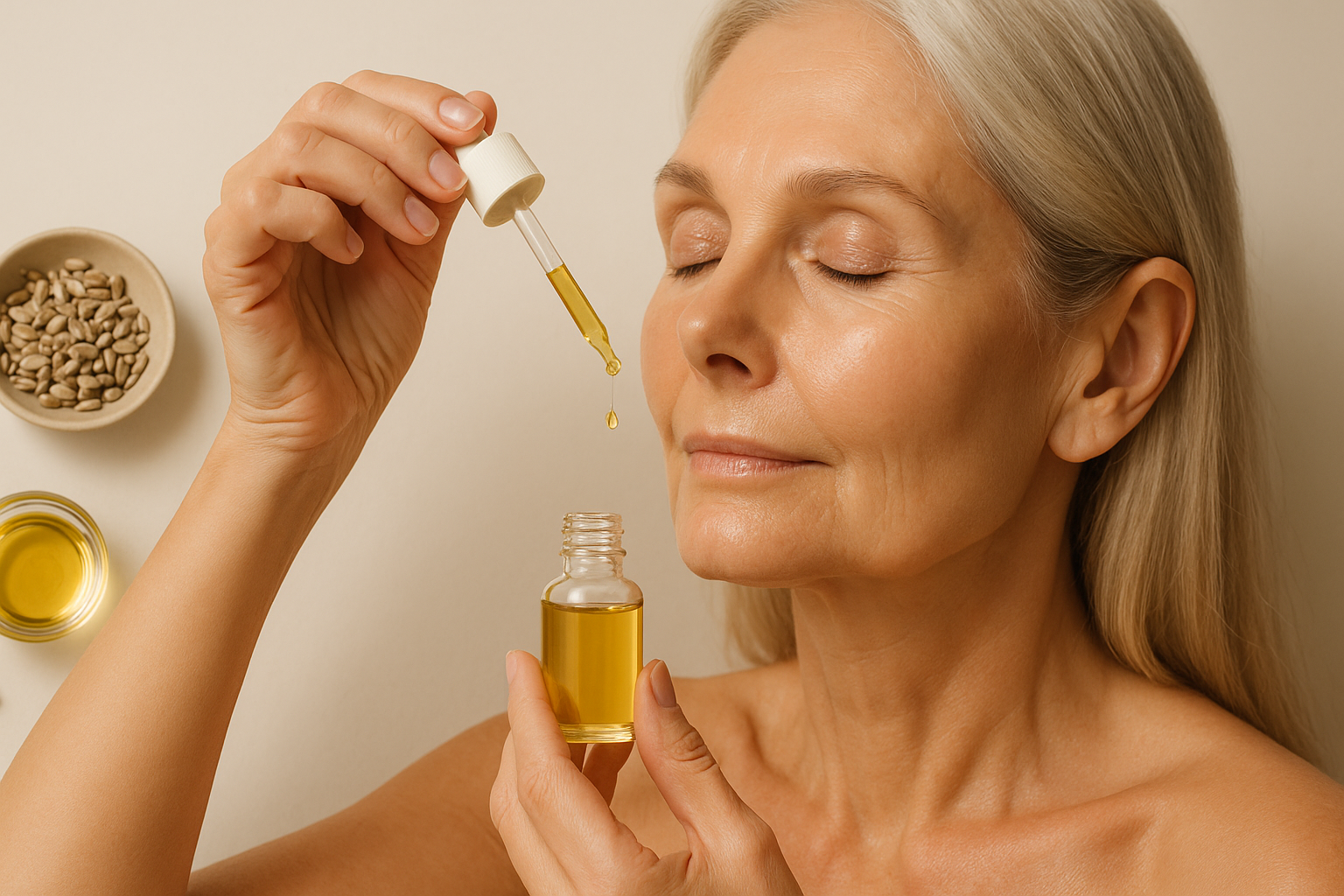
Quick answer
Not in the way the diet debate suggests. The case against seed oils is a case about eating them: refined, heated, often hydrogenated, and mostly arriving inside ultra-processed food. None of that describes a cold-pressed lipid on your face. When researchers actually applied a linoleic-rich seed lipid (sunflower) and an oleic-rich fruit lipid (olive) to adult forearms for four to five weeks, it was the olive that weakened and thinned the outer skin layer (by about 23% in the five-week arm) and caused mild redness, while sunflower preserved it and raised hydration by 12–18% (Danby et al., Pediatric Dermatology 2013). Linoleic acid, the omega-6 fat the diet argument vilifies, is one your skin cannot make and visibly needs: in 1975, two weeks of sunflower-seed oil on the forearm cleared the scaly skin of linoleic-deficient patients while olive oil on the other arm did nothing. The real questions for a bottle on your shelf are different: is the “sunflower” in it the linoleic-rich kind or a high-oleic cultivar (the label will not tell you), and has it oxidised? That is why we suggest judging a botanical lipid serum by its fatty-acid ratio and its freshness rather than by the word “seed”; SD7 Lipid Serum, whose fatty-acid ratios are audited batch by batch, is one example of a formula built on exactly that logic. One firm exception: newborn skin, where a UK trial found both olive and sunflower oil slowed barrier development, so no oil at all is the evidence-based choice.
Last updated: 20 September 2026
“Seed oils” went from an ingredient category to a villain in about three years. Restaurants advertise seed-oil-free fryers. Skincare brands now print “no seed oils” on tallow balms and face creams. And a reasonable person, having read that sunflower or soybean oil is inflammatory on a plate, looks at the ingredient list of their face serum, sees Helianthus annuus (sunflower) seed oil in line two, and wonders whether they have been rubbing the problem straight into their skin.
This article takes that worry seriously, then tests it against the primary sources: two human trials that put seed and non-seed lipids on skin side by side, the international standard that defines what is actually in a bottle labelled “sunflower oil,” and a 2026 study that measured how fast four common cosmetic lipids go rancid. The answer that falls out is more useful than “seed oils good” or “seed oils bad.” It is a rule about two fatty acids, a trap on the label, and one genuine risk that almost nobody in the debate is talking about.
First, which “seed oils” are we talking about?
The dietary debate has a defined cast. Memorial Sloan Kettering’s dietitians list the common seed oils as canola, corn, cottonseed, soybean, sunflower, safflower, grapeseed and rice bran, and note that “seed oils often were called vegetable oils in the past.” Cleveland Clinic’s nutrition team runs a near-identical list (adding peanut) and reports the nickname some critics use for the group: the “hateful eight.”
Two things about that list matter for skin. First, several of its members are not seed oils at all in the botanical sense. The Codex Alimentarius Standard for Named Vegetable Oils (CXS 210-1999), the FAO/WHO reference that defines each oil for international trade, states that maize (corn) oil “is derived from maize germ (the embryos of Zea mays L.)” and rice bran oil “is derived from the bran of rice.” Second, the oils the diet debate recommends instead are defined by the same standard as coming from somewhere else entirely: avocado oil from “the mesocarp of avocado fruit” and palm oil from “the fleshy mesocarp of the fruit.” MSK makes the same point about olive oil: it is “made from the pulp of the fruit, not the seed.”
| Lipid | Part of the plant it comes from (Codex CXS 210-1999 unless noted) | In the diet “seed oil” list? |
|---|---|---|
| Sunflower | Seeds | Yes |
| Grapeseed | Seeds | Yes |
| Safflower | Seeds | Yes |
| Soybean | Seeds (soya beans) | Yes |
| Cottonseed | Seeds | Yes |
| Canola (low-erucic rapeseed) | Seeds | Yes |
| Corn (maize) | Germ, the embryo of the kernel | Yes, despite not being a seed oil |
| Rice bran | Bran, the outer layer of the grain | Yes, despite not being a seed oil |
| Olive | Fruit pulp (MSK) | No, recommended as the alternative |
| Avocado | Fruit flesh (mesocarp) | No, recommended as the alternative |
| Coconut | Kernel | No |
| Almond, hazelnut, walnut | Kernel | No |
| Camellia | Seeds | Not usually listed |
| Rosehip, pomegranate, black cumin | Seeds (Lin et al. 2018 for rosehip and pomegranate) | Not usually listed |
| Jojoba | Seeds, but the “oil” is a liquid wax ester, not a triglyceride (Lin et al. 2018) | Not usually listed |
So “seed oil” is a dietary shorthand, not a chemical category. What actually distinguishes the eight from olive and avocado is their fatty-acid profile: they are rich in linoleic acid, an omega-6 polyunsaturated fat, whereas olive and avocado are dominated by oleic acid, a monounsaturated fat. Hold on to that distinction. It is the whole story once we get to skin.
Eating it versus wearing it: the three things that do not transfer
It is worth being fair to the dietary argument before setting it aside, because the two major cancer-centre and hospital nutrition teams that have addressed it do not fully agree with each other. Cleveland Clinic’s registered dietitian says seed oils “have high levels of omega-6 fats, which can lead to inflammation,” while stressing that “it’s less about the seed oils themselves and more about the fact that they’re so often found in ultra-processed foods.” MSK’s dietitians go further: “there’s no evidence of increased inflammation in people who eat typical amounts of seed oils,” and “the scientific literature strongly supports incorporating seed oils into a well-balanced diet.” That is a live disagreement, and this article is not going to settle it. What it can show is that three pillars of the dietary case have no counterpart on your face.
1. The processing is different
The dietary concern is largely a concern about industrial refining and heat. Cleveland Clinic: “Seed oils are made through a chemical process where they’re bleached, refined and heated in order to be usable,” and “these oils shouldn’t be cooked at high temperatures or reused.” MSK adds that “seed oils in ultra-processed foods are often hydrogenated,” which makes them behave more like saturated fat. A frying oil at 180 °C for the fifth time is a very different substance from the same plant’s lipid pressed cold.
The Codex standard draws that line formally. “Cold-pressed oils are obtained, without altering the oil, by mechanical procedures only e.g. expelling or pressing, without the application of heat,” and virgin oils by mechanical means with “the application of heat only.” It also states that “no food additives are permitted in virgin or cold-pressed oils.” Cosmetic lipids are not automatically cold-pressed, which is why the label check at the end of this article matters, but the seed lipids used in serious botanical skincare typically are, and a cold-pressed lipid has been through none of the steps the diet argument objects to.
2. The ratio that matters is a different ratio
The dietary argument turns on the balance of omega-6 to omega-3 across the whole body. Cleveland Clinic puts the ideal at 2:1 or 1:1 and the typical US intake at 10:1 or even 20:1. Whatever you make of that, your outer skin is not metabolising a meal. The stratum corneum is, in the standard textbook description reproduced in the StatPearls chapter on moisturisers, a “bricks and mortar” structure whose “major lipids … are ceramides, cholesterol, and free fatty acids.” What a topical lipid does to that structure depends, as the human studies below show, on the balance of oleic to linoleic acid, which is an entirely different axis from omega-6 to omega-3. An oil can be “bad” on the dietary axis and “good” on the skin axis, and sunflower is the textbook example.
3. Your skin cannot make linoleic acid, and it shows
Here the diet and skin literatures actually agree, and the agreement cuts against the panic. MSK: “Linoleic acid is an essential nutrient. Our bodies can’t make linoleic acid on our own … Having too little linoleic acid can cause skin problems, hair loss, and stunted growth in children.” The skin studies that established this are old, small and striking. In 1975, Prottey, Hartop and Press (working at Unilever’s research laboratory, which should be noted) reported in the Journal of Investigative Dermatology on three patients made linoleic-deficient by chronic malabsorption, two of whom had a scaly dermatitis. After “cutaneous application of sunflower-seed oil, which is rich in linoleic acid, to their right forearms for 2 weeks, the level of linoleic acid in their epidermal lecithin was markedly increased, the rate of transepidermal water loss was significantly lowered, and the scaly lesions disappeared. No such changes were seen in their left forearms after cutaneous application of olive oil, rich in oleic acid.” Patients who were not deficient showed no change, which tells you this is correction of a shortfall, not a general tonic.
Elias, Brown and Ziboh followed up in 1980 in linoleic-deficient mice and found that “topically applied linoleic acid rapidly reversed the defect in barrier function at the sites of application prior to systemic correction,” concluding that linoleic acid “may play a direct role in the epidermal permeability barrier independent of its role in prostaglandin metabolism.” Animal data, but it explains the human finding: the outer skin can take linoleic acid up directly from what is put on it. The fatty acid the diet argument wants you to fear is the one the skin literature keeps rewarding.
What happens when you put a seed oil and a fruit oil on skin, side by side
Only a handful of studies have done this properly in humans, and they were run not by the skincare industry but by paediatric dermatologists trying to work out what midwives should tell parents. The most detailed is Danby and colleagues at the University of Sheffield, published in Pediatric Dermatology in 2013. Their opening line is the fairest one-sentence summary of the whole field: “Natural oils are advocated and used throughout the world as part of neonatal skin care, but there is an absence of evidence to support this practice.”
They recruited 19 adults, with and without a history of eczema, and ran two forearm-controlled trials. In the first, seven volunteers applied six drops of olive oil to one forearm twice a day for five weeks, leaving the other arm untreated. In the second, twelve volunteers applied olive oil to one forearm and sunflower seed oil to the other, twice a day for four weeks. The oils were chosen for having certificates of composition: the olive oil was 76.3% oleic and 4.6% linoleic; the sunflower was 27.3% oleic and 60.9% linoleic. The total amount was tiny, “less than a tablespoonful” over the four weeks.
| Measure (Danby et al. 2013) | Olive oil (76% oleic) | Sunflower seed oil (61% linoleic) |
|---|---|---|
| Stratum corneum integrity (water loss during progressive tape-stripping) | Significantly weakened in both cohorts. Five-week arm: after 25 strips, water loss was 2.3 times higher on the treated forearm than the untreated one (p < 0.001). Four-week head-to-head: significantly higher after olive in both healthy (p = 0.005) and eczema-history (p = 0.001) volunteers | Preserved; no significant difference from untreated skin in either healthy (p = 0.50) or eczema-history (p = 0.71) volunteers |
| Stratum corneum thickness | About 23% thinner on the treated forearm after five weeks; reduced again after olive in the four-week head-to-head | Unchanged |
| Hydration, measured 16–24 h after the last application | Slightly higher, not significant | Significantly higher: 12–18% improvement, greatest in the eczema-history group |
| Redness | Increased on the treated site regardless of skin type: “mild erythema” | No increase |
| Skin-surface pH | Unchanged | Slightly raised in healthy volunteers only, within the normal range |
| Authors’ verdict | “Significantly damages the skin barrier”; use for dry skin and infant massage “should therefore be discouraged” | “Does not damage the skin barrier and moisturizes in adults” |
The mechanism they propose is the one that explains every result in this article. Oleic acid “is a well-documented skin penetration enhancer” that works “by decreasing the conformational order of SC lipids and by inducing lipid phase separation.” In small amounts that is a feature: a diffusion study found oleic acid fluidises the stratum corneum’s lipid bilayers to enhance delivery, with peak effect at around 15%. Applied continuously at 76% for a month, it is a bug: the outer layer loosens, thins and reddens. Linoleic acid, by contrast, is “attributed to its potent activation of peroxisome proliferator-activated receptor-alpha,” a keratinocyte receptor involved in barrier homeostasis. Danby’s group also cites an earlier human panel in which 14 natural oils were compared for their ability to prevent experimentally induced irritant dermatitis, and “positive effects … were associated with low OA and high LA content.”
The 2018 review by Lin, Zhong and Santiago in the International Journal of Molecular Sciences, which surveys the topical literature on nineteen plant lipids, reaches the same place: continuous application of oleic-rich olive lipid disrupts the barrier and raises water loss, while linoleic-rich sunflower seed lipid preserved stratum corneum integrity and improved hydration. It adds two useful details. Most plant lipids “mostly remain at the surface of skin” and triglycerides do not penetrate deeper, so the surface effect is the effect. And jojoba is not a triglyceride at all but a wax ester, oxidation-stable, which will matter in a moment.
Danby’s closing sentence deserves quoting in full because it is exactly the sentence the “seed-oil-free” marketing inverts: “These findings challenge the unfounded belief that all natural oils are beneficial for the skin and highlight the need for further research.” The oil that failed was the non-seed one.
The trap: “sunflower oil” on a label can mean two opposite things
Now the complication that makes this more than a cheerleading piece for sunflower. Danby’s paper contains a warning that almost nobody repeats: “The notable problem is identifying oil varieties with a defined composition: a challenge faced when sourcing the oils used in this study. Olive oil, and possibly SSO varieties with high OA content, can significantly damage the skin barrier and induce mild erythema.”
That is because “sunflower oil” is not one thing. Plant breeders have produced high-oleic sunflower cultivars whose fatty-acid profile is closer to olive than to classic sunflower, prized in food precisely because they are more heat-stable. The Codex standard defines three sunflower oils and gives the composition ranges for each, measured by gas chromatography on authentic samples. High-oleic sunflower “must contain not less than 75 percent oleic acid.” On a cosmetic ingredient list, all three appear under the same INCI name: Helianthus annuus (sunflower) seed oil.
| Lipid (Codex CXS 210-1999, % of total fatty acids) | Oleic acid (C18:1) | Linoleic acid (C18:2) | Where it sits on the skin axis |
|---|---|---|---|
| Sunflower seed oil (classic) | 14.0–43.0 | 45.4–74.0 | Linoleic-rich: the kind tested by Danby and Cooke |
| Sunflower seed oil, mid-oleic | 43.1–71.8 | 18.7–45.3 | In between |
| Sunflower seed oil, high-oleic | 75–90.7 | 2.1–17 | Oleic-rich: closer to olive than to classic sunflower |
| Safflower seed oil (classic) | 8.4–21.3 | 67.8–83.2 | Linoleic-rich |
| Safflower seed oil, high-oleic | 70.0–83.7 | 9.0–19.9 | Oleic-rich |
| Grapeseed | 12.0–28.0 | 58.0–78.0 | Linoleic-rich |
| Soybean | 17–30 | 48.0–59.0 | Linoleic-rich |
| Corn (maize) | 20.0–42.2 | 34.0–65.6 | Linoleic-leaning |
| Cottonseed | 14.7–21.7 | 46.7–58.2 | Linoleic-rich |
| Walnut | 14.0–23.0 | 54.0–65.0 | Linoleic-rich |
| Sesame | 34.4–45.5 | 36.9–47.9 | Balanced |
| Rice bran | 38–48 | 21–42 | Balanced to oleic-leaning |
| Canola (low-erucic rapeseed) | 51.0–70.0 | 15.0–30.0 | Oleic-rich |
| Almond | 62.0–76.0 | 20.0–30.0 | Oleic-rich |
| Avocado | 42.0–75.0 | 7.8–19.0 | Oleic-rich |
| Camellia seed | 68.0–87.0 | 3.8–14.0 | Oleic-rich |
| Hazelnut | 74.2–86.7 | 5.2–18.7 | Oleic-rich |
| Olive (own Codex standard; range as cited by Danby 2013) | 55–83 | Low (4.6% in the tested oil) | Oleic-rich: the oil that weakened the barrier |
| Coconut | 5.0–10.0 | 1.0–2.5 | Neither; roughly half lauric acid, a saturated fat |
| Rosehip seed (Lin et al. 2018) | 14.7–22.1 | 35.9–54.8 (plus 16.6–26.5% alpha-linolenic) | Linoleic-rich |
| Pomegranate seed (Lin et al. 2018) | 10 | 29 (63% unsaturated overall) | Linoleic-leaning |
Read across that table and the diet list and the skin list simply do not line up. Five of the eight “hateful” seed oils are the linoleic-rich, barrier-friendly kind. Meanwhile the oils sold as the wholesome alternative, olive, avocado and, in skincare, sweet almond and camellia, sit at the oleic end with the oil that thinned the stratum corneum in Sheffield. None of this makes oleic-rich lipids “toxic”; many are excellent in small proportions and, as the diffusion literature shows, oleic acid is what helps other actives get in. It simply means that which cultivar and what proportion are the questions, and the front of the bottle answers neither.
The real risk in the bottle: oxidation
If linoleic acid is the reason seed lipids work on skin, it is also their one genuine vulnerability, and it is a vulnerability the diet debate borrows without understanding. A polyunsaturated fatty acid has more double bonds, and each one is a site where oxygen can attack. A 2026 study in the journal Antioxidants by Fagoaga and colleagues at the Catholic University of Valencia measured exactly how fast four widely used lipids resist that attack, using the Rancimat method: the oil is held at 100 °C under a stream of air and the “induction period,” the number of hours before volatile rancidity products surge, is recorded. Two of the four were cold-pressed cosmetic lipids (rosehip and jojoba); two were food oils (refined sunflower and extra-virgin olive).
| Lipid (Fagoaga et al. 2026) | Polyunsaturated fat (%) | Induction period at 100 °C (hours) | What it means on a shelf |
|---|---|---|---|
| Jojoba (cold-pressed) | 1.0 | 39.8 | A wax ester, not a triglyceride; “much more resistant to oxidation” |
| Olive (extra virgin) | 9.2 | 27.5 | Oleic-rich, stable |
| Sunflower (refined, classic) | 60.0 | 10.4 | Linoleic-rich, moderately perishable |
| Rosehip (cold-pressed) | 72.0 | 4.5 | The most linoleic- and alpha-linolenic-rich, and the most perishable |
The authors’ conclusion is blunt: stability “correlates with degree of unsaturation; lower unsaturation leads to higher stability.” Rosehip, the most prized of the seed lipids in skincare, is nine times more perishable than jojoba under the same conditions. That is not an argument against rosehip; the paper also notes that “cold-pressed oils are generally considered safe for topical use due to their low incidence of irritation or allergic reactions,” and that natural antioxidants, “polyphenols, tocopherols, and phytosterols, play a crucial role in inhibiting oxidation.” It is an argument for treating a linoleic-rich lipid like fresh produce rather than like a mineral oil.
Oxidation is also the one place the seed-oil sceptics and the dermatologists overlap. When NewBeauty asked dermatologists about seed oils in 2024, the most defensible point made was that “some oils can oxidize over time and form free radicals, so it’s important to store them properly.” A rancid lipid is not a seed lipid problem; it is a stale lipid problem, and it is the thing to actually guard against. The Codex standard gives you a sense of the tolerance the food world applies: a cold-pressed or virgin oil is expected to be “free from foreign and rancid odour and taste” and to carry a peroxide value no higher than 15 milliequivalents of active oxygen per kilogram (10 for refined oils). Your nose is a reasonable peroxide meter. The flat, waxy, old-nuts or crayon-like smell most people recognise as rancid is the smell of exactly the aldehydes and carboxylic acids the Valencia paper describes as the end products of auto-oxidation.
What slows it down, according to the same paper, is a short list: less heat, less light, less air, and antioxidants in the formula. Water-free formulas sidestep one part of this: with no water there is no medium for microbial growth and no need for the preservatives that water demands. That is a formulation observation, not a product claim, and it applies to any anhydrous lipid product regardless of who makes it.
The exception that proves the rule: newborn skin
Everything above concerns adult skin, and it would be dishonest to leave out the one population in which the evidence points the other way. Danby’s adult study was designed as a safety step before testing on babies. The baby trial followed: the OBSeRvE pilot, published in Acta Dermato-Venereologica in 2016 by Cooke and colleagues at the University of Manchester with the Sheffield group, and supported by the NIHR. It randomised 115 healthy full-term newborns to olive oil, sunflower oil or no oil, applied twice a day for four weeks, and measured the structure of the lipid lamellae, the “mortar” between the skin’s cells, by infrared spectroscopy.
The result: “Both oil groups had significantly improved hydration but significantly less improvement in lipid lamellae structure compared to the no oil group. There were no significant differences in TEWL, pH or erythema/skin scores.” In other words, both oils, seed and non-seed, slowed the maturation of the newborn barrier relative to leaving the skin alone. The pilot was too small to separate the two oils from each other, and the authors are careful about that: “no significant differences in the effects of the two topical oils in this pilot study were found, but due to the limited sample size no conclusions can be drawn from this.” Their practical conclusion, however, is unambiguous: “it would be difficult to support the use of sunflower or olive oils, based on our data.” Alison Cooke, who led the trial, put it plainly in the university’s announcement: “If the skin barrier function is a wall with bricks made of cells, then the lipid lamellae is the mortar that holds it together. If it isn’t developed enough then cracks appear which let water out and foreign bodies through.”
Two lessons. First, if you are a new parent, the evidence-based default for a healthy full-term baby’s dry skin is no oil, seed or otherwise, and the trial authors note that the tradition of recommending oils “has developed as a traditional practice, rather than be based on evidence.” Second, notice what did not happen in the baby trial: sunflower did not behave worse than olive. The “seed oil” framing does not survive even the one study in which oils came out badly. The lesson there is about an immature barrier and any occlusive layer, not about seeds.
How to read a face-oil label: the six-check test
Because neither “seed-oil-free” nor “contains sunflower” tells you what you need to know, here is what does. This is a reading protocol, not a clinical test; its job is to move you from the word on the front to the chemistry that the studies above say matters.
- Find the lipids and their positions. US regulation requires ingredients to be listed in descending order of predominance down to 1%, so the first three or four lipids on the list are the formula. Look them up in the table above. A serum built on grapeseed, sunflower, safflower or rosehip is linoleic-led; one built on sweet almond, camellia, avocado or olive is oleic-led. Neither is automatically wrong, but the four-week human data favour the first for continuous daily use on intact adult skin.
- Ask which sunflower. If sunflower or safflower is a major lipid, the INCI name cannot tell you whether it is the classic (linoleic-rich) or high-oleic cultivar. A brand that has chosen deliberately will be able to tell you, and the better ones publish or audit their fatty-acid ratios. If nobody can answer, assume nothing.
- Check how it was extracted. “Cold-pressed” and “virgin” have defined meanings under the Codex standard: mechanical extraction without heat, or with heat only, and no additives. A refined lipid is not dangerous, but it has lost much of the tocopherol and phenolic content that the Valencia study identifies as its own antioxidant defence.
- Look for an antioxidant and a dark bottle. Tocopherol (vitamin E), rosemary extract or a naturally tocopherol-rich lipid in the formula, plus opaque or amber glass, are the practical signs that the maker has thought about the induction-period problem. The Codex tables list classic sunflower oil as naturally carrying 440–1,520 mg/kg of tocopherols, one reason it is more forgiving than its polyunsaturation would predict.
- Smell it on day one and write the date on the bottle. A fresh seed lipid smells faintly nutty, green or of nothing much. Note it, then compare at three months. If the flat, waxy, crayon-like note appears, the bottle has gone over. Keep it cool, capped and out of the window; heat, light and air are the three accelerants named in the oxidation literature.
- Patch test the finished formula, not the concept. As with any leave-on product, put it on the inner forearm twice daily for one to two weeks before it goes near your face, and if you have reactive skin extend that to the side of the neck. Stinging, redness or itch belong to a different decision tree from the one in this article; we cover that in Why Does My Serum Sting?. And if a product clogs your pores, that is a comedogenicity question, not a seed-oil question; see Is the Comedogenic Scale Accurate? for the four-to-eight-week trial.
Run those six checks and the word “seed” stops doing any work. What is left is a fatty-acid ratio, an extraction method and a freshness date, which is what the studies were measuring all along.
Where SD7 Lipid Serum stands on seed lipids
We should be upfront: SD7 Lipid Serum contains seed lipids, and would fail any “seed-oil-free” test. Its lipid base includes sunflower; its youth actives include triple-blend rosehip seed, pomegranate seed and black cumin seed. We think that is the right side of the evidence to be on, for the reasons above, and we would rather explain the choice than hide it.
What it is. SD7 is an anhydrous, 100% botanical lipid serum: no water, and therefore no need for the preservatives water demands, no fillers and no synthetic retinols. Water-based serums evaporate; a lipid serum saturates the stratum corneum, the outer layer where the skin’s own ceramides, cholesterol and fatty acids live. It was formulated by S. C. Aris, and this is the part that speaks directly to Danby’s “defined composition” problem: SD7’s fatty-acid ratios are audited by the patent-pending Vouchly AI system (GB2603970.1), so the balance of oleic to linoleic in the finished formula is a measured number rather than an assumption inherited from whichever cultivar the supplier had that season.
What is in it, by axis. On the linoleic-rich side: sunflower, the lipid that preserved barrier integrity and raised hydration in the Sheffield trial; triple-blend rosehip seed, a natural source of trans-retinoic acid; and pomegranate seed, studied for keratinocyte renewal. Alongside them, argan, shown in a 2015 randomised study to improve skin elasticity in postmenopausal women; Japanese camellia, which the Codex ranges place at the oleic-rich end; jojoba wax esters for their oxidation stability; and sea buckthorn, coriander seed and calendula. The youth actives are led by bakuchiol as 99.9% pure Sytenol® A, the plant alternative studied against retinol for the look of wrinkles and pigmentation with less irritation, and by cacay (kahai) nut, a source of plant provitamin A compounds and linoleic acid. The point of blending both axes is the one the diffusion literature makes: enough oleic acid to help the actives in, not so much that it loosens the surface, with the ratio checked rather than guessed.
What it is for. The appearance of fine lines, texture and dullness in mature skin. In a customer survey, 93% reported smoother-looking fine lines and texture within 45 days, 89% a brighter-looking complexion within four weeks, and 100% softer-feeling skin within the first week. These are customer-survey results, not clinical-trial results. SD7 is rated 4.89/5 from 35 verified buyers and carries a 90-day money-back guarantee: use the whole bottle, and if you do not see a smoother, more radiant-looking complexion in the mirror, you get your money back.
Three honest notes. SD7 contains sweet orange and lavender, both aromatic botanicals, so it is not fragrance-free; patch test first if your skin is reactive. It is an adult facial product and, given the newborn trial above, should not be used on infants. And it is a cosmetic, not a medicine: it supports the look of smoother, plumper skin and is not intended for any skin condition. If you have persistent dryness, scaling or a rash, see a dermatologist.
See the full SD7 ingredient list →
Related reading
- Do face oils actually absorb into your skin, or just sit on top?
- Is the comedogenic scale accurate? Where the 0–5 ratings come from
- Rosehip vs retinol for ageing skin
- Cacay vs rosehip for ageing skin
- Why does my serum sting? The 4 kinds of sting
- Is “fragrance” in skincare bad for your skin?
- Is alcohol denat in skincare bad for your skin?
- Is phenoxyethanol bad for your skin? The 1% rule
- Is it dry skin or eczema? The 5 clues
- How do you choose an anti-aging serum?
Frequently asked questions
Are seed oils bad for your skin?
Not according to the human studies that have tested them on skin. The concern about seed oils is a dietary one about refined, heated and ultra-processed fats. When a linoleic-rich seed lipid (sunflower) and an oleic-rich fruit lipid (olive) were applied to adult forearms for four weeks, sunflower preserved the outer skin layer and raised hydration by 12–18%, while olive oil weakened and thinned it and caused mild redness. The fatty-acid ratio, not the word “seed,” is what matters.
Is sunflower oil good or bad for your face?
Classic, linoleic-rich sunflower seed oil is one of the best-studied plant lipids for intact adult skin, and it preserved barrier integrity and improved hydration in a four-week human trial. The catch is that high-oleic sunflower cultivars, which must contain at least 75% oleic acid, carry the same ingredient name on a label and behave more like olive oil. Ask the brand which kind it uses.
Is linoleic acid good for skin?
Yes, and your skin cannot make it. Linoleic acid is an essential fatty acid; too little causes scaly skin, and in a 1975 study two weeks of linoleic-rich sunflower-seed oil on the forearm cleared the scaly lesions of deficient patients while olive oil on the other arm did nothing. Topical linoleic acid has also been reported to reduce the size of acne microcomedones by about 25% in one month in a small trial.
Why is olive oil bad for skin if it is not a seed oil?
Because it is roughly 55–83% oleic acid, a fatty acid that loosens the lipid structure of the outer skin layer when applied continuously. In the Sheffield trial, less than a tablespoon of olive oil spread over four weeks significantly reduced stratum corneum integrity and induced mild redness, and the authors concluded its use for dry skin and infant massage should be discouraged. Small proportions of oleic-rich lipids in a blend are a different matter.
Do seed oils go rancid in skincare?
They can, and this is the one real risk. Polyunsaturated lipids oxidise faster: in a 2026 test at 100 °C, rosehip resisted oxidation for 4.5 hours, sunflower 10.4, olive 27.5 and jojoba 39.8. Buy cold-pressed lipids in dark bottles with an antioxidant, keep them cool and capped, and stop using any that develop a flat, waxy or crayon-like smell.
Should I put seed oils on a baby’s skin?
The evidence says no oil at all for a healthy full-term newborn. A 115-baby UK trial found that both olive and sunflower oil, applied twice daily for four weeks, slowed the development of the skin’s lipid “mortar” compared with no oil, and the authors said they could not support the use of either. Sunflower did not perform worse than olive; the issue is any oil on an immature barrier.
Does SD7 Lipid Serum contain seed oils?
Yes. Its lipid base includes sunflower, and its actives include rosehip seed, pomegranate seed and black cumin seed, blended with camellia, argan, jojoba and other botanical lipids. The fatty-acid ratios of the finished formula are audited by the patent-pending Vouchly AI system, which is our answer to the “defined composition” problem the Sheffield researchers raised. It is an adult facial cosmetic, is not fragrance-free, and should not be used on infants.
Sources
- Danby SG, AlEnezi T, Sultan A, Lavender T, Chittock J, Brown K, Cork MJ. “Effect of Olive and Sunflower Seed Oil on the Adult Skin Barrier: Implications for Neonatal Skin Care.” Pediatric Dermatology 2013;30(1):42–50. doi:10.1111/j.1525-1470.2012.01865.x
- Cooke A, Cork MJ, Victor S, Campbell M, Danby S, Chittock J, Lavender T. “Olive Oil, Sunflower Oil or no Oil for Baby Dry Skin or Massage: A Pilot, Assessor-blinded, Randomized Controlled Trial (the Oil in Baby SkincaRE [OBSeRvE] Study).” Acta Dermato-Venereologica 2016;96(3):323–330. Open access. doi:10.2340/00015555-2279
- University of Manchester. “Olive and sunflower oil on baby skin weakens natural defences.” News release, 14 December 2015. manchester.ac.uk
- Prottey C, Hartop PJ, Press M. “Correction of the Cutaneous Manifestations of Essential Fatty Acid Deficiency in Man by Application of Sunflower-Seed Oil to the Skin.” Journal of Investigative Dermatology 1975;64(4):228–234. Open archive. doi:10.1111/1523-1747.ep12510667
- Elias PM, Brown BE, Ziboh VA. “The Permeability Barrier in Essential Fatty Acid Deficiency: Evidence for a Direct Role for Linoleic Acid in Barrier Function.” Journal of Investigative Dermatology 1980;74(4):230–233. Open archive. doi:10.1111/1523-1747.ep12541775
- Lin TK, Zhong L, Santiago JL. “Anti-Inflammatory and Skin Barrier Repair Effects of Topical Application of Some Plant Oils.” Int J Mol Sci 2018;19(1):70. doi:10.3390/ijms19010070
- FAO/WHO Codex Alimentarius Commission. “Standard for Named Vegetable Oils, CXS 210-1999.” Adopted 1999, amended 2024, published 2026. fao.org (PDF)
- Fagoaga C, Moreno A, Fernández-Julián N, Castellano G. “Oxidative Stability and Kinetics of Oxidation of Rosehip, Sunflower, Olive and Jojoba Oils.” Antioxidants 2026;15(5):646. Open access. doi:10.3390/antiox15050646
- Memorial Sloan Kettering Cancer Center. “The Truth About Seed Oils, According to MSK.” 18 February 2026. mskcc.org
- Cleveland Clinic Health Essentials. “Seed Oils: Are They Actually Toxic?” 3 March 2025. health.clevelandclinic.org
- Harwood A, Nassereddin A, Krishnamurthy K. “Moisturizers.” StatPearls [Internet]. Updated 12 February 2024. ncbi.nlm.nih.gov
- Letawe C, Boone M, Piérard GE. “Digital image analysis of the effect of topically applied linoleic acid on acne microcomedones.” Clin Exp Dermatol 1998;23(2):56–58. PubMed 9692305
- Oleic acid as a stratum corneum penetration enhancer (two-layer diffusion model, peak flux ~15%). PubMed 12520175
- NewBeauty. “Avoid These Oils in Your Diet and Skin Care, Experts Warn.” 30 August 2024. newbeauty.com
- Boucetta et al. Randomised study of cosmetic argan and skin elasticity in 60 postmenopausal women. Clin Interv Aging 2015. PubMed 25673976
- Dhaliwal et al. Randomised controlled comparison of topical bakuchiol and retinol (n=44). Br J Dermatol 2019. PubMed 29947134
- Electronic Code of Federal Regulations. 21 CFR §701.3, “Designation of ingredients.” ecfr.gov
This article is for general information about cosmetic products and skin appearance. It is not medical or nutritional advice. Cosmetic products support the appearance of skin and are not medicines. Dietary questions about seed oils should be discussed with a registered dietitian or physician. If you have persistent dry, scaly or irritated skin, or a reaction to any product, consult a dermatologist.