Do Face Mists Actually Work? The 3 Jobs a Spritz Does Well — and the Seal-It-or-Lose-It Rule
Last updated: 25 October 2026
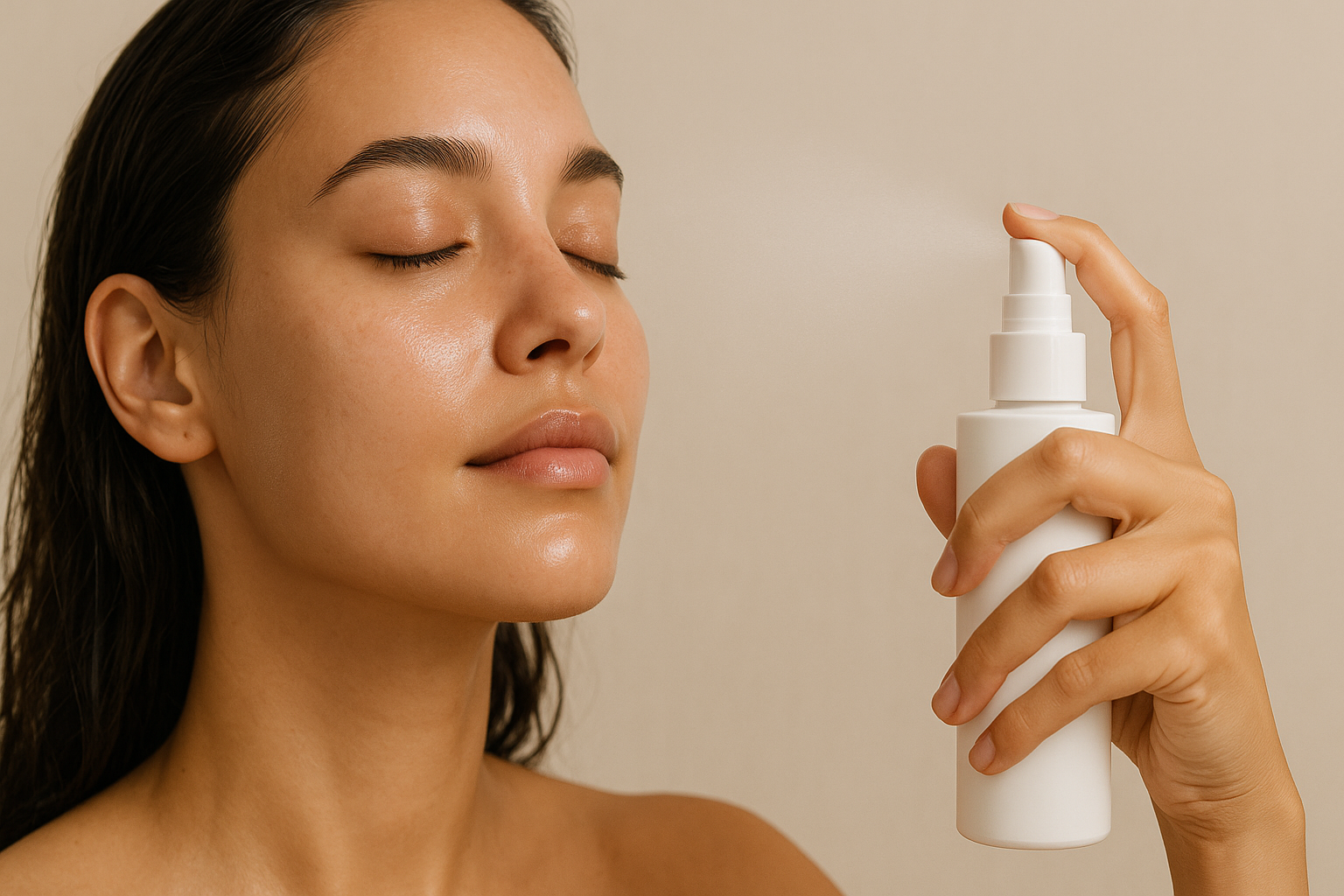
Face mists promise a lot for a two-second spritz: instant hydration, a lit-from-within glow, calmer skin, fresher makeup. Some of that is real, some is marketing, and the difference comes down to how you use the bottle. This guide separates the three jobs a mist does well from the claims it can't deliver, shows where a spritz actually belongs in a routine, and walks through the label checks that sort a useful mist from expensive scented water.
What Can a Face Mist Actually Do?
Three things, reliably — as long as you understand that each one is a short-term surface effect, not a treatment.
Job one: quick surface comfort. A well-made mist is mostly water carrying humectants — ingredients such as glycerin, hyaluronic acid, and panthenol that attract water and hold it against the skin's surface. Spritzed onto tight, uncomfortable skin, that water-plus-humectant film softens the feel within seconds. (If "hyaluronic acid" on a mist label makes you wonder what you're actually buying, our guide to what plant-based hyaluronic acid really is decodes the names it hides behind.)
Job two: a makeup refresh. By mid-afternoon, foundation can settle into dry patches and powder can sit visibly on the surface. A fine, even mist re-melts that powderiness so makeup reads as skin again. The technique matters: blot any shine first, hold the bottle 8–10 inches away, mist lightly, then press — don't rub — with clean fingertips or a sponge.
Job three: the damp canvas. This is the quietest benefit and probably the most useful. The American Academy of Dermatology's dry-skin guidance makes a timing point dermatologists repeat constantly: moisturizer works best applied to damp skin, because it traps the water that's already there. A mist recreates "damp" on demand — after cleansing, mid-routine, or any time your skin has fully dried before you got to the next step.
There's also an honest fourth job that has nothing to do with chemistry: a mist makes a routine nicer to do. If a pleasant two-second spritz keeps you consistent with the unglamorous steps — moisturizer, sunscreen — it's earning its shelf space on morale alone.
Can a Face Mist Dry Your Skin Out?
It can, and the mechanism is worth thirty seconds of your attention, because it's the single biggest reason mists disappoint people.
Plain water doesn't stay on skin — it evaporates, and in dry air it evaporates fast. Worse, the StatPearls review of moisturizers notes that some humectants can actually increase water loss when nothing is layered over them: they pull water toward the surface, and the dry air takes it from there. That's how a spritz can leave skin feeling tighter five minutes later than it felt before. The same evaporation problem applies to most water-based skincare, which is why we've written before about why mostly-water serums flash off before they finish working — a mist is simply the most extreme version of a mostly-water formula.
The fix is the rule this article keeps returning to: seal every spritz. Follow the mist with a moisturizer or a lipid layer so the water it delivered stays put instead of drifting off. Water-binding step first, sealing step second — the same two-step order that makes hyaluronic acid serums work on damp skin.
One sorting note before you blame the mist: a mist speaks to the water side of uncomfortable skin. If what you're seeing is flaking — a matte, chalky, or ashy cast that keeps returning — your skin is short on lipids, not just water, and no amount of misting will fix that. Our guide to what dry skin actually looks like includes a simple table for telling dryness from dehydration.
What a Face Mist Can't Do
It can't replace your moisturizer. A mist adds water; a moisturizer adds water and the sealing layer that keeps it there. Skip the second half and you're renting hydration by the minute.
It can't replace your serum. Antioxidant mists — usually built around vitamin C derivatives and vitamin E — can be a pleasant daytime top-up, but sprays generally carry lighter active levels than a dedicated serum, and light, air, and dilution are all working against them. Keep a serum as the anchor of that part of your routine and treat the mist as a bonus. (Choosing that anchor by skin concern is its own decision — our ingredient-matching guide walks through it.)
It can't reapply your sunscreen. Misting over SPF feels like doing something protective; it isn't. Unless the product is itself a sunscreen with a labeled SPF, a spritz adds no protection — and the Cleveland Clinic calls sunscreen the single most important product in an anti-aging routine, which is not a job to hand to a refreshment spray.
It can't deliver firmness or dramatic brightening on its own. Those claims show up on mist bottles anyway. Results like that come from a consistent leave-on routine — and even then, gradually. A mist that promises them in a spritz is selling the sensation of skincare rather than the outcome.
When Should You Use a Face Mist? The Timing Guide
Morning: cleanse, mist, and move straight to moisturizer while skin is still damp, then sunscreen. The point of the mist here is purely to set up the damp canvas — don't let it air-dry first.
Midday: this is the makeup-refresh slot. Blot shine, mist lightly from 8–10 inches, press gently. If your skin feels tight by afternoon in heated or air-conditioned rooms, a spritz followed by a pea-sized press of moisturizer on the tight zones beats a spritz alone.
Evening: a light mist between your water-based steps and your sealing step helps everything spread evenly, so you use less product. If a lipid serum is your last step, mist first, wait a few seconds, then apply it — the lipids trap the surface water underneath.
Travel and dry air: airplane cabins, gyms, and office HVAC pull water from skin all day. A pocket mist helps — but only as half of a pair. Carry something to seal with, or accept that each spritz buys you minutes of comfort, not hours.
How Do You Choose a Good Face Mist? The Label Checks
Four things separate a working mist from scented water, and all four are on the label.
Humectants high on the list. Glycerin, hyaluronic acid (or sodium hyaluronate), and panthenol in the top half of the ingredient list mean the mist can actually hold water against your skin for a while. If the list is essentially water, fragrance, and preservative, you're buying the sensation of misting.
Watch where the alcohol sits. A volatile alcohol (usually "alcohol denat") near the top of the list makes a mist dry down fast and feel weightless — at the cost of pulling moisture out as it flashes off, which is exactly backwards for dry or easily irritated skin. What that label line really means, and when it matters: our alcohol-denat guide.
Be deliberate about fragrance. Scent is a big part of why misting feels nice, and fragrance is also the most common sensitizer family in skincare. If your skin is reactive, choose fragrance-free — not "unscented," which can still contain masking scent. The difference is covered in what "parfum" on a label actually hides.
Packaging, if antioxidants are the point. Vitamin C derivatives and vitamin E degrade with light and air. An antioxidant mist in a clear bottle with a standard sprayer is a countdown timer; opaque, air-limiting packaging is the tell that the brand expects the actives to survive.
| Type of mist | Best for | The catch |
|---|---|---|
| Plain hydrating mist (water + glycerin, HA, panthenol) | Quick comfort, the damp-skin prep step, makeup refresh | Evaporates within minutes unless you seal it with a cream or lipid layer |
| Antioxidant mist (vitamin C derivatives, vitamin E) | A light daytime top-up over or under makeup | Lighter active levels than a serum, and it needs opaque, air-limiting packaging to stay potent |
| Alcohol-forward or heavily fragranced mist | A fast-drying feel and a pleasant scent | The drying and sting trade-off lands hardest on dry, reactive skin |
And skip the buzzwords. "Exosome," "vesicle," and firming claims on mists run well ahead of the evidence; nothing about a spray format makes an unproven ingredient work better.
Should You DIY a Face Mist?
It's tempting — a mist looks like the simplest product in skincare. It's also the one that spoils fastest. Water is what microbes grow in, and a homemade spray has no preservative system, so rose water, teas, and juice blends can start growing things within days at room temperature. Commercial mists are preserved, pH-adjusted, and stability-tested for exactly this reason.
If you do make your own: tiny batches, scrupulously clean bottles, refrigerate it, and discard within a few days. Skip raw juices entirely. And whether a mist is homemade or store-bought, introduce it the way you'd introduce any new product on reactive skin — patch test first, and if it stings when it goes on, pay attention to the timing: when a product stings tells you what kind of reaction you're having.
When to See a Professional
A mist should be the least eventful product you own. If adding one brings stinging that lingers, persistent redness, or new rough patches, stop using it — comfort now is never worth a two-week irritation cycle. And if a rash spreads quickly, blisters, hurts, comes with fever, or involves the eyes or mouth, those are the American Academy of Dermatology's signs a rash needs medical attention — a doctor's job, not a product swap.
Why SD7 Lipid Serum Isn't a Mist — and Why It's the Step That Makes One Work
An honest label note, in an article about reading labels: SD7 Lipid Serum is the opposite of a face mist. A mist is nearly all water; SD7 is 100% anhydrous — no water phase at all — so it couldn't be sprayed and couldn't carry a humectant. What it's built for is the other half of the rule this article keeps repeating: the seal. The mist supplies the water; SD7's botanical lipids — a base of jojoba wax esters, structurally close to skin's own surface lipids, carrying bakuchiol, cacay, triple-blend rosehip seed, and seven more botanicals — slow that water from leaving. Mist, wait a few seconds, then press in a few drops of SD7, and the spritz that used to fade in minutes becomes cream-like comfort that lasts. (Skeptical that oils do anything beyond sitting on top? The penetration research is worth a look.)
Two disclosures before you try it. SD7 is a cosmetic — it supports the look and feel of skin and treats nothing. And it is not fragrance-free: its lipid blend includes sweet orange and lavender, aromatic botanicals that naturally carry limonene and linalool, so if your skin is reactive, patch-test a small area first. It's rated 4.92 out of 5 across 51 verified buyers and comes with a 90-day money-back guarantee, which makes the mist-then-seal experiment a low-risk one to run for a few weeks. See the full SD7 Lipid Serum formula →
Frequently Asked Questions
Do face mists actually hydrate your skin?
Briefly, yes. A mist with humectants like glycerin or hyaluronic acid holds water against the skin's surface and softens the feel of tightness within seconds. But the effect fades in minutes unless you seal it — follow the spritz with a moisturizer or a lipid layer so the water stays put instead of evaporating off.
Can a face mist replace my moisturizer?
No. A mist adds water but no sealing layer, so the water it delivers evaporates — in dry air, sometimes taking extra moisture with it. A moisturizer does both jobs: it adds water and locks it in. Use the mist before your moisturizer, not instead of it.
How many times a day can I use a face mist?
One to four times works for most people. The number matters less than the follow-up: whenever skin feels tight afterward, seal the spritz with a moisturizer or a lipid serum, especially in heated rooms, on flights, or in dry climates. If you see pilling or shine, mist less or switch to a finer sprayer.
Can I use a face mist over makeup?
Yes — it's one of the things mists do best. Blot any shine first, hold the bottle 8–10 inches away, mist lightly, then press gently with clean fingertips or a sponge. A fine, even sprayer matters more here than any ingredient. One caution: misting over sunscreen does not reapply your SPF.
Are fragrance-free face mists better for sensitive skin?
Often, yes. Fragrance is the most common sensitizer family in skincare, and a mist gets reapplied through the day, which adds up. Choose fragrance-free rather than "unscented" — unscented products can still contain masking scent — and patch test on the inner forearm before using any new mist on your face.
Does SD7 Lipid Serum come as a mist?
No — and it couldn't. SD7 is a 100% water-free botanical lipid serum, and a mist is by definition nearly all water. They're opposite halves of the same two-step: the mist supplies the water, and SD7 is the sealing step that keeps it from evaporating away. Mist first, wait a few seconds, then press in a few drops of SD7.
This article is for general information and is not a substitute for professional medical advice, diagnosis or treatment. SD7 Lipid Serum is a cosmetic product; it supports the appearance of the skin and does not treat, cure or prevent any medical condition. If you are concerned about persistent dryness, stinging, rashes or any other skin change, please consult a doctor or dermatologist.