Why Do My Cuticles Grow Over My Nails? Cuticle, Nail Fold or Pterygium — the 4-Look Check, and Why Cutting Isn’t the Answer
Last updated: 19 October 2026
Quick Answer
Your cuticles grow over your nails because the cuticle is a thin film of dead skin that is made continuously by the living skin fold at the base of the nail and carried forward as the nail grows — so it re-forms and creeps onto the nail plate unless something stops it. What most people call an “overgrown cuticle” is usually one of three things: that normal film, a dry, thickened nail fold (the living skin around the nail base), or, rarely, a scarred wing of skin called a pterygium that needs a dermatologist. The American Academy of Dermatology says to “never cut or forcefully push back your cuticles”; the safe move is to soften them and, only if needed, nudge them back gently after a shower. A water-free lipid concentrate such as Provité Nail Elixir is one example of a conditioning step to add alongside a good hand cream (see the product section below).
First, a vocabulary problem: “cuticle” means three different things
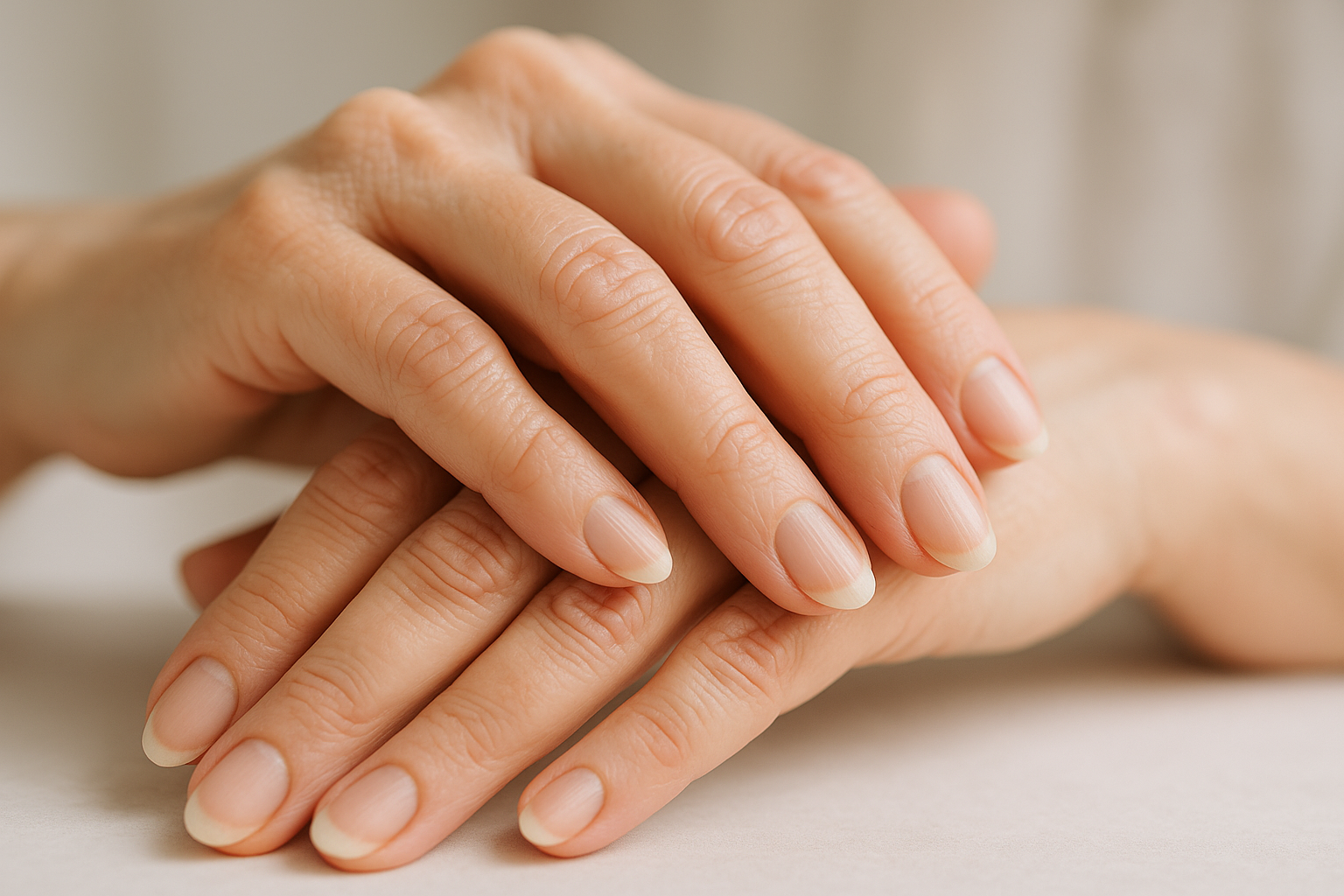
Most confusing advice on this topic comes from people using one word for several structures. DermNet defines the cuticle precisely: “a sheet of keratin joining the skin of the proximal nail fold to the nail plate, protecting the space under the proximal nail fold,” and adds that “loss of cuticle results in paronychia” (inflammation of the skin around the nail). The proximal nail fold is the living skin at the base of the nail; the cuticle is the thin, dead, sealing film that bridges it to the nail.
| What people call it | What it actually is | Alive? |
|---|---|---|
| “Cuticle” (the clear or whitish film on the nail) | The cuticle proper: keratin that seals the nail fold to the plate (DermNet; StatPearls) | No |
| “Thick cuticle” (the rim of skin around the base) | The proximal nail fold, the skin the cuticle is attached to | Yes |
| “Cuticle growing into the nail” (a wing of skin splitting the nail) | Pterygium: scarring of the nail matrix (DermNet: “a wing of extra tissue”) | Yes (scar tissue) |
The StatPearls nail histology chapter adds the job description: the cuticle “forms a seal to protect the matrix from toxins and microbes,” and removing it “can leave nails vulnerable to contamination and paronychia.”
Why it keeps coming back: a dead film that never stops being made
The nail advances about 3 mm a month (StatPearls). The cuticle is the dead layer shed by the living fold at the nail base, and because the nail plate slides forward underneath it, that film rides along on the plate. This is our reading of the cited definitions rather than a measured study, but it explains the everyday experience: remove it, and a fresh film is there again within weeks; leave it, and it gradually appears to “grow over” the visible nail.
The nail-industry educator Doug Schoon makes a related point on NailKnowledge (June 2023; the page cites no studies): what looks like a thicker cuticle is usually “a hardening and thickening of the proximal nail fold,” and the cuticle itself “will not grow back thicker when removed from the nail plate.” Treat that as an expert opinion, not trial evidence. No trial we could find has tested whether cutting cuticles changes how they regrow.
The 4-Look Check: which kind of “overgrown” do you have?
Look at your nail base in good light, ideally after a shower when the skin is soft.
| What you see | Most likely | What to do |
|---|---|---|
| A thin, clear or whitish film stuck to the nail, edge lifting | Normal cuticle that has advanced onto the plate | Soften with warm water and moisturiser; if you must, gently nudge it back after a shower (AAD) |
| A dry, tight, rough or cracked rim of skin, sometimes peeling or forming hangnails | Dry or irritated nail fold | Moisturise the nail base after every hand-wash (Mayo); see why you keep getting hangnails |
| Puffy, red, tender fold, or the cuticle seems to have disappeared, especially with lots of wet work | Possible paronychia (nail-fold inflammation) | Stop manicuring the area, protect from water; see a doctor if it persists or is painful (PCDS) |
| A wedge of skin that appears to be attached to or splitting the nail plate | Possible pterygium | Do not cut or pull; see a dermatologist |
Should you cut them? What the authorities say
On this question the major sources agree, and it is the one place the advice is unusually uniform:
- American Academy of Dermatology: “To prevent infection, never cut or forcefully push back your cuticles,” and “if you must push them back, only do so gently after a shower or bath.”
- Mayo Clinic Staff (22 November 2024): “Don’t let your cuticles be removed. They seal the skin to the nail plate.” Mayo also advises working hand lotion into the nails and cuticles.
- Healthline (Higuera; medically reviewed by Cobb, 28 January 2021): “You should never cut or remove your cuticles,” suggesting a soak, oil and gentle push-back instead.
- DermNet on acute paronychia: triggers include nail biting, picking at the nail fold and, notably, following manicuring.
The honest nuance: loose, detached bits of skin and hangnails are different from the cuticle itself, and Mayo says to clip a hangnail rather than pull it. The dividing line is simple — cut only what is already separate from you.
Cuticle myths, graded by evidence
| Claim | Verdict | Evidence |
|---|---|---|
| “Cutting them makes them grow back thicker” | Unproven | Expert opinion only (Schoon): cuticle won’t grow back thicker, but a damaged nail fold may thicken. No trial found. |
| “Cuticles are just dead skin, so removing them is harmless” | Not supported | DermNet and StatPearls: they seal the nail fold; loss is linked to paronychia. |
| “Stress makes cuticles overgrow” | Unproven | Healthline says the exact link “isn’t known.” |
| “Psoriasis can change the cuticle area” | Plausible | Healthline notes rapid cuticle growth with nail psoriasis; a 2021 case series also links nail psoriasis to pterygium (below). |
| “Pushing back hard every day keeps them tidy” | Counter-productive | AAD says never forcefully push; Lee & Lipner (2022) describe repetitive pushing and picking at the cuticle as a habit tic that can ridge the nail. |
When the “cuticle” isn’t a cuticle: pterygium
A true pterygium is rare, but it is the reason a persistent, wing-shaped fold should be examined rather than trimmed. A 2021 case series in Skin Appendage Disorders (Grover, Singal and Bhattacharya; seven patients, so preliminary) describes dorsal pterygium as a wing-shaped fold from the proximal nail fold that fuses with the matrix and nail bed and splits the plate, and states that “pterygium is an irreversible scarring of the nail matrix resulting in a split nail.” Lichen planus is the best-known inflammatory cause; burns, injury, chronic nail picking and nail psoriasis are among others. Early assessment matters, because the authors urge vigilance and proactive management of the underlying nail disease.
A calm 3-week routine for cuticles and nail folds
| Week | What to do | Why |
|---|---|---|
| 1 | Stop cutting and stop picking; photograph the nail bases | A baseline, and a break from the injury-and-thicken loop (AAD; Mayo) |
| 1–3 | Moisturise nails and cuticles after every hand-wash and at bedtime | Mayo advises working lotion into nails and cuticles |
| 2 | Wear cotton-lined rubber gloves for dishes and cleaning | PCDS: protect from water and irritants, use soap substitutes and emollients |
| 2–3 | If the film is lifting, nudge it back gently once, after a shower; clip only already-detached skin | AAD: only gently, after a shower or bath |
| 3 | Re-photograph; any redness, swelling or pain means stop and see a doctor | Judge by the log, not by feel |
For a related water-and-nail problem, see why nails go soft and bendy in water, and for the habits that wear nail bases down, does hand sanitiser damage your nails?
When to see a doctor
See a doctor or dermatologist for a red, swollen, painful or pus-filled nail fold, a cuticle that has vanished along with ridging or a thickened, discoloured nail, a wing of skin attached to the nail, or “ragged” cuticles alongside other symptoms — DermNet notes that ragged cuticles are characteristic of connective tissue disease. Chronic fold problems are common in people whose hands are often wet; PCDS names domestic and catering workers, bar staff and fishmongers. Acute infections can develop within hours, so do not wait on those.
Conditioning the nail as well as the skin around it
Provité Nail Elixir is a 100% lipid, water-free, formaldehyde-free concentrate formulated by S. C. Aris to saturate between the keratin layers of the nail, designed to support the look of flexible, resilient-looking nails rather than hard, glassy ones. It combines 13 botanical lipids: hemp seed, grapeseed, sesame seed, jojoba, avocado, coconut, camellia tea, cucumber seed, lemon, carrot seed, lavender, geranium and vitamin E. It is a cosmetic conditioning step, not a replacement for moisturising your nail bases or for the gentle habits above.
It has a 4.8/5 rating from 26 reviews and a 90-day guarantee. In a customer survey, 88% said their nails felt stronger and less brittle within four weeks (survey data, not a clinical trial). It contains aromatic botanicals (lavender, geranium and lemon), so it is not fragrance-free; patch-test on your forearm first. It is not a treatment for any nail or skin condition — if the skin around your nail is red, swollen or painful, see a doctor first.
Frequently asked questions
Why do my cuticles grow over my nails?
The cuticle is a dead film made by the living skin at the nail base and carried forward as the nail grows, so it keeps reappearing on the plate. A dry, thickened nail fold can also look like an overgrown cuticle.
Do cuticles grow back thicker if you cut them?
Unproven. Nail-industry educator Doug Schoon says the cuticle will not grow back thicker, but that a damaged nail fold may thicken. We found no trial testing it. Dermatologists advise against cutting them regardless, because of infection risk.
Is it OK to push cuticles back?
Only gently. The AAD says never to cut or forcefully push back cuticles and, if you must push them back, to do so gently after a shower or bath.
Can I cut a hangnail?
Yes. Mayo advises clipping a hangnail rather than pulling it off, because pulling can tear live tissue. A hangnail is already-detached skin, which is different from the cuticle.
What is the thing growing into my nail?
A wing-shaped fold of skin attached to the nail plate may be a pterygium, caused by scarring in the nail matrix. It needs a dermatologist, not scissors.
Related reading
- Why do I keep getting hangnails?
- Why do my nails break more in winter?
- Why do my nails go soft and bendy in water?
- Does hand sanitiser damage your nails?
- Why do I have a ridge down the middle of my thumbnail?
Sources
- American Academy of Dermatology, “Manicure and pedicure safety.”
- Mayo Clinic Staff, “Fingernails: Do’s and don’ts for healthy nails” (22 November 2024).
- DermNet, “Nail terminology” (Oakley; reviewed April 2023).
- DermNet, “Paronychia.”
- Primary Care Dermatology Society, “Paronychia” (updated 31 May 2024).
- Brahs AB, Bolla SR, “Histology, Nail,” StatPearls (updated 29 May 2023).
- Grover C, Singal A, Bhattacharya SN, “Pterygium Complicating Nail Psoriasis and Trachyonychia: Is It Rare?” Skin Appendage Disorders 2021;7(4):298–305.
- Lee DK, Lipner SR, “Update on Diagnosis and Management of Onychophagia and Onychotillomania,” Int J Environ Res Public Health 2022;19(6):3392.
- Higuera V (medical review: Cobb C), “Overgrown Cuticles: Causes, Treatment, and Prevention,” Healthline (28 January 2021).
- Schoon D, “Why do my clients’ cuticles grow thicker during the winter?” NailKnowledge (22 June 2023; industry source, cites no studies).
This article is for general information and is not medical advice. If you have pain, swelling, pus or a changing nail, see a doctor or dermatologist.