Can Stress Really Cause Gum Disease? The 5 Pathways From a Hard Month to Bleeding Gums — and the Two-Minute Floor That Protects You
Last updated: 5 October 2026
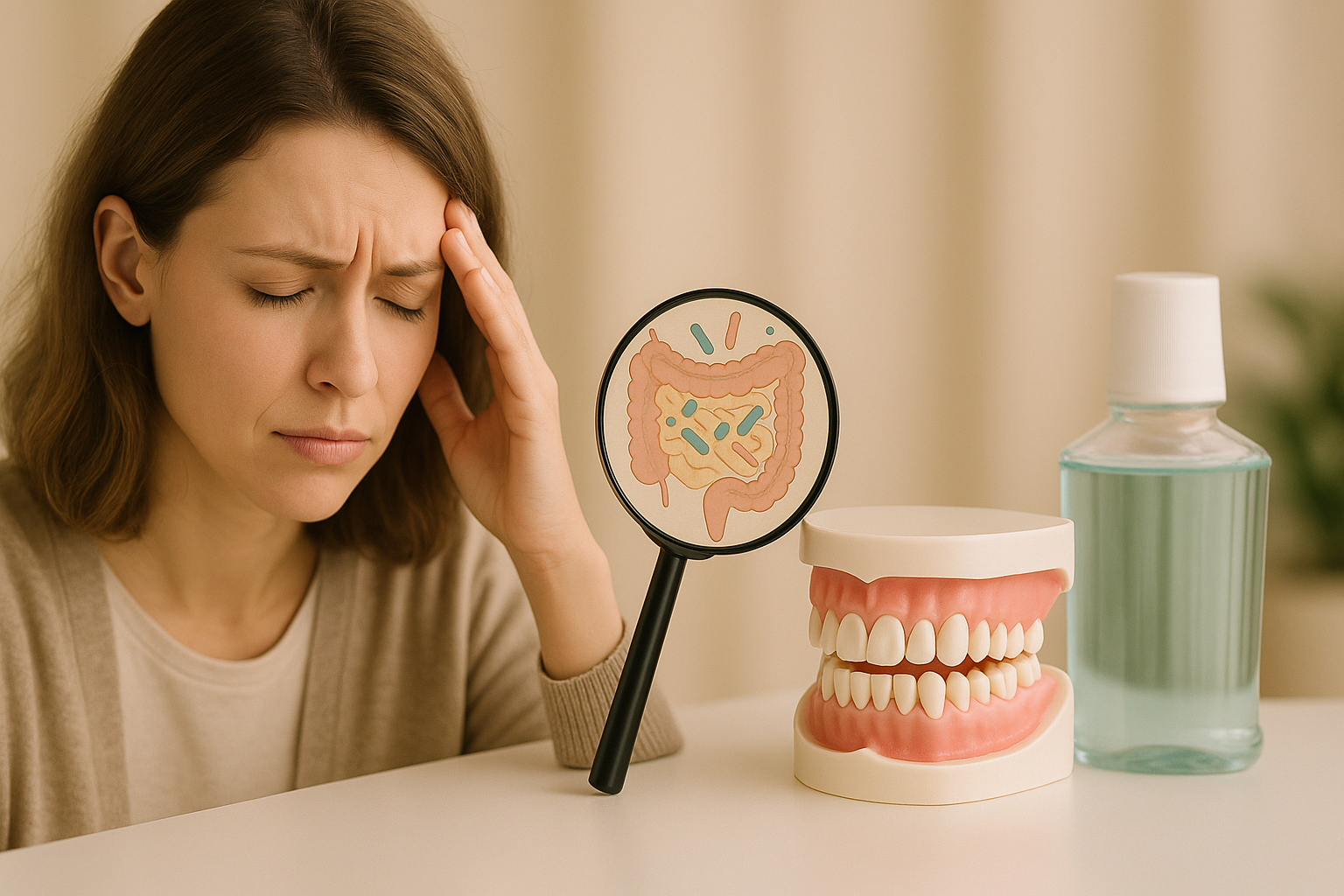
There's a pattern dentists see all the time: a patient whose checkups were boring for years shows up after a brutal stretch — a job change, a divorce, exam season, a sick parent — with gums that bleed at the lightest touch. Nothing about their toothpaste changed. What changed was everything else.
So is "stress gum disease" a real thing? The honest answer is more useful than a yes or a no: stress is not a cause of gum disease the way plaque is, but it is a genuine accelerant — and it works through five specific, fixable pathways. This article walks through each one, shows you the tells, and ends with the most practical idea in the whole topic: the two-minute floor, the minimum routine you protect when you can't protect anything else.
Can stress actually cause gum disease?
Gum disease starts with dental plaque — the soft bacterial film that collects where tooth meets gum. No plaque, no gum disease; that part doesn't change however hard your month gets. The CDC reports that roughly 4 in 10 US adults aged 30 and over have some form of periodontitis, rising to about 60% of adults 65 and over — and everyday plaque, not everyday pressure, is the engine behind those numbers.
But gum health is a running contest between that plaque and your body's response to it, and stress leans on both sides of the contest at once. It changes how strongly your tissues react to the plaque that's there, and it makes more plaque likely by disrupting the habits that remove it. That's why a stressful season so often shows up at the gum line first: the gums run on a daily maintenance contract, and stress is very good at breaking daily contracts.
One useful comparison before we get into the pathways. Hormonal shifts work the same way — they don't create bleeding out of nowhere, they amplify the gums' reaction to plaque that is already there. If your flare-ups track your menstrual cycle rather than your workload, that's a different pattern with its own 30-second test, covered in Are My Bleeding Gums Hormonal — or Gum Disease? Stress, by contrast, follows the calendar of your life: project deadlines, bad news, short sleep.
The 5 pathways from a hard month to struggling gums
Pathway 1: Your defenses shift
A body under sustained pressure keeps stress hormones such as cortisol elevated, and sustained cortisol changes how the immune system handles irritants — including the bacteria sitting at your gum line. The contest between plaque and your defenses tilts: the same film that your gums shrugged off in a calm month draws a bigger, angrier response in a hard one, and the repair side of the equation runs slower too.
You can't feel your cortisol, but you can see this pathway's result: gums that seem touchier on the same routine — a little puffier along the margins, quicker to bleed on flossing, slower to settle after you've been less than perfect. The practical response isn't a stronger product; it's giving the amplified response less to amplify, which brings us to the pathway that matters most.
Pathway 2: The routine slips
This is the quiet one, and it does most of the damage. Plaque starts re-forming within hours of brushing, which means gum care only works as a streak — and the evening routine is usually the first casualty of a brutal week. You fall asleep on the sofa without brushing. The floss sits untouched for a month. Lunch becomes grazing, dinner becomes whatever's fastest, and every skipped step hands the plaque a longer, less interrupted shift at the gum line.
Almost everyone underestimates this pathway because each individual lapse feels trivial. It's the compounding that costs you: two weeks of a slipped routine is enough for gums to look and feel visibly worse, and when you then restart flossing, the early bleeding can scare you into stopping again — that early-days bleeding has a predictable arc, mapped in the day-by-day timeline for bleeding gums. Push through it gently; it's the route back out.
Pathway 3: Clenching and grinding
Many people respond to pressure with their jaw — clenching through tense meetings by day, grinding at night without knowing it. Teeth and their supporting ligaments are built for brief, vertical chewing forces, not hours of sustained sideways load. Over time that overload can leave teeth tender, make a tooth feel slightly mobile, and stress the gum margins — and grinding tends to travel together with gum disease, each making the other worse.
The tells: an aching jaw or facial muscles when you wake, flattened biting edges, a partner who hears grinding at night, or a tooth that feels bruised for no reason. Two counter-moves work: a daytime cue (lips together, teeth apart — teeth should only touch when you're chewing) and a dentist's exam, where a night guard can be fitted if grinding is confirmed. If a tooth has developed real give, don't wait the stress out — What Causes Loose Teeth in Adults? walks through how to tell force problems from gum-disease problems, and why both need a prompt look.
Pathway 4: A drier mouth
Saliva is your mouth's built-in rinse cycle — the American Dental Association's consumer site has a good overview of everything saliva quietly does — and stressful seasons drain it from several directions at once. More coffee, less water. Mouth breathing through tense days and congested nights. Alcohol in the evening. And many of the medications that get prescribed during hard chapters of life — antidepressants and some sleep and blood pressure medicines among them — list dry mouth as a side effect, something the NIDCR flags as one of its most common causes.
Less saliva means plaque builds faster and lingers longer between brushings, which quietly multiplies every other pathway on this list. If your tongue sticks to the roof of your mouth by mid-afternoon or you're waking for water at 3 a.m., treat the dryness as its own project — the full cause-by-cause fix list is in Why Is My Mouth Always Dry? One rule carries most of the load: a glass of water alongside every coffee or drink, one for one. And never stop or change a medication on your own over a dry mouth — that's a conversation with your doctor.
Pathway 5: The coping habits
Stress rarely arrives alone; it brings its own catering. More cigarettes or vaping, more sugar grazing, more wine — each one a gum-line tax on top of everything above. Sugary snacking feeds plaque continuously instead of occasionally. Alcohol dries the mouth further.
Smoking deserves special mention because it hits twice. It's one of the strongest risk factors for gum disease — and at the same time, as the American Academy of Periodontology explains, the nicotine and other chemicals in tobacco can hide the symptoms commonly associated with periodontal disease, such as bleeding gums, by reducing blood flow to the tissue. A stressed smoker's gums can be getting worse while looking quieter. It's also why gums sometimes seem to bleed more after quitting — the warning system switching back on, explained in Why Did My Gums Start Bleeding After I Quit Smoking?
What stressed gums look like — and what they don't
There's no special "stress gingivitis" that looks different from the ordinary kind. What stress produces is ordinary plaque-driven irritation arriving faster than usual: gum margins that look red or puffy rather than matte pink, bleeding when you brush or clean between teeth, tenderness in spots you used to clean without a thought, and breath that fades earlier in the day. If you want a systematic look at the early signals — including the same-site pattern that separates a one-off from a trend — run the self-check in Early Gum Disease: Signs, Self-Check & Progression.
Two companions often show up in stressful seasons and get blamed on the gums. Canker sores — the small, shallow ulcers on the inside of the lips and cheeks — are commonly triggered by stress, but they're not gum disease and usually heal on their own within a week or two; our canker sore guide covers the triggers, including the toothpaste foaming agent that bothers some mouths. And jaw or tooth ache from clenching can masquerade as a gum problem when it's really a force problem. Sorting which is which is exactly what a dental exam is for.
The 5 pathways at a glance
| Pathway | The tell | The counter-move |
|---|---|---|
| Defenses shift | Gums puffier and quicker to bleed on the same routine | Give the amplified response less to amplify: keep plaque removal gentle, daily, and complete |
| The routine slips | Evening brushes skipped, floss untouched for weeks | Shrink to the two-minute floor below and anchor it to a cue you never skip |
| Clenching and grinding | Morning jaw ache, flattened edges, a tender or slightly mobile tooth | Lips together, teeth apart by day; ask your dentist about a night guard |
| A drier mouth | Sticky tongue, 3 a.m. water glass, breath fading by midday | Water one-for-one with coffee and alcohol, steady sips, humidify the bedroom |
| Coping habits | More smoking or vaping, sugar grazing, nightly wine | Keep sugar to mealtimes — and know that smoking also hides the bleeding that would warn you |
The two-minute floor: protecting your gums when you can't protect your schedule
Here's the mindset shift that actually survives a crisis: stop aiming for your best routine and start defending your minimum one. Willpower is exactly what a stressful month is short of, so the goal is a floor so small it's never worth skipping — and the floor for gums is mercifully low. Two minutes of soft-bristled brushing angled into the gum line, morning and night. One pass between the teeth each day, with whichever tool you'll actually use. Spit, don't rinse. That's it — the full architecture, including the supporting habits and which extras earn a place, is laid out in What Should a Natural Gum Health Routine Include?
A few tricks make the floor hold under load. Anchor the evening clean to a cue that survives chaos — the moment you plug in your phone, the kettle for your last cup of tea. Keep interdental brushes or floss picks somewhere visible rather than in a drawer; interdental brushes are often the easier win when you're tired, because they're quicker to use well. If your gums are already tender, go gentler rather than skipping — the gumline-first method in our brushing-with-gum-disease guide is built for exactly that, and backing off the bleeding spots is the one move that guarantees next week is worse.
And notice what's not on the floor: nothing to buy, nothing to learn, nothing that takes longer than brushing already takes. Stress management for your gums is mostly logistics, not discipline.
When "it's just stress" stops being the answer
Give the floor two weeks. Early, gum-level irritation generally settles with consistent daily cleaning once the plaque comes back under control — gums are quick to reward you. If bleeding, swelling, or tenderness persists beyond two weeks of honest effort, stop adjusting your routine and book an exam; the NIDCR's overview lists the warning signs worth acting on, and persistent symptoms are on it whatever your calendar looks like.
Go sooner if you notice the structural signs: gums pulling back so teeth look longer, a tooth with real give, pus, a persistent bad taste, or pain. And if the stressful season ran long enough for plaque to harden into tartar, no home routine removes it — that takes a professional cleaning, which is the reset button at the center of how gum disease is treated, stage by stage. The honest news about what heals and what doesn't — which damage settles once care resumes, and which is permanent — is laid out in Can Gum Disease Go Away? The encouraging part, noted in the StatPearls periodontitis review: as oral hygiene improves and smoking stops, the outlook improves with it. Gums respond to the care they get next, not the care they missed.
Does lowering stress itself help your gums?
Indirectly, yes — and it's worth saying plainly. Better sleep, regular movement, and a few minutes of deliberate breathing support the same immune and inflammatory balance that pathway 1 disturbs, and they make every habit on this page easier to keep. But no amount of meditation removes plaque. The mouth-level job stays mechanical: bristles and interdental tools at the gum line, daily. Treat stress reduction as the tailwind and the two-minute floor as the engine — and don't wait for a calm month to start, because the calm month is never the one your gums needed help with.
The step worth keeping on the worst days
If your routine is going to shrink to a floor, it's worth making the floor count at the gum line — and contact time is where most products quietly fail. Water-based toothpastes and rinses froth up, dilute in saliva, and are gone in seconds, which is a poor match for a week when your gums are reacting to every lapse.
Dental Pro 7 approaches the problem from the opposite direction: it's a professional-strength, 100% water-free botanical lipid concentrate, designed to cling to the gum line rather than wash away. A few drops on a dry brush along the gum margins after your evening clean — a step that takes no longer than the brushing you're already doing, which is precisely why it survives hectic seasons. No water, no alcohol, no foaming agents, no fillers; just botanicals like immortelle helichrysum, pomegranate seed, black cumin seed, myrrh, and clove in a lipid base.
To be straight about what it is and isn't: Dental Pro 7 is a cosmetic product. It supports the appearance of firmer, pinker, healthier-looking gums and fresher breath. It won't treat gum disease, it can't offset a skipped routine, and it doesn't replace the dental exam this article keeps pointing you toward. What it offers is a pleasant, low-effort way to finish the one daily job that a stressful month makes matter more. It's rated 4.81 out of 5 from 190 verified buyers and comes with a 90-day money-back guarantee — longer than most stressful seasons last.
Frequently asked questions
Can stress alone cause gum disease?
No. Gum disease is driven by plaque — the bacterial film that collects at the gum line — so stress on its own, with a genuinely clean gum line, has very little to work with. What chronic stress does is tilt the field: it changes how your immune system responds to plaque, dries the mouth, encourages clenching, and erodes the daily cleaning habits that keep plaque controlled. Stress is an accelerant, not a spark.
Why do my gums bleed more during stressful weeks?
Usually because two things moved at once: a little more plaque stayed behind as the routine slipped, and a stressed body responds to that plaque more strongly. The practical response is to tighten the basics rather than add products — gentle, thorough brushing at the gum line and a daily clean between the teeth. If the bleeding continues past two weeks of consistent care, book a dental exam; and if it tracks your menstrual cycle rather than your workload, the pattern is hormonal and worth testing separately.
Can stress cause canker sores or mouth ulcers?
Stress is one of the most commonly reported triggers for canker sores — the small, shallow ulcers that show up on the inside of the lips or cheeks during rough patches. They are not gum disease and usually heal on their own within one to two weeks. Any mouth sore that lasts longer than two weeks without improving should be looked at by a dentist or doctor.
Does stress make you grind your teeth — and does that hurt your gums?
Many people clench through tense days or grind at night during stressful periods, often without knowing it. Sustained sideways force overloads the ligaments that hold teeth in place, can leave a tooth tender or slightly mobile, and tends to travel together with gum disease, each making the other worse. Morning jaw ache, flattened biting edges, or a partner hearing grinding at night are the tells — and a dentist can fit a night guard if an exam confirms it.
Will my gums recover when the stressful period ends?
The early, gum-level irritation usually does: red, puffy, bleeding gums from a slipped routine generally settle within a couple of weeks once daily cleaning is back on track. Hardened tartar and the deeper damage of periodontitis are different — tartar needs a professional cleaning, and lost bone or gum attachment does not rebuild itself once the stress lifts. If things have not calmed down within two weeks of good care, let a dentist tell you which situation you are in.
Should I put off the dentist until life calms down?
No — the busy season is exactly when a checkup earns its keep. A professional cleaning removes the tartar that home care cannot, which resets the board at the very moment your defenses are lowest, and catching a problem early costs far less time and money than treating it later. A stressful year is a reason to keep the recall appointment, not to skip it.
This article is educational information about stress and gum health, not medical or dental advice, and it does not diagnose any condition. Dental Pro 7 is a cosmetic product that supports the appearance of healthy-looking gums; it does not treat, cure, or prevent gum disease or any other condition. If you have bleeding gums, receding gums, loose teeth, mouth sores that persist, or ongoing pain, see a dentist or doctor.