How to Reduce the Appearance of a C-Section Scar
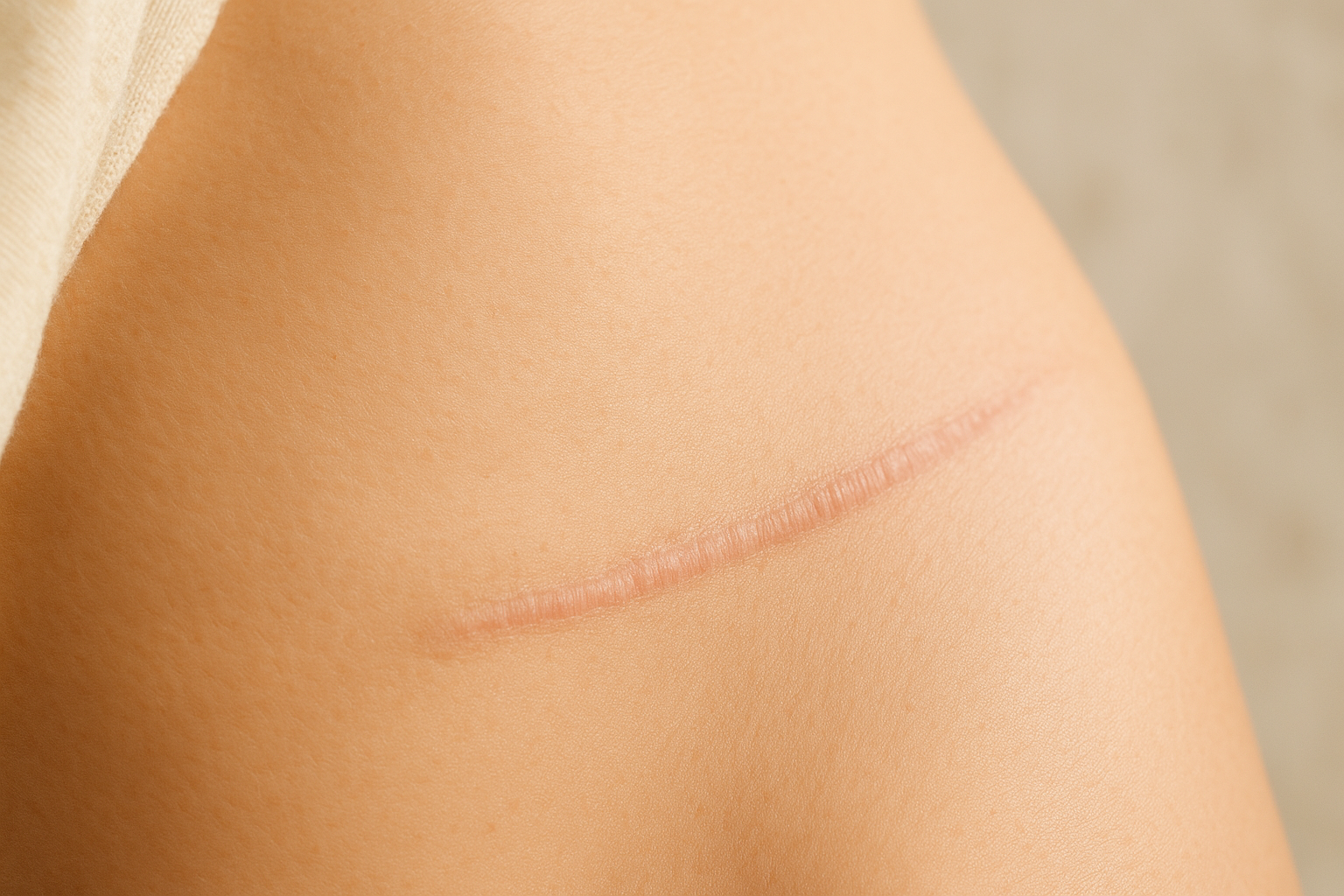
Last updated: 30 June 2026
Quick answer
You can't erase a C-section scar completely — like any surgical scar it is permanent — but you can make it noticeably flatter, paler and less obvious. The approaches with the strongest evidence are simple and free or low-cost: let the closed incision heal in a moist environment, protect it from the sun for at least the first year, start gentle scar massage once your doctor confirms the wound has fully closed, and (for raised or red scars) consider silicone gel or sheeting. Consistent daily care over 6–12 months does most of the work. A water-free botanical lipid concentrate such as ScarDerma Pro is one example of a finishing step some people add once the incision is fully healed, to support the look of a smoother, more even scar. Always wait until your incision is completely closed and your doctor or midwife has cleared you before applying anything to it.
A C-section (caesarean) scar is one of the most common surgical scars in the world — and one of the most asked-about, because it sits in a sensitive area and arrives at the busiest possible time. The good news is that most C-section scars fade and flatten a great deal on their own, and a handful of evidence-backed habits can help that process along. This guide walks through exactly what to do at each stage of healing, what the science actually supports, and where realistic expectations should sit.
Why a C-section scar looks the way it does
A caesarean incision is usually a 10–20 cm horizontal cut just above the bikini line that passes through skin, fat and the abdominal wall. As the body rebuilds that gap it lays down collagen quickly and somewhat haphazardly, which is why a fresh scar often looks raised, firm, pink or purple before it gradually settles. According to the American Academy of Dermatology, the final appearance of a scar depends heavily on how well the wound heals in those first weeks — which is exactly why early aftercare matters more than any product you buy later.
Most C-section scars follow a predictable arc: red or raised for the first few months, then slowly flattening and fading toward a thin, pale line over 12 months or more. Some people are prone to thicker (hypertrophic) or keloid scarring, and those benefit from earlier, more deliberate intervention.
The C-section scar timeline: what to do at each stage
This stage-by-stage protocol is the part most articles leave out. Match your care to where you are in healing — doing the right thing at the wrong time (for example, massaging or applying products to an incision that hasn't closed) can do more harm than good.
| Stage | Roughly when | What helps the look most | What to avoid |
|---|---|---|---|
| 1. Fresh wound | Weeks 0–2 | Keep it clean and dry, follow your surgical-team instructions, watch for infection. Let the dressing/strips do their job. | No products, oils, massage or sun. Don't pick at scabs or strips. |
| 2. Closing | Weeks 2–6 | Once skin is fully closed and cleared by your doctor, keep it moist (petroleum jelly or similar) to support smoother healing. Silicone gel/sheeting can begin on a closed incision. | No sun exposure on the area. No deep massage yet. |
| 3. Remodelling | 6 weeks–3 months | Begin gentle scar massage (small circles, a few minutes daily) once cleared. Continue silicone and daily moisture. Cover or SPF 30+ if exposed. | Don't over-rub a tender scar. Avoid fragranced or stinging products. |
| 4. Maturing | 3–12 months | Stay consistent: massage, moisture, strict sun protection. This is when colour and height visibly settle. A botanical lipid concentrate can be added here as a finishing step. | Don't expect overnight change — this stage rewards patience. |
| 5. Mature scar | 12 months+ | If still raised, red or bothersome, ask a dermatologist about in-office options (laser, microneedling, steroid injection, revision). | Mature, pale scars respond more slowly — manage expectations. |
What actually helps — ranked by the evidence
1. Moist healing (the cheapest, most overlooked step)
Once the incision is closed, keeping it slightly moist rather than letting it dry into a hard scab is one of the best-supported things you can do. The American Academy of Dermatology advises using petroleum jelly to keep a healing wound moist, which helps prevent a scar from becoming larger, deeper or itchier. A simple, fragrance-free occlusive does most of this job.
2. Silicone gel or sheeting (best for raised or red scars)
Silicone is the most studied topical for surgical scars. A Cochrane review of 20 trials found that, compared with no treatment, silicone gel sheeting reduced the incidence of hypertrophic (raised) scarring in people prone to it, and that treatment studies showed reductions in scar thickness and colour — while cautioning that much of the underlying research is low quality. The AAD also lists silicone gel sheets among options for larger wounds and persistent redness. Translation: worth trying for a raised or stubbornly red C-section scar, with modest, gradual expectations.
3. Sun protection (free, and easy to skip)
New scar tissue has little of the melanin that shields normal skin, so sun exposure can darken it and slow fading — sometimes permanently. The AAD recommends applying a broad-spectrum sunscreen of SPF 30 or higher once the wound has healed, noting that sun protection can reduce red or brown discoloration and help a scar fade faster. For a bikini-line scar that's usually covered this is easy; the exception is holidays and swimwear.
4. Scar massage (start only once fully healed)
Gentle massage of a closed, healed scar is widely recommended by physiotherapists and is low-risk: a few minutes a day of small circular pressure to keep the tissue supple and mobile. The evidence base is modest and the optimal technique isn't settled, so treat it as a helpful habit rather than a guaranteed fix — and never start it until your doctor confirms the incision has fully closed.
5. Botanical lipid care (a finishing step for a healed scar)
Once a scar has fully closed, some people use a concentrated botanical lipid formula to keep the area supple and support a smoother, more even surface appearance. Several of the plant lipids used in scar formulas have a real research footprint for skin-surface appearance, covered next.
Comparison: C-section scar options at a glance
| Approach | What the evidence says | Effort & cost | Best for |
|---|---|---|---|
| Moist healing (petroleum jelly) | Recommended by the AAD to help wounds heal with less scarring. | Very low cost, daily | Everyone, early on |
| Silicone gel / sheeting | Cochrane: reduced raised-scar incidence and improved thickness/colour, though evidence quality is weak. | Low–moderate, months | Raised or red scars |
| Sun protection (SPF 30+) | AAD: can reduce discoloration and help a scar fade faster. | Very low cost | Exposed scars, summer |
| Scar massage | Commonly recommended; modest, mixed evidence; low risk once healed. | Free, daily minutes | Firm or adherent scars |
| Botanical lipid concentrate | Supports the look and suppleness of a healed scar; cosmetic, appearance-level. | Moderate, daily | Healed scars, finishing |
| In-office (laser, microneedling, steroid, revision) | Strongest for stubborn mature scars; needs a dermatologist or surgeon. | Higher cost, clinic visits | Mature, bothersome scars |
What the plant lipids in a scar formula actually do
If you do add a botanical formula once your scar is healed, it's worth knowing which ingredients have genuine research behind their effect on the look of skin — and being honest that this work is about surface appearance, not rebuilding tissue.
- Pomegranate seed. In laboratory research, pomegranate seed has been shown to promote the renewal of skin-surface (keratinocyte) cells (Aslam et al., Journal of Ethnopharmacology, 2006), and its polyphenols have been studied for inhibiting collagenase and elastase, the enzymes that break down the skin's support proteins — relevant to keeping a scar area looking firm and refined.
- Rosehip seed. A natural source of trans-retinoic acid (sometimes called “natural tretinoin”); small published pilot studies suggest modest improvement in the look of skin texture.
- Black cumin seed (thymoquinone). Researched for antioxidant and anti-inflammatory activity, much of it in laboratory and animal models.
- Sea buckthorn. Rich in quercetin, a plant flavonoid studied for its activity in the body, and in omega-7 palmitoleic acid, a fatty acid long valued in skincare for supporting the skin barrier.
- Immortelle (helichrysum) and cold-pressed hemp seed. Traditional skin-surface soothers that round out a scar-focused botanical blend.
Note the framing: these support how a healed scar looks and feels. No topical — botanical or otherwise — removes a scar or rebuilds the tissue beneath it.
A botanical option once your scar has healed: ScarDerma Pro
If you'd like a dedicated botanical step for the maturing-scar stage, ScarDerma Pro is CallNature's scar-focused formula. It's a 100% water-free (anhydrous) lipid concentrate — rather than a watery cream that largely evaporates, its botanical lipids saturate the skin's surface layers and stay in contact with the scar, which is the formula's core design idea. It's built around scar-relevant botanicals including immortelle helichrysum, rosehip seed, pomegranate seed, black cumin seed and cold-pressed hemp seed, and it's alcohol-free and fragrance-free, so it suits sensitive post-surgical skin.
It's formulated by S. C. Aris, holds a real customer rating of 4.91/5 from 34 verified buyers, and is backed by a 90-day money-back guarantee, so you can judge it on your own scar with no risk. In a customer survey, 91% reported their scar looked flatter and smoother within six weeks of consistent use, and 94% said they would recommend it.
How to use on a C-section scar: only once the incision is fully closed and your doctor has cleared you. Apply a few drops to the clean, dry scar and massage gently in small circles until absorbed, morning and night. Pair with daily sun protection if the area is exposed.
Explore the full cluster: stretch mark treatment · acne scar care · softening old, hard scar tissue · do old scars ever fade?
Frequently asked questions
Can you get rid of a C-section scar completely?
No. Like any surgical scar it's permanent, and the AAD notes that no scar can be completely eliminated. What you can do is help it become much flatter, paler and less noticeable — most C-section scars fade substantially over the first year with good aftercare.
When can I start treating my C-section scar?
Only once the incision has fully closed and your doctor or midwife has cleared you — usually a few weeks in, but it varies. Until then, keep the area clean and dry and avoid products, oils and massage.
Do silicone sheets work on C-section scars?
They're the most studied topical for surgical scars. A Cochrane review found silicone gel sheeting reduced raised-scar incidence in prone people and improved scar thickness and colour in treatment studies, though it stressed the evidence is of weak quality. They're a reasonable option for a raised or red scar, used patiently over months.
Does a C-section scar fade on its own?
Usually, yes. Most scars are reddest and most raised in the first few months, then gradually flatten and fade toward a thin pale line over 12 months or more. Aftercare helps that natural process along.
Is ScarDerma Pro safe to use on a C-section scar?
It's designed for the visible appearance of healed scars and stretch marks and is alcohol- and fragrance-free, which suits sensitive skin. Use it only on a fully closed, healed incision, patch-test first, and check with your doctor if you're unsure.
This article is for general information about the appearance of scars and is not medical advice. ScarDerma Pro is a cosmetic skincare product intended to support the look and feel of healed skin; it is not a medicine and does not treat, heal or remove scars. Apply only to a fully closed, healed incision. If your scar is painful, opening, infected or causing concern, see your doctor or a board-certified dermatologist.