Why Do My Stretch Marks Itch When I'm Losing Weight? (And How to Calm It)
Last updated: 14 July 2026
Quick answer
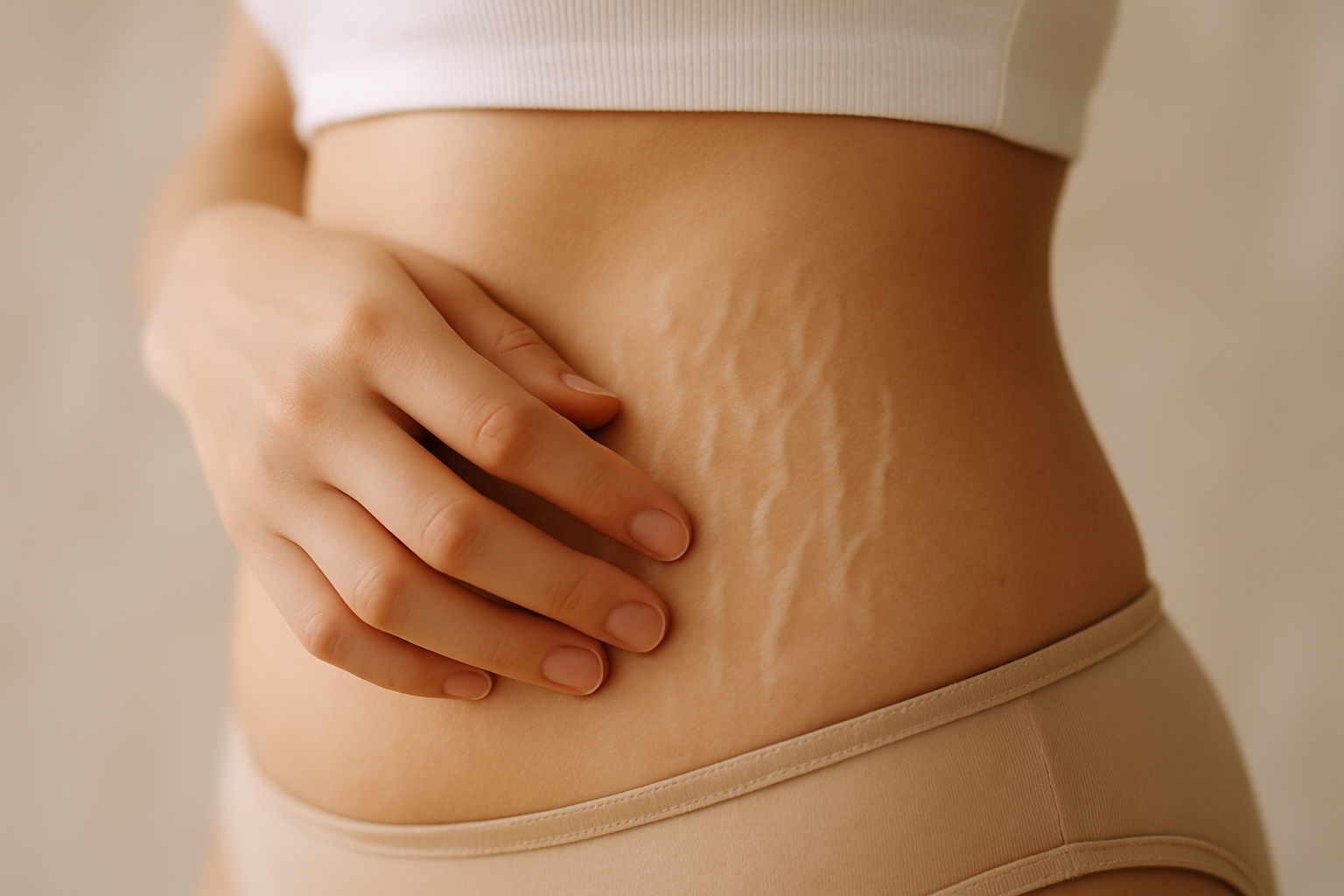
Your stretch marks itch during weight loss because rapid changes in body size put the thin, remodeling skin of a stretch mark under fresh mechanical and inflammatory stress. Newer ("red") stretch marks are still actively healing — the American Academy of Dermatology notes that early stretch marks "may feel slightly raised and can be itchy," and the skin in that band is thinner, drier, and rich in irritated nerve endings and inflammatory mediators. Losing weight quickly dries and slackens the surrounding skin, which amplifies that itch.
The itch is almost always harmless and fades as the marks mature. The two things that calm it fastest are consistent moisturisation and gentle massage of a rich, lipid-based product into the marks — a botanical lipid concentrate such as ScarDerma Pro is one example built for exactly this dry, stretched skin. See a doctor if the itch is severe, spreading, or comes with a rash (especially in pregnancy).
What's actually happening in an itchy stretch mark
A stretch mark is a scar that forms when skin is stretched or slackened faster than its collagen and elastin can keep up — the same underlying process whether the trigger is pregnancy, a growth spurt, or fast muscle gain from training. We cover that formation process in full in our guide to stretch mark causes, prevention and treatment, and in the training context specifically in why lifters get stretch marks on their shoulders. What matters here is narrower: why that band of skin itches, specifically, once it exists.
Three things about a stretch mark's structure explain the itch:
- Thinner skin, more exposed nerves. A stretch mark's skin is thinner, so the nerve endings sit closer to the surface and fire more readily when the skin is dry or stretched.
- An active inflammatory phase. In the early, red stage (striae rubrae), mast cells and macrophages gather in the mid-dermis and degranulate — releasing histamine and other mediators that irritate nerve endings.3 Histamine is the same chemical behind an itchy insect bite.
- No built-in moisture. Scar tissue has few working oil glands, so it dries out faster than normal skin — and dry, tight skin itches.
Why losing weight makes the itch worse
Weight loss adds two fresh stresses on top of that already-sensitive tissue:
1. The skin is remodeling again. Stretch marks form when tissue is stretched, but the same disruption can be re-triggered when the skin slackens and reorganises during weight loss. The StatPearls dermatology review notes that both rapid gain and loss drive striae, because either direction forces the dermal collagen and elastin to reorganise.2 Active reorganisation means an active inflammatory phase — and more itch.
2. The surrounding skin dries and loosens. When you lose weight — especially quickly — skin that was taut suddenly has less volume beneath it. It can feel loose, dry, and tight in turn, and that dryness is one of the most common everyday itch triggers. The faster the loss, the less time skin has to adapt, and the more pronounced the itch tends to be.
This is why people on a fast weight-loss phase — including rapid results from GLP-1 medications, post-partum weight loss, or an intense training cut — so often report their old stretch marks suddenly itching again. The marks themselves aren't "reopening"; the skin around and within them is being remodeled and dried out.
Itch timeline: how a stretch mark's itch changes as it heals
Most guides only tell you "stretch marks can itch." The more useful question is which stage your marks are in — because the stage tells you how long the itch is likely to last and what actually helps. Here is the timeline dermatologists use, mapped to the itch you feel.
| Stage | Look | Typical age | Itch level | What's happening | What helps most |
|---|---|---|---|---|---|
| Striae rubrae (early) | Red, pink, purple or reddish-brown; slightly raised | 0–6 months | Highest — can be genuinely itchy | Peak inflammation; mast-cell activity and histamine release irritate nerve endings3 | Rich moisturiser + gentle massage; cool compress; loose clothing |
| Transition | Colour fading from red toward pale | ~6–12 months | Easing | Inflammation settling; skin still dry and thin | Daily lipid moisturiser to keep dryness-itch away |
| Striae albae (mature) | Silvery-white, slightly sunken | 12+ months | Usually none — unless dried or stretched again | Mature scar tissue; itch mainly returns with dryness, friction or renewed weight change | Ongoing hydration; treat friction and dryness triggers |
Timeframes are typical ranges; individual healing varies. If an old, mature mark starts itching during weight loss, it's almost always the dryness/friction column, not a return to the inflammatory stage.
The 5-step routine that calms an itchy stretch mark
None of these "cure" a stretch mark — like any scar, stretch marks are permanent, though their appearance and the itch both improve.1 But this sequence targets the two real itch drivers (dryness and inflammation) in the order that works:
- Cool it, don't scratch it. A cool, damp compress for a few minutes calms histamine-driven itch without damaging the thin skin. Scratching re-inflames the exact tissue that's already irritated.
- Moisturise on damp skin. Apply a rich moisturiser within a couple of minutes of showering, while skin is still damp, to trap water in. Dryness is the single most common everyday itch trigger for scarred skin.
- Work the product in, don't just pat it on. Gently massaging a product into the skin, rather than smoothing it on and leaving it, is what a review of moisturisers used on scars and stretch marks found actually improves how the marks look and feel over time.4 For itch specifically, two minutes of circular massage per area also helps desensitise irritated nerve endings — much as it would with any itchy patch of skin.
- Reduce friction. Loose, soft clothing over the area cuts the mechanical itch trigger — important during exercise-driven weight loss when waistbands and seams rub.
- Be consistent for weeks. Whatever product you choose, daily use over several weeks is what moves the needle; sporadic use does little. Early (red) marks respond far better than mature (white) ones.1
ScarDerma Pro — a lipid concentrate for calming dry, itch-prone skin
Most stretch-mark creams are mostly water, which is the last thing dry, itchy skin needs — it evaporates fast and can leave the surface feeling tighter than before. ScarDerma Pro takes the opposite approach: it's a 100% water-free botanical lipid concentrate that sinks into the surface layers of the skin and stays there, so a two-minute massage actually has something to work with. Being anhydrous also means no preservatives, harsh acids, drying agents or artificial fragrance — a shorter, calmer ingredient list for skin that's already irritated.
The formula is built around rosehip seed, a natural source of trans-retinoic acid (sometimes called "natural tretinoin") that small studies link to a modest improvement in the look of scarred texture;5 and pomegranate seed, shown in laboratory research to encourage keratinocyte (skin-cell) renewal.6 Immortelle helichrysum and tamanu round out the active blend, carried in a base of sea buckthorn, calendula and jojoba oils chosen for how readily they're taken up by dry, thirsty skin.
ScarDerma Pro was developed by formulator S. C. Aris, carries a real customer rating of 4.91 / 5 from 34 verified buyers, and comes with a 90-day money-back guarantee — long enough to judge whether the itch and the look of the marks both settle. Massaged in once or twice a day, it slots straight into the same routine that calms the itch: cool the skin, moisturise while damp, then work the product in.
Worth saying plainly: ScarDerma Pro is a cosmetic, not a medicine. It supports the look and feel of skin; it does not treat, heal or remove stretch marks, and it will not stop the itch on its own. If your itching is severe, is spreading, or comes with a rash, don't rely on home care alone — see a doctor, particularly if you're pregnant.
Frequently asked questions
Is it normal for stretch marks to itch when losing weight?
Yes. Early stretch marks are actively healing and can be itchy, and weight loss dries and slackens the surrounding skin, which intensifies the itch. It's almost always harmless and eases as the marks mature.
Why do my old, white stretch marks suddenly itch again?
Mature (white) marks have few oil glands and dry out easily. During weight loss the skin loosens and dries, so old marks can itch again from dryness and friction — not because they've become "active" once more.
Does moisturising actually stop the itch?
It's the most reliable everyday step, because dryness is a leading itch trigger for thin scar tissue. Applying a rich, ideally water-free product to damp skin and massaging it in targets both the dryness and the sensitised nerves.
When should I see a doctor about itchy stretch marks?
If the itch is severe, spreading, or comes with a rash or bumps — particularly during pregnancy, where it can signal a condition like PUPPP — see a doctor or dermatologist to rule out anything beyond ordinary stretch-mark itch.
Can anything remove stretch marks completely?
No. Like any scar they're permanent, but their appearance and the itch can both be improved with consistent care, and in-office dermatology procedures can make them less noticeable.
When itchy stretch marks need a doctor, not a moisturiser
Ordinary stretch-mark itch is mild and settles. Get it checked if the itch is intense or spreading, if there's a rash, hives, or bumps rather than just the marks, or if you're pregnant and the itching is severe — severe pregnancy itch can point to conditions such as PUPPP that need medical assessment. A board-certified dermatologist can also advise on procedures (lasers, microneedling, radiofrequency) that make marks less noticeable, which have more evidence behind them than any cream.2
Related reading
- Stretch Mark Treatment: Prevention, Causes & What Works
- Why Is My Scar Still Red — and How Long Does Redness Last?
- How to Reduce the Appearance of a C-Section Scar
- Do Old Scars Ever Fade?
- How to Soften Old Hard Scar Tissue
References
- American Academy of Dermatology. "Stretch marks: Why they appear and how to get rid of them." aad.org
- Mikes BA, Oakley AM, Patel BC. "Striae Distensae." StatPearls, updated 2025. NCBI Bookshelf NBK436005
- Sheu HM, Yu HS, Chang CH. "Mast cell degranulation and elastolysis in the early stage of striae distensae." J Cutan Pathol. 1991;18(6):410–416. PubMed 1774350
- Rawlings AV, Bielfeldt S, Lombard KJ. "A review of the effects of moisturizers on the appearance of scars and striae." Int J Cosmet Sci. 2012;34(6):519–524. PubMed 22994859
- On rosehip seed as a natural source of trans-retinoic acid and small-study texture improvement — discussed in the dermatology literature on topical retinoids for striae. See also Ud-Din S, McGeorge D, Bayat A. "Topical management of striae distensae." J Eur Acad Dermatol Venereol. 2016;30(2):211–222. PubMed 26486318
- Aslam MN, Lansky EP, Varani J. "Pomegranate as a cosmeceutical source: pomegranate fractions promote proliferation and procollagen synthesis…" J Ethnopharmacol. 2006;103(3):311–318. ScienceDirect