Is a Hydrogen Peroxide Rinse Safe for Your Gums? The 1:1 Dilution Rule, the 7-Day Limit — and What the Fizz Really Means
Last updated: 2 November 2026
The brown bottle in the first-aid aisle might be the most multitasked product in the house: it cleans cuts, lifts laundry stains — and, if the internet is to be believed, belongs in your mouth too. Swishing diluted hydrogen peroxide is one of the oldest home oral-care habits there is, and like most old habits it comes wrapped in equal parts good sense and bad advice.
So let's separate them. Here's what hydrogen peroxide actually does in your mouth, the dilution math that keeps it comfortable, where overuse goes wrong, and the questions people rarely ask — like whether it helps bleeding gums (mostly no), whether it whitens teeth (barely, at rinse strength), and what it can't do that your toothbrush can.
What does hydrogen peroxide actually do in your mouth?
Hydrogen peroxide is an oxidizing agent, and it has a legitimate place in oral care: the American Dental Association lists peroxide among the active ingredients used in therapeutic mouthrinses, alongside chlorhexidine, cetylpyridinium chloride (CPC), essential oils, and fluoride (ADA, Mouthrinse (Mouthwash)). In over-the-counter products, its classic job is debriding — loosening debris, mucus, and secretions so they're easier to rinse away, which is why peroxide appears in rinses meant for occasional sore-mouth cleanup rather than everyday freshness.
About that famous fizz: your saliva, blood, bacteria, and damaged tissue all contain catalase, an enzyme that splits hydrogen peroxide into plain water and oxygen on contact. The bubbles are that reaction happening — oxygen escaping — and the foaming does help lift loose debris. What the fizz is not is a meter of deep cleaning. More foam doesn't mean more germs defeated, any more than a mouthwash burn does; it mostly means the peroxide met something to react with, which in a mouth is guaranteed.
One more thing the fizz explains: peroxide spends itself fast. It reacts, breaks down, and is gone — one reason it's a short-contact, short-term tool rather than a protective layer.
How do you dilute 3% hydrogen peroxide for rinsing? The 1:1 rule
The hydrogen peroxide sold in drugstores is almost always 3% — fine for a countertop, stronger than your gums want. The fix is simple kitchen math:
- 1:1 — equal parts 3% peroxide and water gives you about 1.5%. This matches the standard label direction on the bottle.
- 1:2 — one part peroxide to two parts water gives you about 1%, a gentler mix if your mouth runs sensitive.
It's worth reading the Drug Facts panel on the bottle itself, because the directions printed there are the closest thing home peroxide has to an instruction manual: mix with an equal amount of water, swish over the affected area for about a minute, then spit it out — and do not use it for more than 7 days unless a dentist or doctor tells you to. That 7-day line is the one most people have never noticed, and it's the one that matters most.
A few practical rules ride along with the math. Mix fresh each time — peroxide breaks down with light, heat, and time, so a pre-mixed jar is a weaker, dirtier version of itself by tomorrow. Keep the original bottle capped and out of reach of children, and treat 10–15 mL (about two to three teaspoons) of the diluted mix as a full dose. And never rinse with the high-concentration "food grade" peroxide sold online; anything far above 3% has no business near your mouth, diluted or not.
Is it safe for your gums — and where does overuse go wrong?
At proper dilution, for a few days, most adults tolerate a peroxide rinse without trouble. The problems come from strength and frequency — using it undiluted, or using it like a daily mouthwash for weeks.
Your gums will tell you when you've crossed the line. The signals to respect: stinging that keeps going after you've spit, soreness or rawness the next day, and especially a white, filmy patch on the gums or inner cheeks. That whitening is the surface layer of tissue reacting to the chemical — it usually settles within hours, but it is your mouth's clearest "too strong, too often" message. Stop, and give things a few days of plain gentle care.
There's also a quieter cost to chronic antiseptic rinsing of any kind: your mouth hosts a community of bacteria you actually want, and blanket oxidizing or antiseptic rinses don't distinguish friend from foe. Short bursts are the whole point — they let you do a specific cleanup job and then get out of the ecosystem's way.
Will a peroxide rinse fix bleeding gums?
Here's the honest answer the old internet posts skip: mostly no. Gums that bleed when you brush or floss are almost always inflamed because plaque is sitting along and under the gumline — and no rinse, peroxide included, treats gum disease or removes attached plaque. The things that actually move the needle are mechanical and boring: brushing along the gumline twice a day, cleaning between teeth daily, and professional care when inflammation is established. If bleeding is your issue, start with our umbrella guide to why gums bleed, and if you've just started flossing, the day-by-day bleeding timeline shows what normal improvement looks like.
Where a diluted peroxide rinse can earn a short run is cleanup: a sore spot you want to keep tidy, or a canker sore — the bottle's label specifically mentions cleansing minor mouth irritation, and we've covered what causes canker sores separately. Think of peroxide as a janitor you call occasionally, not a repair crew.
Will it whiten your teeth?
Less than you're hoping. Peroxide genuinely is the workhorse of tooth whitening — but whitening products rely on higher concentrations held against the teeth for extended time in strips, trays, or in-office applications. A 30–60 second swish of 1–1.5% is a different event entirely: you may keep surface staining slightly more at bay, but a rinse-strength peroxide habit will not meaningfully change your tooth shade. If whitening is the real goal, it deserves its own plan (ideally with your dentist's input), not an extended peroxide-rinse habit that your soft tissue will protest first.
What about the "mouthwash raises blood pressure" question?
You may have seen headlines about mouthwash and blood pressure, and they're worth a paragraph here because peroxide is an antiseptic-style rinse. The short version: bacteria on your tongue help convert dietary nitrate from foods like leafy greens into nitrite, which supports nitric-oxide signaling that helps blood vessels relax (Alzahrani et al., Nutrition Research Reviews, 2021). Small, short trials found that strongly antibacterial rinses — chlorhexidine above all — were followed by small blood-pressure rises; other trials found nothing, and the long-term data show no clear harm or benefit.
Two things matter for this article: hydrogen peroxide was not one of the rinses in those trials, so there's no direct peroxide data either way — and the general lesson still applies. Antiseptic-style rinsing is a tool to use purposefully for short runs, not a permanent daily layer. We've unpacked the trials, the effect sizes, and which rinse ingredients were actually tested in our full guide to mouthwash and blood pressure.
Who should skip a peroxide rinse?
- Kids who can't reliably swish and spit. Peroxide must not be swallowed. The label allows supervised use for children over a certain age, but practically, if there's any doubt about the spit, the answer is no rinse at all.
- Anyone with ongoing dry mouth. Low saliva already leaves tissue less protected, and an oxidizing rinse is more likely to sting and irritate. Dry mouth also has fixable causes worth chasing — see why your mouth is always dry.
- A mouth sore that hasn't healed in two weeks. That's a dentist visit, not a stronger rinse.
- Right after dental procedures. After an extraction or gum treatment, follow your dentist's aftercare exactly — vigorous swishing of anything can disturb healing, so ask before adding peroxide.
- Anyone who simply hates it. A peroxide rinse is optional. Nothing about healthy gums requires it.
The safe step-by-step, start to finish
- Dilute: mix equal parts 3% hydrogen peroxide and water (about 1.5%), or 1 part peroxide to 2 parts water (about 1%) for sensitive mouths. Mix fresh each time.
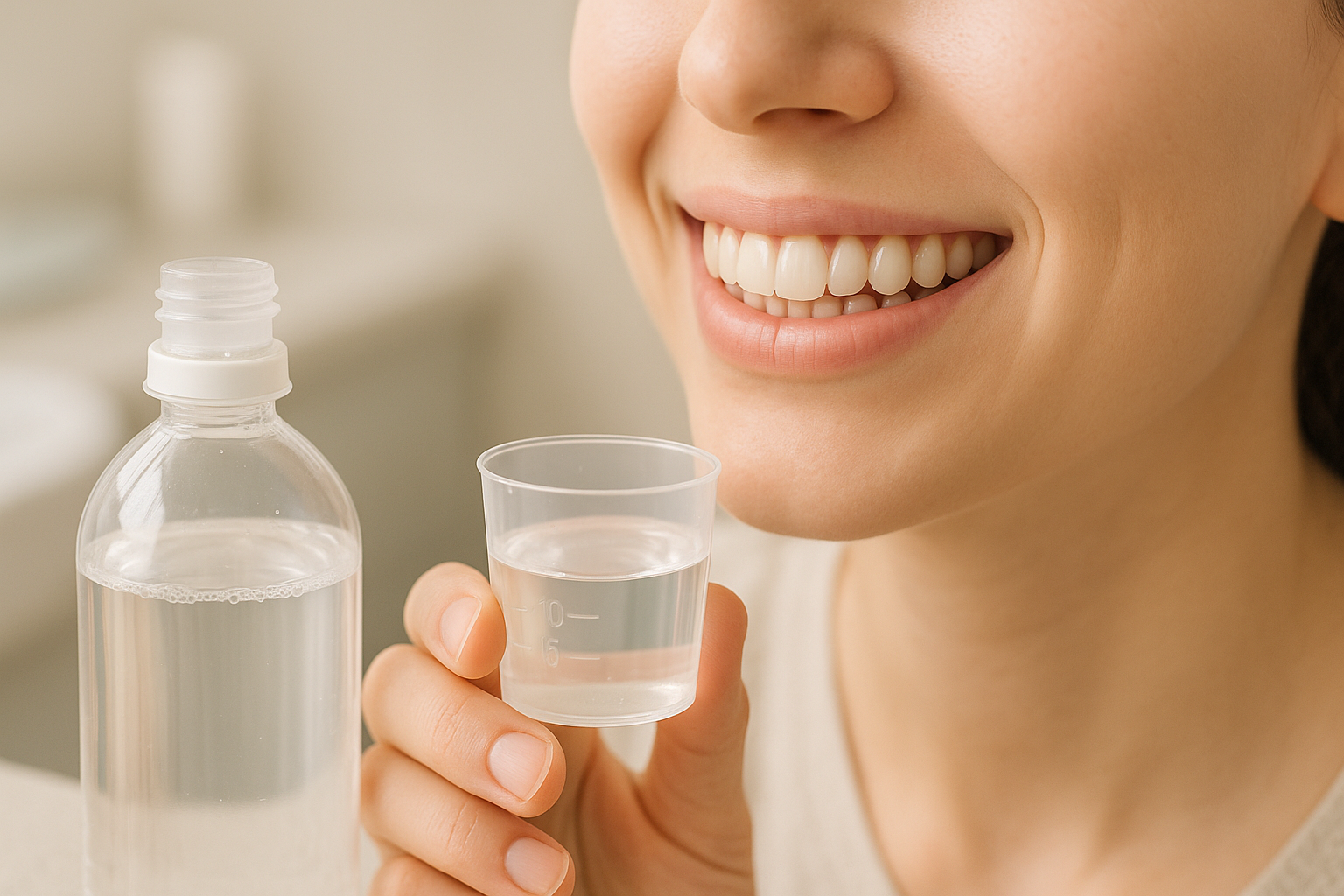
- Measure: pour 10–15 mL of the diluted mix into a clean cup.
- Swish gently for 30–60 seconds. Gentle is enough; aggressive swishing adds irritation, not cleaning.
- Spit it all out, then rinse once with plain water.
- Keep the run short: once a day is plenty at home, and stop at 7 days unless your dentist directs otherwise.
- Watch for stop signals: lingering sting, next-day soreness, or white patches mean you're done — pause and let your mouth reset.
Two don'ts to finish the job: don't stack it back-to-back with other antiseptic rinses in the same session, and don't let the undiluted bottle near fabric — peroxide bleaches towels as happily as it bleaches stains.
What should you use every day instead?
The everyday work of a fresh mouth and a clean gumline belongs to mechanics, not chemistry: brushing twice a day along the gumline, cleaning between your teeth once a day, and the small supporting habits in our natural gum-health routine. The ADA's own framing is blunt on this point — a mouthrinse is an add-on, never a substitute for brushing and cleaning between teeth.
If you enjoy a daily rinse on top of the basics, pick one designed for daily use. An alcohol-free everyday mouthwash gives up nothing next to the burning kind, and botanical options have their own honest trade-offs — our guide to tea tree oil mouth rinses walks through a popular one.
A Daily Rinse Built for the Gum Line: DP7 Pro Rinse
Peroxide's limits — short runs, short contact, a hard 7-day stop — are exactly where DP7 Pro Rinse takes the opposite approach. It's an alcohol-free and water-free botanical rinse: its lipid base carries immortelle helichrysum, peppermint, and white thyme along the gum line and between teeth, where it clings instead of washing straight off. No alcohol burn, no drying, and no run-length limit to track — it's made to be used twice daily, every day, alongside brushing and interdental cleaning.
To be clear about what it is and isn't: DP7 Pro Rinse is a cosmetic product that supports the look and feel of a clean, fresh gum line and lasting fresh breath. It is not an antiseptic, and it doesn't treat or prevent any condition — the brushing-and-between-teeth basics stay the foundation. It's rated 4.55 out of 5 by its first 11 verified buyers, and every order carries a 90-day money-back guarantee.
When to see a dentist
Gum trouble is too common to rinse past: the CDC reports that nearly half of American adults aged 30 and over have some form of gum disease (CDC oral health data). Book a visit if your gums bleed for more than a week or two despite gentle daily care, if a mouth sore hasn't healed within two weeks, if you have pain, swelling, or a bad taste that keeps returning, or if you suspect a chemical burn from using peroxide too strong or too long. And if anyone swallows more than an incidental amount of peroxide — especially a child, or any amount of a high-concentration product — contact Poison Control or a medical professional promptly rather than waiting it out.
Frequently asked questions
How do you dilute 3% hydrogen peroxide for a mouth rinse?
Mix equal parts 3% hydrogen peroxide and water for about 1.5%, or one part peroxide to two parts water for about 1%. Make it fresh each time, swish 10–15 mL for up to a minute, spit it all out, and never swallow.
Is it safe to use a hydrogen peroxide rinse every day?
Not as an ongoing habit. The label on the bottle caps use at 7 days in a row unless a dentist directs otherwise. Daily, long-term oxidizing rinses raise the odds of irritation and work against the helpful bacteria your mouth needs. For every day, use a rinse designed for daily use.
Why does hydrogen peroxide foam in your mouth?
Saliva, blood, bacteria, and damaged tissue contain catalase, an enzyme that splits peroxide into water and oxygen. The foam is escaping oxygen. It helps lift loose debris, but more foam doesn't mean a deeper clean — it just means the peroxide found something to react with.
Will a hydrogen peroxide rinse help gum disease?
No rinse treats gum disease, peroxide included. Bleeding and inflammation are driven by plaque along and under the gumline, which responds to brushing, interdental cleaning, and professional care. A diluted peroxide rinse can be a short-term cleanup aid — nothing more.
Can a peroxide rinse whiten your teeth?
Barely. Whitening relies on higher peroxide concentrations and long contact time in strips, trays, or professional treatments. A brief swish at 1–1.5% may help slightly with surface staining but won't meaningfully change tooth shade.
What strength of hydrogen peroxide is too strong for your mouth?
Anything above drugstore 3% has no place in oral care, and even 3% should be diluted before rinsing. High-concentration "food grade" peroxide (often 12–35%) can cause chemical burns and must never be used as a rinse, diluted or not.
Educational information only — not a diagnosis or medical advice. DP7 Pro Rinse is a cosmetic product and is not intended to diagnose, treat, cure or prevent any disease. If you have persistent bleeding gums, mouth sores that won't heal, pain, or swelling, see a dentist promptly.