Do Silicone Scar Sheets Work on Old Scars? The Redness Test That Tells You
Last updated: August 11, 2026
Quick answer
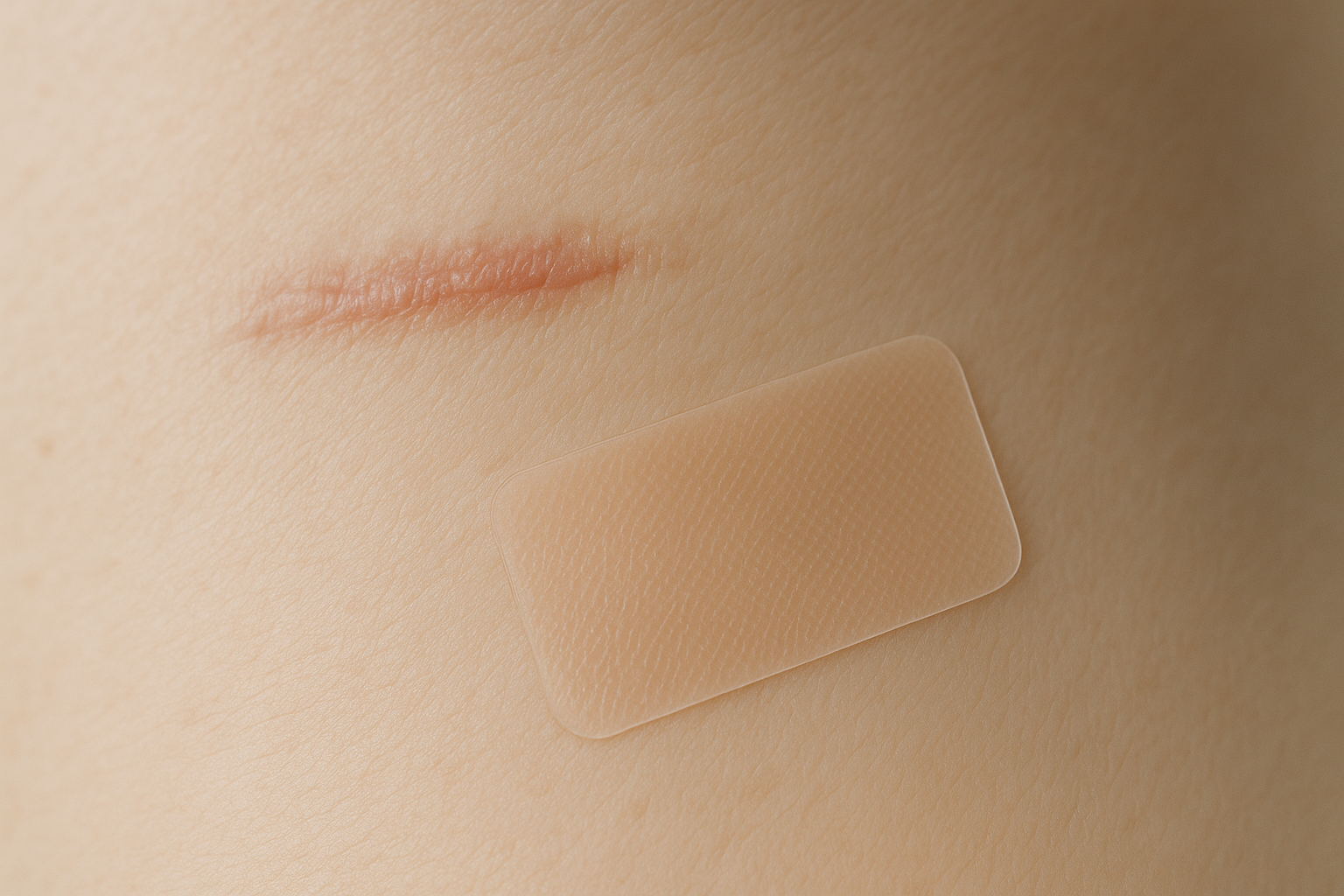
Silicone sheets have their best-documented results on scars that are still maturing — typically under a year old and still red, raised, or itchy. On fully mature scars, the plastic-surgery literature is blunt: silicone shows “minor effects or no effect on mature scars” — defined as scars older than one year with no remaining redness. The deciding factor isn’t the number on the calendar; it’s whether your scar is still active, which you can gauge in about 30 seconds with the redness test below. If your scar has gone pale, flat, and quiet, silicone has little left to work on — and the realistic goal shifts to caring for how the scar looks and feels: daily massage, sun protection, and cosmetic care such as ScarDerma Pro, a water-free botanical lipid concentrate formulated to smooth and refine the appearance of scars and stretch marks.
Why the answer online is so confusing
Search this question and you’ll find page after page saying yes — old scars respond, you just need to wear the sheets for 6 to 12 months. Look closer and nearly all of those pages are written by companies that sell silicone sheets. The independent clinical literature tells a more reserved story, and the gap between the two is exactly why this question deserves a proper answer.
Three sources sit at the top of the evidence pyramid here: a Cochrane systematic review, the plastic-surgery textbook chapter by Professor Thomas Mustoe (one of the researchers behind the original silicone-gel studies), and the U.S. FDA’s own regulatory record for silicone sheeting. All three are summarised below — and none of them supports the “any scar, any age” promise.
How silicone sheets actually work (it’s not what the packaging implies)
The first surprise: silicone doesn’t soak into your scar. As Mustoe’s chapter in the Textbook on Scar Management puts it, “silicone is not absorbed into the skin and covers intact epithelium” — the original studies specifically ruled out absorption, pressure, and heat as the working mechanism. What’s left is occlusion: the sheet slows water loss from the scar’s surface, and that change in hydration appears to calm the overactive healing response in a scar that is still remodelling.
That mechanism explains the age limit. A scar that is still red and raised is still biologically busy — there is an active process for occlusion to influence. A scar that finished remodelling years ago is stable collagen; there is no longer an overactive process to calm. The mechanism itself predicts what the clinical observations then confirm: silicone’s results concentrate in immature scars.
What the evidence really shows
Here is what each major authority actually found — the summary the seller blogs leave out:
| Source | What it found | The caveat |
|---|---|---|
| Cochrane review, 2013 (20 trials, 873 people) | In people prone to scarring, silicone sheeting roughly halved the risk of developing a hypertrophic or keloid scar (RR 0.46). Used on existing scars, trials reported reduced scar thickness and improved colour. | The reviewers judged the trials “of poor quality and highly susceptible to bias,” concluding “a great deal of uncertainty prevails.” |
| Mustoe, Textbook on Scar Management, 2020 | Consistent benefit reported in immature scars. Verbatim: “much more impressive results in immature scars, with minor effects or no effect on mature scars” — mature meaning older than 1 year without redness. | Written by a researcher who defends silicone against the Cochrane critique — and even he draws the line at mature scars. |
| FDA classification rule, 2004 | Silicone sheeting is a Class I device, exempt from premarket review, with an intended use limited to closed hypertrophic and keloid scars. Safety record is excellent — “only two medical device adverse event reports… over a span of several decades.” | The FDA itself wrote that the literature “does not demonstrate that silicone sheeting alone alleviates the symptoms or improves the appearance” of these scars. |
Put together: silicone sheets are very safe, best supported for preventing heavy scarring and for use on young, still-active raised scars — and poorly supported for the flat, pale, years-old scar most people are asking about.
The redness test: is your scar still “active”?
Because the honest dividing line is activity rather than age, check your scar against these three signs. This is the same standard Mustoe’s mature-scar definition uses (older than a year without erythema — that is, without redness):
- Colour. In daylight, is the scar still pink or red compared with the skin around it — or has it settled to pale, white, or silvery? Redness means blood vessels are still present and the scar is still remodelling. (Normal scar redness fades on its own timeline — see how long scar redness lasts.)
- Height and texture. Is it still raised, firm, or lumpy — or flat and soft? Hospital guidance notes scars typically keep changing for 12–18 months, sometimes up to 2 years, before they stabilise.
- Sensation. Does it still itch, tingle, or feel tight? Ongoing symptoms usually mean ongoing remodelling.
Take a photo in the same light every 4–6 weeks. A scar that is visibly changing is, by definition, not finished — and still in silicone’s window. A scar that looks identical month after month, pale and flat, has matured.
Scar by scar: what silicone can realistically do
| Your scar right now | Status | What silicone sheets can realistically offer | Sensible next step |
|---|---|---|---|
| Under 3 months old, red, raised, or itchy | Immature — prime window | Best-documented use: this is where prevention and early-treatment evidence concentrates | Start once the wound is fully closed; wear at least 12 h/day for at least 3 months |
| 3–12 months old, still pink or firm | Still remodelling | Still inside the responsive window described in the clinical literature | Same routine; reassess with monthly photos |
| Over 1 year old but still red, raised, itchy, or growing | Still-active raised scar — possibly hypertrophic or keloid | Some potential, since the scar is not truly mature — but this pattern deserves professional eyes | See a dermatologist: a scar that grows beyond the original wound and doesn’t fade is keloid behaviour, and clinics can offer steroid injections, laser, and cryotherapy |
| Over 1 year old, pale, flat, quiet | Mature | “Minor effects or no effect” per the surgical literature | Shift to appearance care: massage, sun protection, cosmetic products — see below |
On the third row: the American Academy of Dermatology notes that a keloid grows beyond the original wound, does not fade with time, and while growing can cause pain or discomfort — whereas an ordinary hypertrophic scar appears within 1–2 months, stays inside the wound’s footprint, and usually becomes less noticeable. If your “old scar” is actually a keloid, self-care sheets are not the whole answer.
Trying silicone on an older scar anyway? Do it properly
Silicone’s safety record makes a trial reasonable if your scar shows any lingering activity. But most people quietly sabotage it. The clinical guidance:
- 12 hours a day is the target — not 24. Mustoe’s chapter reports that around-the-clock wear causes maceration (soggy, waterlogged skin) and is “poorly tolerated,” while at least 12 hours daily is sufficient. NHS plastic-surgery guidance likewise specifies 12 hours a day for at least 3 months.
- Keep the sheet clean. Sheets “pick up dirt and perspiration” — wash and reuse them as directed, and replace them when they stop adhering.
- Expect trouble in heat. Occluding skin with a non-porous covering in hot, humid conditions can trigger miliaria — heat rash of itchy red 2–4 mm bumps — which DermNet notes usually settles within a day or two of cooling the skin. If your sheet itches, that’s a known pattern with its own fixes — we’ve covered it in why does my silicone scar sheet itch?
- If irritation appears, pause — don’t quit. The textbook protocol is to interrupt use for about a week, then restart with shorter daily wear.
- Give it a fair, finite trial. Three months at 12 h/day, with monthly photos. Visible change → continue. No change → your scar has told you it’s mature; move to the appearance-care routine below.
Using a topical product alongside sheets? Order matters — see can you use scar oil and silicone gel together?
What actually helps a mature scar’s appearance
A mature scar is permanent skin — Memorial Sloan Kettering’s patient guidance is honest that scars do not go away completely — but its appearance is far from fixed. Four things carry real weight:
1. Daily massage. NHS plastic-surgery teams recommend massaging with the pads of two fingers in slow circles, side-to-side, then along the scar — light pressure building to firmer — for around 5 minutes, 2–3 times a day. Massage softens scar tissue, reduces adhesions between tissue layers, and can relieve itching and over-sensitivity. MSKCC’s version is lighter — 1–2 minutes, 1–3 times daily — showing there’s a workable range. Wash off any previous product before each session, use a small amount of moisturising product, and stop if the skin becomes sore or inflamed. For older, firmer scar tissue, we’ve written a full routine in how to soften old hard scar tissue.
2. Sun protection — non-negotiable. Scar tissue pigments unevenly, and sun exposure can darken a scar against the surrounding skin. The AAD advises broad-spectrum SPF 30+ on healed wounds, reapplied often, and NHS guidance is to keep new scars out of the sun for at least a year.
3. Camouflage where it counts. For events and photos, MSKCC endorses camouflage makeup — including green-tinted correctors for redness — as a legitimate part of scar care, and notes silicone gel can sit under makeup.
4. Professional options for the stubborn few. Steroid injections, dermabrasion, laser resurfacing, and cryotherapy remain the clinic-level tools for raised or symptomatic scars — worth a consultation if your scar bothers you daily. And if you’re wondering whether time alone will keep helping, the honest answer is in do old scars ever fade?
Where ScarDerma Pro fits for older scars
Once a scar is mature, the job is cosmetic: keeping the scar and the skin around it conditioned, supple, and even-looking. That’s the job ScarDerma Pro was formulated for. It takes the opposite approach to a silicone sheet: instead of occluding the surface from above, it’s a 100% water-free botanical lipid concentrate — skin-compatible lipids that move into the outer layers of the skin (the stratum corneum) rather than sitting on top, to smooth and refine the appearance of scars and stretch marks.
Formulated by S. C. Aris, it combines four scar-focused actives — Immortelle Helichrysum, Rosehip seed, Tamanu, and Pomegranate seed — with skin-soothing Japanese Camellia, English Lavender, and Hemp seed in a base of Sea Buckthorn, Calendula, Jojoba, and Vitamin E. No harsh acids or peels, no drying agents, no artificial fragrance, no parabens — and because the formula contains no water, it needs no preservatives. It also pairs naturally with a scar-massage routine as the slip layer for your daily 5 minutes.
It currently holds a 4.91/5 rating from 34 verified buyers, and in a customer survey 91% reported their scar looked flatter and smoother within 6 weeks, with 9 in 10 reporting more even-looking skin tone. Every order carries a 90-day money-back guarantee — a fair-trial window in line with the 3-month timelines in this article.
Frequently asked questions
Is it ever too late to start using silicone sheets on a scar?
It’s never unsafe — the FDA’s record shows only two adverse event reports over several decades. But it can be too late to expect much: on mature scars (over a year old, no redness) the surgical literature reports minor or no effects. Run the redness test first; if your scar is pale, flat, and unchanged for months, put your effort into massage, sun protection, and appearance care instead.
How many hours a day should I wear a silicone sheet — and can I wear it 24/7?
At least 12 hours a day is the clinically cited target, kept up for at least 3 months. Around-the-clock wear is actually counterproductive — it macerates the skin and is poorly tolerated. If irritation develops, pause for about a week, then restart with shorter daily wear.
My scar is over a year old but still red, raised, and itchy — will silicone help?
A scar with those symptoms isn’t truly mature, so it may still respond — but that pattern also overlaps with keloid behaviour. If the scar has grown beyond the boundary of the original wound, isn’t fading, or causes pain, see a dermatologist: keloids don’t fade on their own, and clinic options like steroid injections, laser, and cryotherapy exist for exactly this case.
Do silicone sheets work on old white stretch marks?
Stretch marks are a different structure: flat, indented lines rather than raised scar tissue, and silicone sheeting’s FDA-described use is closed hypertrophic and keloid scars — raised types. Mature white stretch marks are also low on melanin, which is why they stand out after sun exposure — we’ve covered that (and what helps their appearance) in why don’t my stretch marks tan?
ScarDerma Pro is a cosmetic product: it cares for the appearance and feel of skin and scars, and does not treat, heal, or prevent any medical condition. For keloids, or any scar that is growing, painful, or changing in a way that concerns you, please see a dermatologist or plastic surgeon.